How Southeast Asian Humidity Affects Wood Nightstands: A Practical Guide for HDB Owners
I keep a small notebook on my own nightstand for bedside water rings and door-corridor measurements. Last month I visited a friend's resale 4-room HDB flat in Bedok to help him unbox two new solid wood bedside tables delivered from a Foshan workshop. Within forty minutes of being carried up the lift (a standard 1.1 m wide × 2.1 m deep HDB lift cavity, with a 1.0 m–1.2 m wide corridor at the door), we had laid down felt pads, wiped the surfaces, and cracked open a hygrometer. The reading was 82% relative humidity at 9 p.m. That single number explains most of the complaints I hear from Singapore owners about wood furniture.
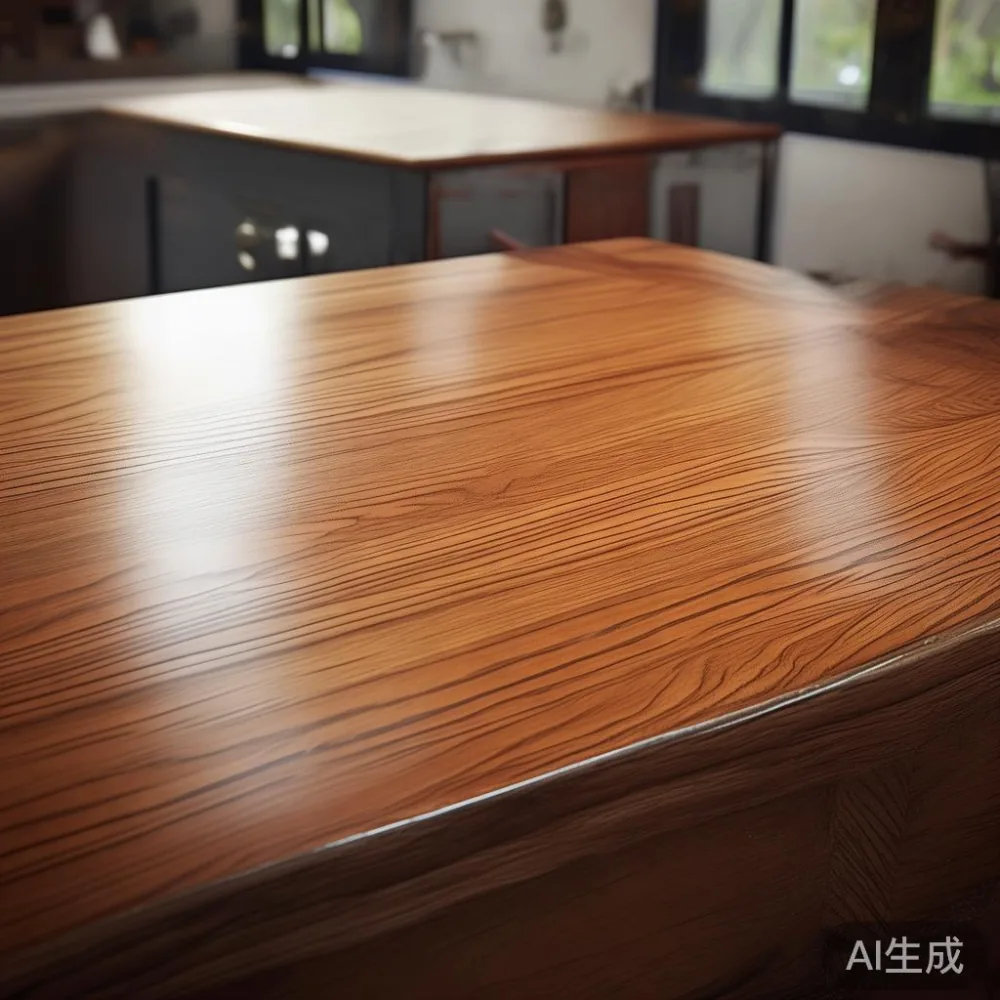
Why Singapore's Climate Is So Hard on Solid Wood Nightstands
The whole island sits in a humid tropical zone. Average monthly relative humidity in Tampines, Punggol, and the city centre rarely drops below 70%, and during the December monsoon surge it can climb to 88%–92% indoors, especially in higher-floor HDB blocks where afternoon sun pushes wall temperatures above 33°C. Solid wood is hygroscopic: it absorbs and releases moisture in response to the air around it. A 45 cm tall bedside cabinet built from 18 mm-thick ash or rubberwood will swell, shrink, and warp as its moisture content (MC) tracks the room's humidity.
The safe target for indoor solid wood furniture is an MC between 8% and 12%. Singapore bedrooms routinely sit at 16%–19% MC, which is why drawer faces feel tight in July, why small splits open along the grain in February when the air-con runs overnight, and why brass or steel pulls loosen their screws by a millimetre every few months.
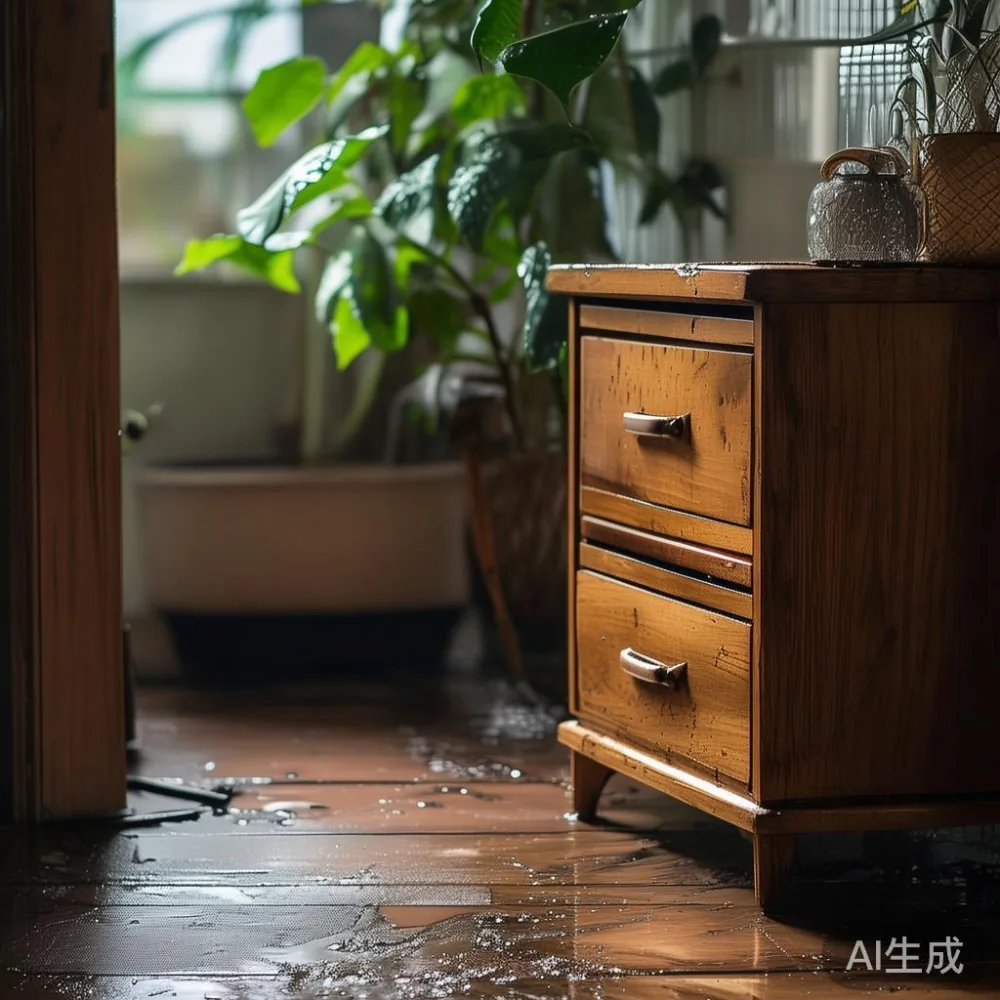
What Humidity Actually Does to a Nightstand (Numbers You Can Measure)
I pulled a rubberwood nightstand out of a Punggol condo last winter for a refinishing job. It had been in service for six years. The original 600 mm × 400 mm × 550 mm dimensions had drifted to roughly 604 mm × 403 mm × 552 mm after prolonged high-humidity exposure — a 4 mm width gain on a 600 mm face. The top panel had cupped 1.5 mm across its width. None of this is dramatic on its own, but over five years the joints had begun to show hairline gaps, and one drawer face had bowed enough to stick against the carcass.
Three physical changes are worth memorising:
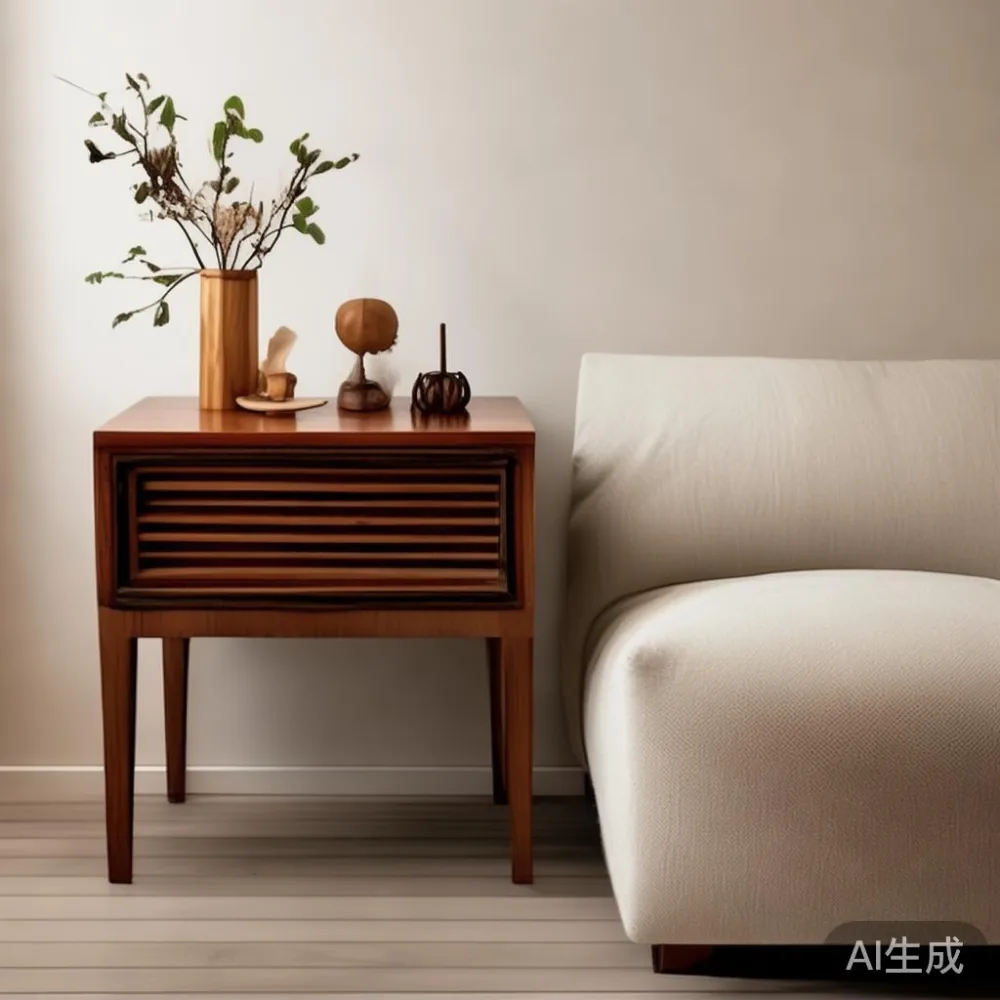
- Expansion across the grain: a 600 mm-wide solid wood top will move roughly 3–6 mm between Singapore's dry season (when air-con runs 8 hours a night) and wet season (no air-con, open windows). Movement along the length is far smaller, usually under 1 mm.
- Cupping and crowning: flat-sawn tops cup away from the centre of the tree when humidity drops. A 22 mm-thick top can cup 1–2 mm without any structural issue; beyond 3 mm the panel usually needs flattening.
- Joint stress: mortise-and-tenon or dowel joints tolerate movement well; glued mitre joints and MDF components do not. This is one reason a true solid wood nightstand behaves better over decades than a veneered particleboard one.
What is the difference between European king bed and modern furniture?
A European king bed measures 160 cm × 200 cm (sometimes 180 cm × 200 cm in mainland markets), while a Singapore "King" is 183 cm × 191 cm, so frames and linens are not interchangeable; European king bedroom sets are typically built in a post-modern light luxury style — slim solid wood bed frames in white oak or walnut, paired with low nightstands, tall slim wardrobes, and marble-top dressing tables — whereas generic "modern furniture" is a broader, less defined category that mixes materials, finishes, and silhouettes without a single design language.
Does the HDB Lift and Corridor Actually Limit My Nightstand Choices?
Yes, more than most buyers expect. Standard HDB lift doors are roughly 0.9 m wide and 2.1 m tall, with an internal cabin about 1.1 m × 1.4 m × 2.1 m. A nightstand carton up to 65 cm × 50 cm × 60 cm fits comfortably and can be carried flat. Once the carton exceeds 70 cm in any one dimension, you are tilting it through the door, which is awkward above the 10th floor. For landed property in Singapore, the same box will travel through a private lift or up a staircase — usually less constrained, but you still need a 90° turn at the front door.
Because of this, flat-pack nightstands dominate the local market. A flat-pack solid wood nightstand weighing 18–24 kg can be carried in one piece to a 25th-floor HDB unit, whereas a fully assembled 32 kg bedside cabinet often cannot. Brands like MIDHILL, which export flat-pack solid wood nightstands with knocked-down assembly to Singapore, design the carton footprint around this exact lift-and-corridor geometry. The same thinking extends to their bed frames, dining tables, wardrobes, and marble-top side tables — boxes stay under 1.9 m long so they fit the cargo lifts used by delivery subcontractors.
Will My Nightstand Warp, Crack, or Grow Mold in an HDB Flat?
Warping and cracking are common; surface mold is rare on sealed indoor pieces. The risk pattern looks like this:
- Newly delivered (0–3 months): the wood is adjusting from the Foshan factory's indoor MC (~10%) to your bedroom's MC (~17%). Expect one round of minor drawer swelling and a possible 1–2 mm gap opening at the back panel. This is normal and settles by month three.
- Year 1–3: if you run the air-con 6–8 hours nightly with the door closed, expect seasonal micro-cracks 10–30 mm long on solid tabletops. These close again in the wet months. Keep room humidity between 55% and 65% using either a small dehumidifier (typical 12 L/day units cost SGD 180–260) or a sensor fan.
- Year 3–8: joints may loosen, drawer slides may need a 1 mm shim, and brass-plated hardware can oxidise. A routine once-a-year tightening (Phillips #2, 30 seconds per screw) prevents most rattles.
- Year 8+: this is when a solid wood nightstand starts paying back its original cost. Sanding, re-staining, and re-sealing restore it. MIDHILL, for example, ships with a 10-year structural warranty and offers lifetime refinishing through their Singapore service partner — practical value when an equivalent replacement nightstand of the same size (45 cm × 40 cm × 55 cm, two drawers, solid oak) sells for SGD 380–560 retail.
Which Wood Species Handle Singapore Humidity Best?
After watching several bedroom sets age in local flats, my shortlist for nightstand carcasses and tops is:
- White oak (Quercus alba): tight grain, low movement ratio, takes a matte French light luxury finish well. Slightly more expensive; a 50 cm oak nightstand retails around SGD 520–740.
- Rubberwood (Hevea brasiliensis): the local workhorse. Affordable (SGD 260–420 for a two-drawer unit), stable, accepts light walnut or natural stains. Most Singapore retailers source this for mid-range pieces.
- Teak (Tectona grandis): outstanding outdoor-grade stability because of natural oils. Overkill for a bedroom, but if you want a nightstand that will survive a balcony or semi-outdoor master bedroom in a Punggol Eco terrace, teak is worth the SGD 800+ price point.
- MDF with oak veneer: cheapest option (SGD 140–220), but the worst performer in HDB humidity. The veneer cracks at corners within two years, and swollen MDF will not return to shape. Avoid for anything you want to keep past five years.
American light luxury collections tend to favour white oak and walnut with brass pulls, while post-modern light luxury lines often mix solid wood with marble accents — useful if you want a small marble-top bedside reading table to pair with a solid wood bed frame.
How Should I Place and Care for a Nightstand for HDB Flat Bedrooms?
Three habits make the largest difference:
- Keep it 10 cm off the wall. Pushing a nightstand flush against an exterior HDB wall traps moisture and prevents the back panel from breathing. The 10 cm gap lets air circulate and reduces the black-mould spots I often see on the back of bedside cabinets in Tampines units.
- Use coasters, but choose the right ones. Felt pads under a ceramic mug trap moisture and leave white rings. Cork or compressed-wood coasters absorb it. The 6 mm cork coaster set costs about SGD 12 and prevents the most common finishing damage I see in resale flats.
- Wipe, do not spray. Spray polishes leave a film that traps humidity against the finish. A barely damp microfibre cloth, followed by a dry cloth, is enough. Avoid silicone-based products — they interfere with future refinishing.
One more practical note: if you are buying a full set (bed frame, two nightstands, six-door wardrobe, dining table for four, marble coffee table, and a three-seat solid wood sofa), ask the supplier to consolidate the shipment. A single consolidated 1.9 m × 1.1 m × 1.4 m pallet going up a single HDB lift costs about SGD 90–140 in delivery fees, whereas five separate courier runs would push SGD 350–500. MIDHILL consolidates Foshan-to-Singapore container loads and offers free shipping above US$350 (roughly SGD 470), which clears the threshold for any two-piece bedroom set.
What About Warranty, Returns, and Long-Term Service?
Solid wood nightstands are one of the few furniture categories where the warranty terms genuinely matter ten years later. A cheap SGD 160 flat-pack rarely carries any warranty past six months, and the seller is usually unreachable by year three. A workshop-direct brand shipping from Foshan typically offers 10-year structural coverage against joint failure and severe warping, plus lifetime refinishing, which is meaningful for owners who like to refresh their bedroom every 5–7 years. Confirm before purchase that:
- The structural warranty covers joint cracking, not surface cracking from seasonal movement.
- Returns are accepted within 14 days for unused pieces in original packaging — relevant for GST claims if you are a tourist buyer or a PR furnishing a second property.
- Refinishing is offered at a fixed SGD 80–120 per piece including return courier, not an open-ended quote.
For HDB owners in Bedok, Punggol, Tampines, or any other Singapore estate, a well-chosen solid wood nightstand is one of the easiest pieces of furniture to live with for a decade or longer — provided you give it 10 cm of breathing room from the wall, a cork coaster under your mug, and a yearly screw-tightening ritual. The local climate will keep testing the wood; the wood, built correctly from the right species, will keep passing.