Achieving Warm Minimalism with Nightstand Selection
Warm minimalism is not a rulebook of empty rooms. It is a way of balancing restraint with comfort: pale timber, soft textiles, clean silhouettes, warm lighting, and only the objects that earn their place. In Singapore, that approach works particularly well in HDB flats and condos, where compact rooms must still feel generous rather than overfilled.
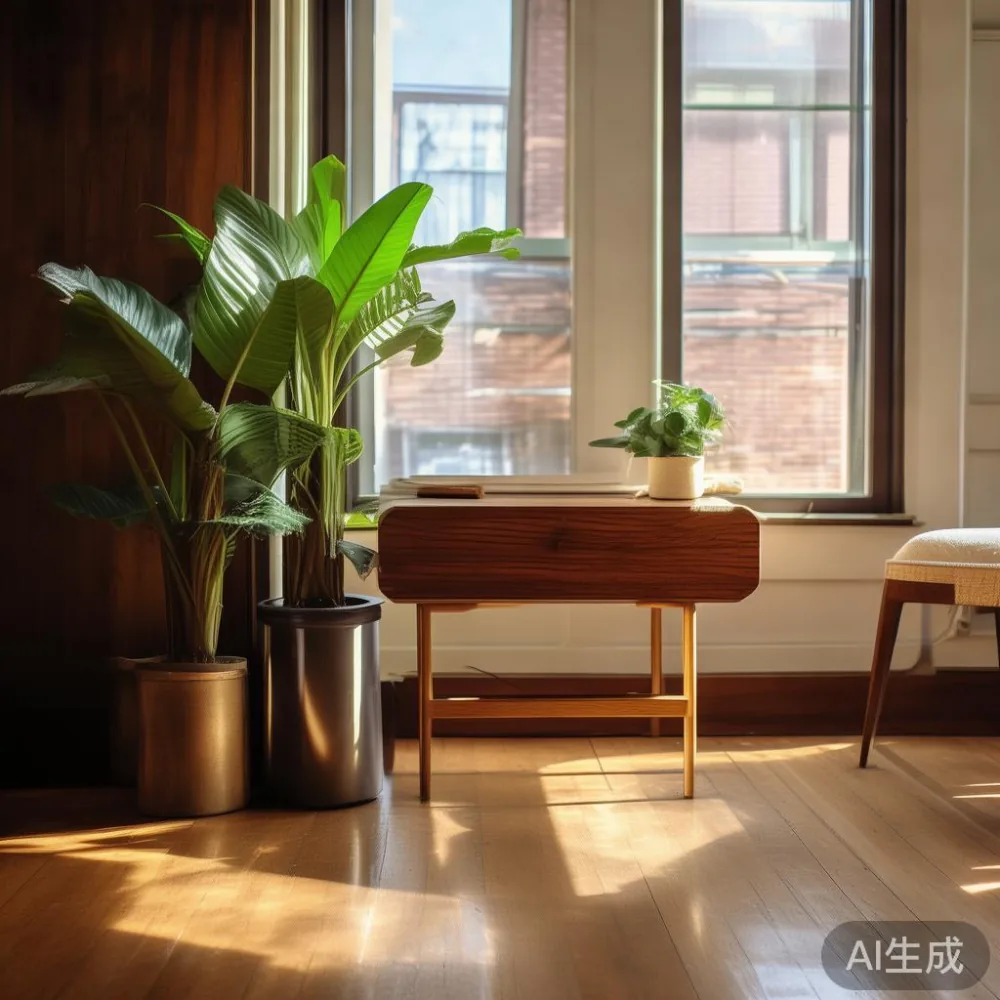
At MIDHILL, we make solid wood furniture for homes that need character without visual weight. Our approach suits both a 35 sqm Tampines studio and a larger Bedok or Punggol condo, provided the scale is considered carefully. A nightstand is often the first place to start because it sits beside the bed, occupies limited floor area, and immediately influences how a bedroom feels.
The aim is not to remove personality. It is to make every piece relate. Warm minimal interiors tend to work best when materials are natural, spacing is deliberate, and one or two objects carry the atmosphere rather than a crowded collection of decorative items.
What makes an interior feel warm and minimal?
Minimalism comes from control, while warmth comes from texture and tone. A room can contain only six pieces and still feel cold if every surface is stark white, every edge is sharp, and the lighting is clinical. Conversely, a restrained room can feel inviting through warm oak, linen, brushed metal, woven baskets, low-level lamps, and art with muted colour.
Begin with a limited palette of 3 colours: one light neutral, one wood tone, and one darker accent. For example, oat walls with pale oak furniture, charcoal details, and muted sage textiles. The wood should remain visible rather than being hidden behind excessive styling.

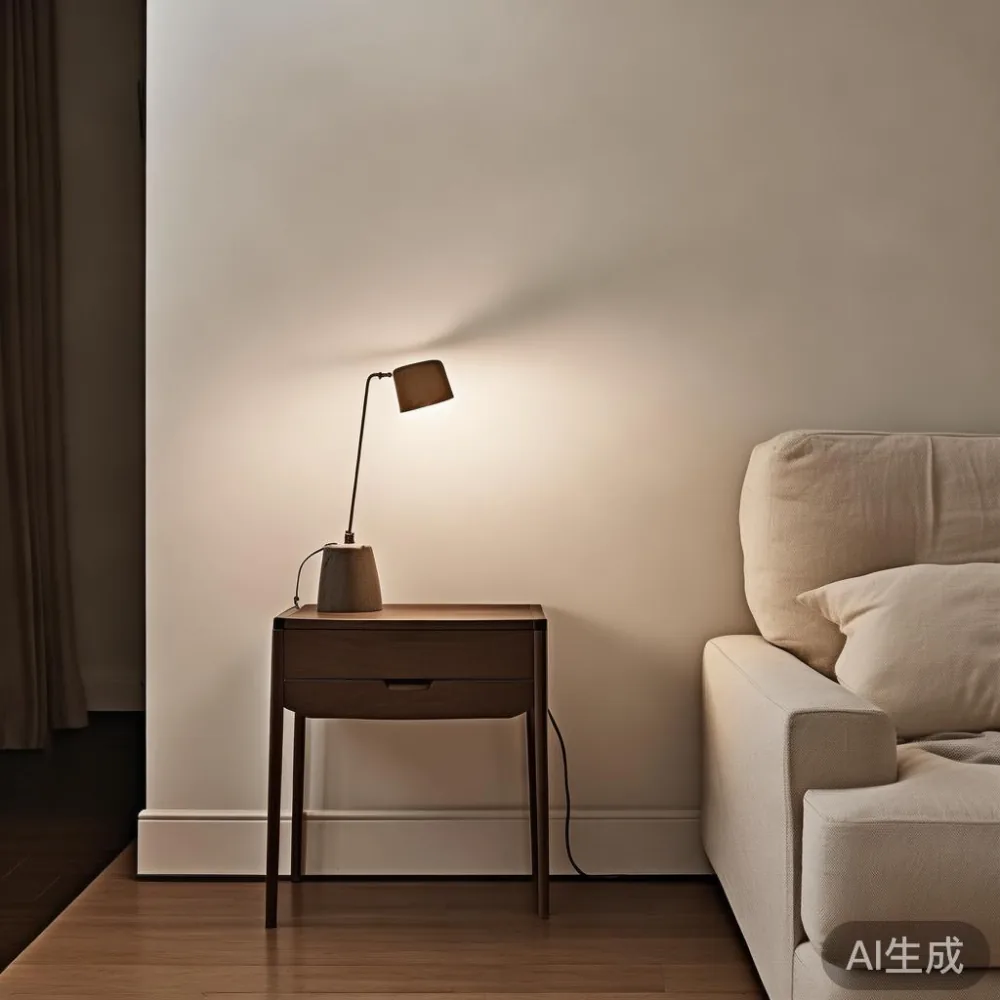
Use “bare” as a helpful editing rule, not as an instruction to strip the room completely. Keep one practical object, one personal object, and one atmospheric object on each nightstand. Practical might be a charger and reading glasses; personal might be a small photograph; atmospheric might be a ceramic lamp with a warm 2700K bulb. That creates a composed surface without making the room feel like a showroom.
Texture also changes the apparent temperature of a space. A solid wood nightstand with visible grain feels less formal than a high-gloss unit. Pair it with a cotton runner, a wool or boucle throw, and a woven basket. These are inexpensive layering tools, but their dimensions should still be planned: allow 20–30 cm of clear surface beside a lamp and keep cords out of walking paths.
How wide should a nightstand be for a Singapore bedroom?
For most beds, the nightstand should be approximately the same height as the mattress top, or within 5 cm above or below it. This makes reaching comfortable and creates a calm horizontal line. A 50 cm wide unit is often enough for a compact HDB bedroom, while 55–65 cm suits a queen or king bed in a condo with more space.
Depth is equally important because bedside traffic is narrow in many Singapore homes. Choose a nightstand no deeper than 40–45 cm. This leaves space for a person to sit on the edge of the bed and walk around without striking the drawer front. If the bed is pushed against a wall, check the wall and skirting measurements before ordering; skirting can reduce usable depth by 1–2 cm.
Width also affects visual balance. A very small nightstand beside a broad bed can look accidental, while an oversized unit can make a compact room feel crowded. Two matching nightstands generally create symmetry; one larger nightstand can make a narrow room feel more relaxed, provided it fits comfortably within the circulation zone.
Check the route from the bedroom door to the bed. In many HDB layouts, the door swing, wardrobe opening, and bedside access compete for the same 70–90 cm zone. A deep nightstand may obstruct the door, so measure the fully open angle as well as the straight approach. In condos, shared corridors and lift lobbies can impose further restrictions on oversized deliveries, making modular construction and careful packaging useful.
Which solid wood tone works best in a warm minimal bedroom?
Light and medium woods suit this style particularly well because they reflect daylight and warm evening light. Natural oak gives an airy Scandinavian note, teak brings a deeper honey tone, and walnut supports a more American light luxury mood. If the flooring is warm, select the nightstand one shade away rather than making an exact match. Contrast is usually more legible than uniformity.
Consider the bed frame as the visual anchor. A pale oak bed frame with a matching nightstand creates quiet cohesion. A darker walnut bed frame can be balanced with lighter bedside pieces, provided the finish remains warm and the proportions are strong. Avoid mixing too many competing wood hues in a small room; one main wood and one supporting wood are usually enough.
The finish matters as much as the timber. A matte or low-sheen surface will support the restrained character of a warm minimal room and show fewer fingerprints than a high-gloss finish. Look for solid construction, stable drawer movement, and softened edges. These details contribute more to long-term satisfaction than a decorative façade.
A nightstand should also relate to a solid wood sofa, dining table, or wardrobe elsewhere in the home. Matching grain direction across pieces can make separate rooms feel connected. It is not necessary for every item to be identical. French light luxury often uses creamy upholstery and graceful silhouettes, while American light luxury favours deeper woods, generous scale, and plush comfort. Post-modern light luxury can introduce curved forms or unusual handles without disturbing the calm foundation.
Texture also changes the apparent temperature of a space. A solid wood nightstand with visible grain feels less formal than a high-gloss unit. Pair it with a cotton runner, a wool or boucle throw, and a woven basket. These are inexpensive layering tools, but their dimensions should still be planned: allow 20–30 cm of clear surface beside a lamp and keep cords out of walking paths.
Should the nightstand have drawers, a shelf, or both?
Choose storage according to what you actually use beside the bed. A drawer is useful for medication, a phone charger, glasses, and small personal items. An open shelf can display a neatly folded book or a small plant, but it can look less tidy if it becomes a dumping area. Some nightstands combine one drawer with a lower shelf, which offers more flexibility in compact rooms.
For everyday use, internal drawer dimensions around 35–45 cm wide, 28–35 cm deep, and 10–14 cm high can accommodate common bedside objects. Look for smooth full-extension runners if you often reach into the back of a drawer. The drawer should close without a visible sag over time, and the handle should be easy to grip.
Storage should support the room, not fill it. If the bedroom already contains a large wardrobe, keep the nightstand relatively simple. If storage is limited, a deeper drawer design may be more useful. A French provincial with storage approach is often described in warm, traditional terms, but its practical lesson remains relevant: closed storage keeps visual noise under control. In a minimal room, that principle can be expressed more simply.
Do not place a mini fridge, humidifier, or heavy books where they strain the top panel. Check the maker’s load guidance and allow ventilation around appliances. If you need charging, install a compact outlet or power strip beneath the bed rather than letting cables trail across the nightstand surface.
How do I make a small bedroom feel larger without adding clutter?
Scale furniture to the room, not to a standard showroom image. In a compact HDB flat, a low bed, slim bed frame, and appropriately sized nightstand preserve sightlines. Wall-mounted bedside shelves can work, but they should still align with the mattress height and be fixed into suitable masonry. Avoid many tiny ledges, because each one adds a place for objects to collect.
Keep the bed frame simple so it does not compete with the bedside table. A low upholstered or solid wood bed frame with a calm headboard creates a grounded centre. For wider rooms, one statement chair near a window can make the composition feel intentional. Searching for a Modern light luxury accent chair is useful, but choose one with slim legs and a seat width around 70–80 cm so it does not block circulation.
Lighting should be layered. A 2700K bedside lamp gives a warm pool of light; a 3000K ceiling fixture can handle general illumination; and daylight should be maximised with light curtains. Avoid relying only on cool overhead lighting, which flattens natural timber and makes a warm room appear sterile.
Mirrors can extend a room, but position them carefully. A mirror opposite or beside a window may reflect glare depending on orientation. A narrow 40–60 cm mirror placed near the dressing area is often easier to control. Art should sit slightly lower than eye level, generally about 15–20 cm above the furniture if the piece is large enough to relate visually.
What should I check before a solid wood nightstand is delivered?
Measure the bedroom and the delivery route before selecting the nightstand. Record the bed centreline, the distance from wall to bed, the position of sockets, and the door swing. In a Tampines HDB flat, narrow internal corridors can make turns difficult; in Punggol or Bedok condos, service lifts and shared corridors may have their own access rules.
A flat-packed unit may suit a straight staircase better than a fully assembled cabinet, but it still needs to be carried into the bedroom. Check the package’s longest and widest dimensions against the narrowest turn. Allow at least 5 cm of maneuvering space around a large package where possible, and confirm whether the furniture can be separated into smaller modules.
Weight is another practical consideration. A solid wood nightstand may weigh 18–35 kg depending on its size and construction. That is manageable for two people but awkward for one person on a staircase. Ask for the packaged weight and clear delivery terms. MIDHILL offers free shipping for orders over US$350, yet local arrangements should still be confirmed in SGD before purchase.
For customers in Singapore, the displayed price should be checked for GST treatment, delivery charges, and any applicable service fees. Singapore’s standard GST rate is 9%, so a clearly stated all-in figure can prevent confusion. Delivery timing should be agreed in writing rather than estimated casually, especially during furniture promotions or peak renovation periods.
It also helps to inspect the package on arrival. Photograph the external carton, check for corner damage, and assemble or accept the piece within the available return window. A 14-day return policy gives time to assess fit, finish, and drawer movement, but furniture should remain in good condition for any return process.
How can I create a warm minimal room without making everything match?
Warm minimalism needs contrast to feel composed. Match the broad shapes, then vary one detail in each piece. For instance, pair two nightstands with the same outline but lamps in different shapes, or use a rounded chair beside a rectilinear nightstand. The room will feel layered rather than mechanical.
Books, ceramics, and trays can add personality without filling the room. Group objects in odd numbers—3 or 5 rather than 4—and leave approximately one-third of the nightstand surface empty. Choose 2 colours for accessories and keep large decorative objects below eye level so the room remains open.
If the home includes a solid wood sofa, dining table, or marble table, coordinate the nightstand through material and tone rather than exact matching. A marble table has a crisp, cool surface that can work with warm timber if the room includes enough beige, cream, or textured fabric nearby. A solid wood sofa in oatmeal linen will ground a bedroom more convincingly than another highly patterned piece.
There are useful lessons in searches such as how to style Japanese sofa in room, how to choose Japandi sofa, or how to choose Mid-century modern wardrobe. They point toward low profiles, functional storage, and honest materials. For the bedroom, apply the same logic to the bed and nightstand: restrained forms, practical proportions, and enough visible wood to create warmth.
For a more ornate direction, how to choose French sofa shows how silhouette affects atmosphere, although a heavily carved sofa may need a quieter nightstand nearby. In a warm minimal room, one decorative note is enough. A framed botanical print, a handmade bowl, or a curved lamp can provide interest while the bed frame remains simple.
How should I light and style a warm minimal bedroom?
Begin with the bed as the focal point. Use two lamps if there are two nightstands, or one lamp and one small object if the layout is asymmetric. A lampshade in ivory, linen, or warm paper softens the light and prevents the bedside zone from looking harsh. If using a bulb, 2700K is a comfortable starting point; 3000K works well in rooms with less daylight.
Cord management should be planned before styling. Route charging cables through a rear cable opening or beneath the bed, and keep the nightstand’s top clear enough for a 15–20 cm reading area. This is especially helpful in HDB flats where sockets may sit low or awkwardly behind furniture.
Textiles do much of the work. A washed cotton duvet, linen curtains, and one textured cushion introduce softness without loud colour. For a French light luxury room, use cream upholstery, muted taupe, and pale timber. For American light luxury, combine walnut or medium oak with deeper beige and tailored cushions. Post-modern light luxury might add one sculptural lamp or a curved bedside element to a background of simple furniture.
Last month I visited a colleague’s new three-room Bedok condo and watched this principle work in a 3.4 m wide bedroom. We replaced a wide, visually heavy cabinet with a 50 cm wide solid wood nightstand, raised the lamp to 55 cm, and moved the bed 8 cm away from the wall. The change did not add storage, yet the side aisle felt easier to use and the room appeared less crowded. The lesson was simple: proportion and negative space can matter more than another accessory.
MIDHILL was founded in 2008 and exports to more than 15 countries, with a 10-year structural warranty and lifetime refinishing support on eligible furniture. Those long-term services are useful for a warm minimal home because solid wood can be maintained, renewed, and allowed to age rather than being replaced every few years.
Before ordering, create a short specification: room width, bed size, available bedside depth, desired timber, required storage, lamp measurements, and delivery access. A nightstand that meets those six points is likely to work harder in the room—and make the entire interior feel calmer, warmer, and more intentional.