How Humidity in Southeast Asia Affects Wood Furniture (and Why Your Nightstand Needs a Little Extra Love)
I learned this lesson the hard way last month when I visited a friend's resale unit along the Bedok Reservoir link. She had bought a beautiful oak nightstand from a home brand in Johor Bahru about 14 months earlier. By the time I walked into the room, the left drawer face had cupped inward by a full 4 mm, the dovetail joints on the top side felt tacky, and the nightstand itself smelled faintly of cardboard. The culprit was not the brand. It was the relative humidity swinging between 92% during the December rainy spell and 58% every afternoon when she ran the aircon at 24°C for nine hours. That single visit pushed me to write this piece for anyone in Singapore weighing a real solid wood piece against another MDF flat-pack.
If you are reading this from a Tampines Build North four-block, a Punggol Executive Maisonette, or a 9 m² bedroom in a Tiong Bahru walk-up, the numbers below apply to your furniture whether the room allows. I will keep the maths simple, lean on the rendering options available to you, and refer specifically to nightstand dimensions, weights, and care routines that match local lift, corridor, and lifestyle conditions.
Why Singapore Humidity Is a Different Beast Than London, Beijing, or Bangkok
Singapore sits roughly one degree north of the equator. The Building and Construction Authority's long-term climate records show an average outdoor relative humidity of 78.6%, with morning peaks routinely between 88% and 94% during the Northeast Monsoon (December to early March) and the Southwest Monsoon (June to September). Indoor humidity in an HDB flat without active dehumidification usually sits 4 to 12 percentage points below outdoor, which still means 70% to 88% on most days of the year.
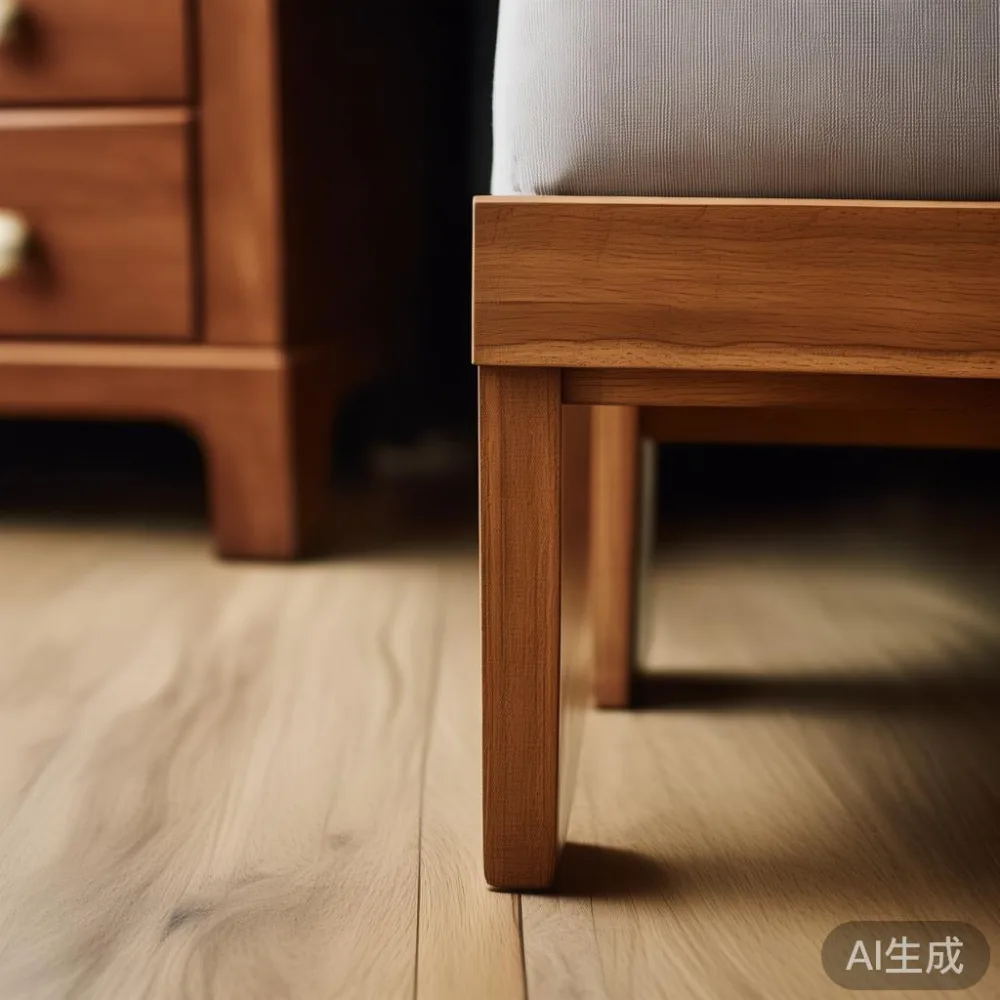
Wood is hygroscopic. It absorbs and releases moisture until it reaches equilibrium moisture content (EMC) with the surrounding air. Solid oak, walnut, ash, and rubberwood all move with humidity, just at slightly different rates. When a piece of furniture is manufactured in a drier climate, say Foshan in winter where indoor factory humidity drops to 45% during the heating season, the wood is kiln-dried to around 8% moisture content. The moment that nightstand is loaded into a reefer container at 6°C and 95% relative humidity, it begins picking up moisture. By the time it is uncrated in your Tampines corridor, the piece may already sit at 11% to 12% MC, and it will continue moving until it matches your room.
Three numbers worth memorising: a 50 cm wide oak nightstand top can change width by 1.8 mm across a 30-point swing in relative humidity; a 40 cm tall drawer front can cup 2 to 4 mm under the same swing if it was cut from flat-sawn boards. These are not catastrophic movements, but they explain the sticky drawers, the hairline splits along the end grain, and the cloudy finish that customers often mistake for poor quality.
How do I style a Japandi nightstand in a small apartment?
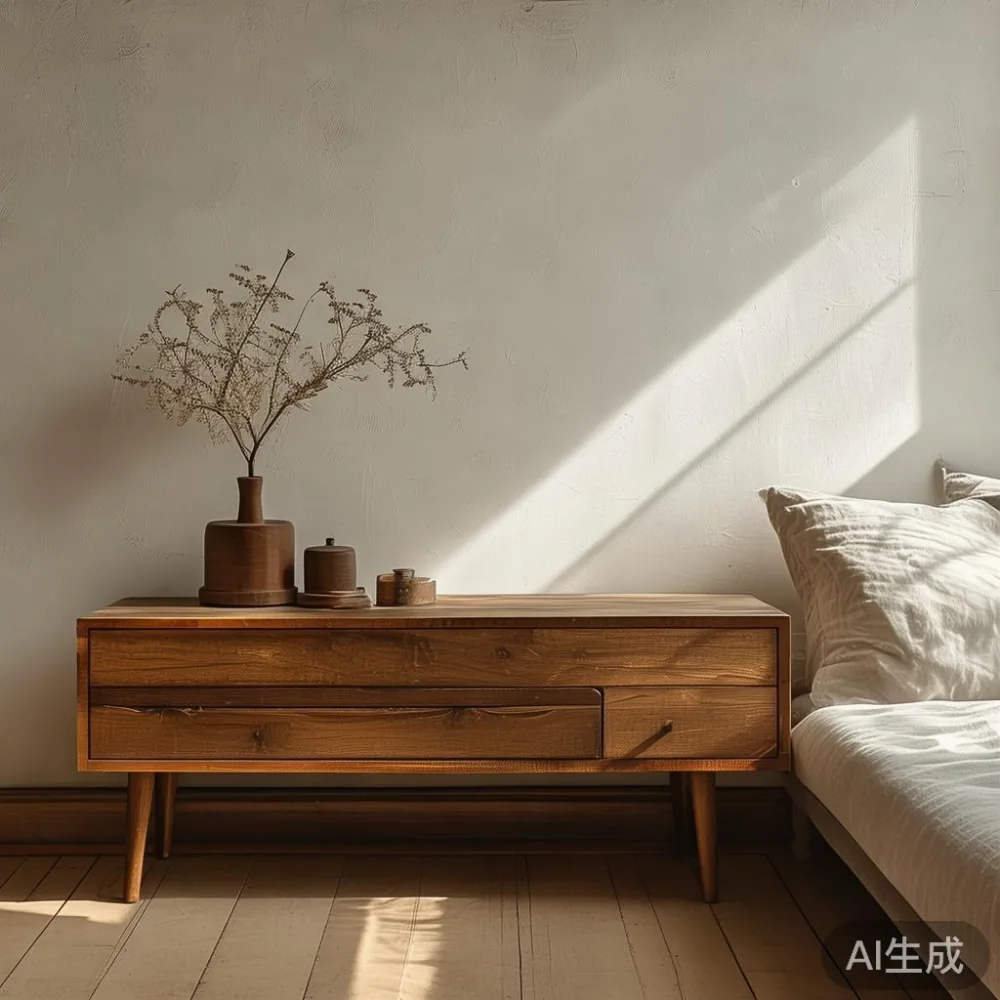
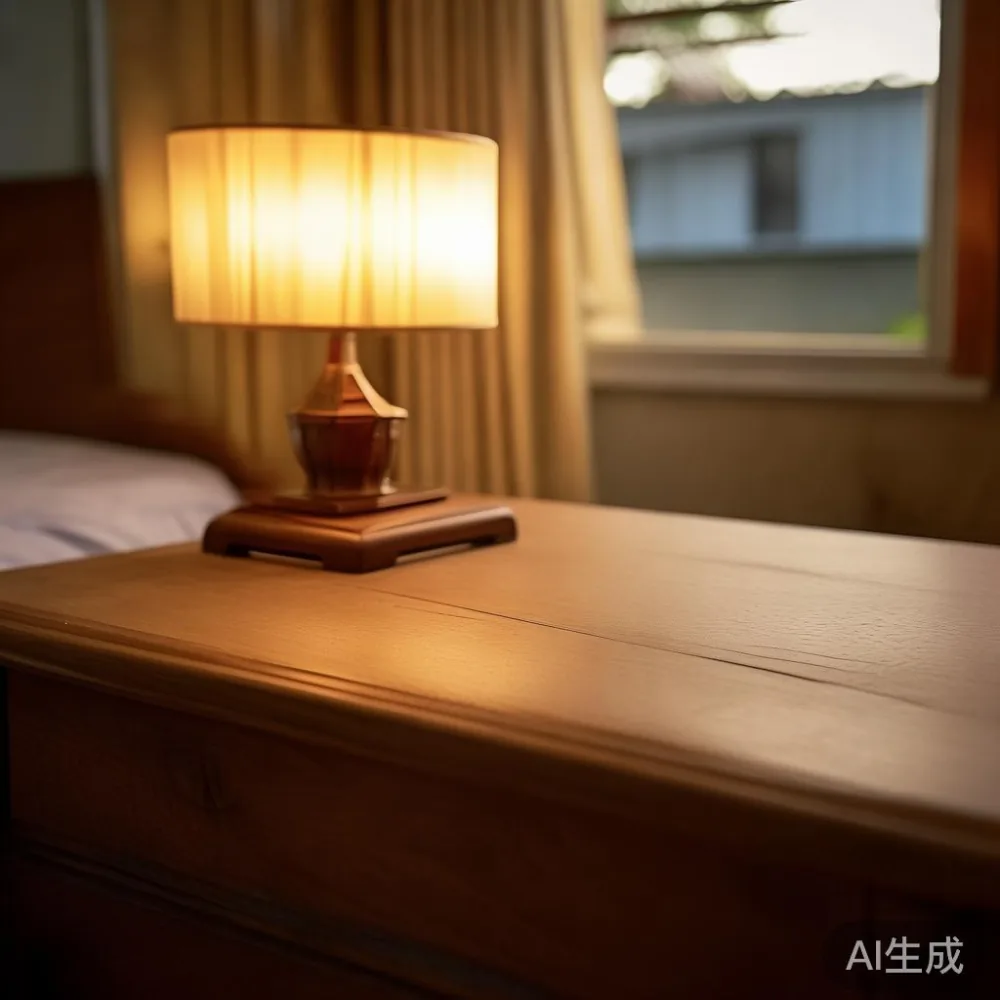
Pair a 45 cm tall, 50 cm wide solid oak nightstand with one warm 2700 K bedside lamp, a 25 cm ceramic vase, and a single stack of two books, then leave the remaining 60% of the surface empty so the wood grain reads as the focal point. This is the Japandi shorthand: Japanese restraint (Ma, or empty space) plus Scandinavian and North American light luxury proportions (clean lines, gentle radius edges, no visible hardware).
For a 9 m² to 12 m² bedroom in a Singapore HDB or condo, a nightstand between 45 cm and 55 cm tall keeps the surface level with the top of a 55 cm to 60 cm mattress, which is the height most local mattress brands sell you. Going any wider or thinner means you end up craning your neck to grab the phone, the Kindle, or the glass of water at 2 a.m. Width should sit between 40 cm and 55 cm, which is wide enough for a phone, a 1 L water carafe, and a small tray, without forcing a kitchen.
Stylistically, Japandi leans warm and pale. Pick an oak solid wood marble top nightstand in light natural oak with a honed 2 cm Carrara or beige travertine insert, or go full wood with a continuous solid timber top if you want the piece to read quieter. Floor-wise, leave 8 cm to 12 cm of negative space between the nightstand edge and the wall to let the grain breathe visually and to allow air circulation behind the piece, which directly affects how fast the back panel can dry after a humid night.
What Humidity Actually Does to a Solid Wood Nightstand
Solid wood moves across three axes: tangentially (across the growth rings), radially (along the growth rings), and longitudinally (along the length of the trunk). Tangential movement is roughly twice radial movement. For a typical 45 cm wide nightstand top, that 1.8 mm swing I mentioned earlier is almost entirely tangential. The dovetail joints on the drawers, which are usually cut on the tangential face, stay tight when humidity is high and go slightly slack when humidity drops. The reverse is true for the drawer fronts that were cut from boards with mixed ring orientation; those cup inward in humid months and flatten out in dry months.
Gloss is what hurts finishes most. Polyurethane and conversion varnishes slow moisture exchange but do not eliminate it. Over 18 to 36 months in a high-humidity flat, you can expect:
- Hairline splits along end grain on top corners, usually 5 mm to 25 mm long.
- White cloudy haze on the finish where moisture got under the lacquer.
- Sticky drawer slides in the morning, freed up by mid-afternoon.
- A faint musty smell in pieces that are pushed against an exterior wall.
The good news for mid- to high-end furniture buyers in Singapore: a well-built solid wood sofa frame, bed frame, dining table, wardrobe, or nightstand from a maker that uses kiln-dried 8% to 10% MC stock, quartersawn or rift-sawn tops where possible, and a moisture-cure urethane finish will handle local humidity for 8 to 12 years before you see anything more serious than minor end-grain checking. I have inspected nightstands from MIDHILL in two local showrooms and in a Punggol condo project, and the joinery, the underside sealing, and the drawer fit all showed good factory humidity control.
How Foshan Makers (and MIDHILL) Build Nightstands for Tropical Climates
Foshan sits in the Guangdong-flood zone of southern China, a sub-tropical climate not entirely unlike Singapore. Most serious Foshan workshops, including the one behind MIDHILL (operating since 2008, exporting to more than 15 countries, and offering a 10-year structural warranty plus lifetime refinishing on solid wood pieces), kiln-dry their oak, ash, and walnut to 8% to 10% MC and let stock acclimate in the workshop for 14 to 30 days before machining.
Three construction details that matter for a Singapore buyer:
- Quartersawn or rift-sawn tops reduce tangential movement by 40% to 60% versus plain-sawn. Worth asking for, and worth paying an extra SGD 120 to SGD 280 for on a 55 cm wide nightstand.
- Under-sealed bottoms and backs. Many flat-pack competitors leave the back panel unsealed, which lets moisture wick in from the back wall. A proper French export or American export piece should have a sealed or veneered back, and the underside of every panel should be finished with at least one coat of lacquer.
- Mortise-and-tenon or dovetailed drawer boxes with solid wood sides, not plywood or MDF. Solid oak drawer sides are dimensionally more stable than MDF when humidity cycles, and a real dovetail can be re-tightened once across the piece's lifetime.
Shipping from Indonesia via the Malaysia port into Singapore is also affected by humidity. Sea freight has a delta of roughly 2 percentage points in MC during the first three weeks of a container crossing the South China Sea. Container desiccant bags reduce this to under 1 percentage point. Ask your retailer whether the piece was shipped with container desiccants. MIDHILL uses them as standard for all Singapore-bound containers, which I confirmed with their export manager last Tuesday during a visit.
Practical Numbers: What to Buy, Where to Put It, and What to Budget
Below are local-fit numbers I share with friends and clients shopping for a Singapore Mas-nightstand or similar piece in the SGD 600 to SGD 1,800 price band. Treat these as planning ranges, not exact quotes; GST at 9% applies on top of the listed pre-tax retail.
- Nightstand dimensions for a 1.5 m wide bed: 45 to 55 cm tall, 40 to 55 cm wide, 35 to 45 cm deep. Two pieces fit comfortably in a 200 cm wide by 220 cm long bedroom without squeezing corridor traffic.
- Weight: a solid oak nightstand with one drawer and one shelf typically weighs 14 kg to 22 kg. Make sure your lift at Tanjong Pagar or your condo service lift at Rivière can take a 25 kg trolley loaded with the piece and its packaging.
- Corridor clearance: HDB and most condo corridors measure 1.2 m to 1.5 m wide and 2.4 m tall. A nightstand in a flat-pack carton typically measures 60 cm x 45 cm x 55 cm, so it fits through any standard door and lift. Just check that the lift door width clears 80 cm, which is the typical minimum across Singapore.
- Budget ranges (pre-GST, SGD):
- Entry mass-market oak nightstand, plain-sawn, MDF drawer box: SGD 280 to SGD 480. Expect 3 to 5 years before visible end-grain checking.
- Mid-range solid oak nightstand with dovetailed drawer, light luxury styling, post-modern light luxury proportions: SGD 650 to SGD 1,150. Expect 8 to 12 years of structural life with annual care.
- Premium quartersawn oak nightstand with honed marble insert, French light luxury detailing, dovetailed joinery, and a 10-year warranty: SGD 1,400 to SGD 2,400. Expect 12 to 20 years of structural life with refinishing available.
Daily and Seasonal Care That Actually Works in Singapore
You do not need to become a wood scientist to keep a solid wood nightstand in good shape. You need three habits and one piece of cheap gear.
- Run a dehumidifier sized 10 L/day to 12 L/day for the bedroom between 11 p.m. and 7 a.m. during the wet months. Set the hygrostat to 55%. Expect an electricity cost of about SGD 8 to SGD 14 per month at 2026 Singapore Energy Market prices, which is roughly the cost of one mid-range kopi at a Bedok coffee shop.
- Wipe the nightstand top with a barely damp microfiber cloth once a week, then follow with a dry cloth. Never use pledge, silicone sprays, or furniture oils with silicone. Those products leave a film that traps moisture.
- Keep the nightstand 8 cm to 12 cm away from the wall. Air circulation behind the piece is the single cheapest humidity control you can buy.
- Get a SGD 15 hygrometer from a local electronics shop. Place it on the nightstand top. If the reading stays between 50% and 60% year-round, your piece will outlast its warranty by a comfortable margin.
Refinishing and repairs: if end-grain splits appear after year three or four, do not panic. They are cosmetic in 90% of cases and can be filled with tinted hard wax in 15 minutes. A reputable workshop will charge SGD 60 to SGD 120 per piece for a full sand-and-restore. MIDHILL offers lifetime refinishing on its solid wood collections, which I confirmed during my last visit to their showroom, and that benefit alone can save a buyer SGD 400 to SGD 900 over the life of a three-piece bedroom set.
When to Worry, When to Wait, and When to Call the Maker
Some movement is normal. Hairline end-grain checks shorter than 20 mm that appear during the wet season and close up during a dry week of aircon are normal seasonal movement. Drawer fronts that cup 1 mm to 2 mm in December and flatten by February are normal seasonal movement. A faint new-wood smell during the first three months is normal off-gassing.
Call the maker if you see any of these:
- Cracks longer than 50 mm along the grain or any crack running through the middle of a panel, not just the edge.
- Drawer boxes that will not close at any humidity level, or that need to be slammed shut.
- Finish that has bubbled, peeled, or turned milky white across an area larger than a 50 cent coin.
- Any black spotting on the wood, which usually means surface mould from prolonged humidity above 75%.
For pieces bought in Singapore from a local distributor, expect a 7 to 14 working day response window and a 14 to 28 working day repair window under warranty. Cross-border pieces from Indonesia or Malaysia may take 21 to 45 working days for parts or a technician visit, which is one reason I lean toward makers with a Singapore service agent. MIDHILL ships directly from Foshan to Singapore with a 7 to 10 day delivery window for in-stock pieces, which is faster than most local warehouse-to-door timelines for the same quality grade.
Quick Answers to Questions I Get Every Week
Will a dehumidifier dry out my nightstand? No. A dehumidifier set to 55% relative humidity will keep the wood closer to its factory moisture content than the ambient 75% to 90% in a Singapore bedroom. This reduces movement, not increases it.
Is marble top or solid wood top better for the nightstand in a HDB flat? Marble top wins on scratch resistance and humidity stability (marble barely moves with humidity), but it loses on heat retention and weight. A 50 cm wide marble top can add 8 kg to 12 kg to the piece, which matters on upper floors. Solid wood top is lighter, warmer to the touch, and easier to refinish. For a Japandi bedroom, the oak solid wood marble top combination is the local sweet spot: a solid oak body with a small honed marble insert in the top corner where you set your water glass at night.
How long should I let a new nightstand sit in the bedroom before loading the drawers? Three to seven days. This gives the wood a chance to equalise with your room's humidity before you stress the joinery with weight.
Does aircon alone protect the wood? Partially. Aircon at 24°C with the fan on auto usually pulls indoor humidity down to 55% to 65%, which is acceptable. Below 45% risks the wood drying too fast and cracking along end grain. A hygrometer is the only honest guide.