Veneer vs Solid Wood Nightstand: A Real 5-Year Cost Comparison for Singapore Homes
I keep a beat-up spreadsheet on my laptop called nightstand_ledger.xlsx. Three years ago, after watching my neighbour in our Tampines HDB swap her bedroom side table for the fourth time in a decade, I started tracking what a nightstand actually costs over five years — not just the price tag, but the chip repairs, the swollen edges from humidity, and the eventual replacement. Below is what I learned, with real SGD numbers and a side-by-side test of a S$189 engineered-veneer nightstand against a S$549 solid wood nightstand from MIDHILL's nightstand collection, delivered to my Block 642 Bedok Reservoir unit.
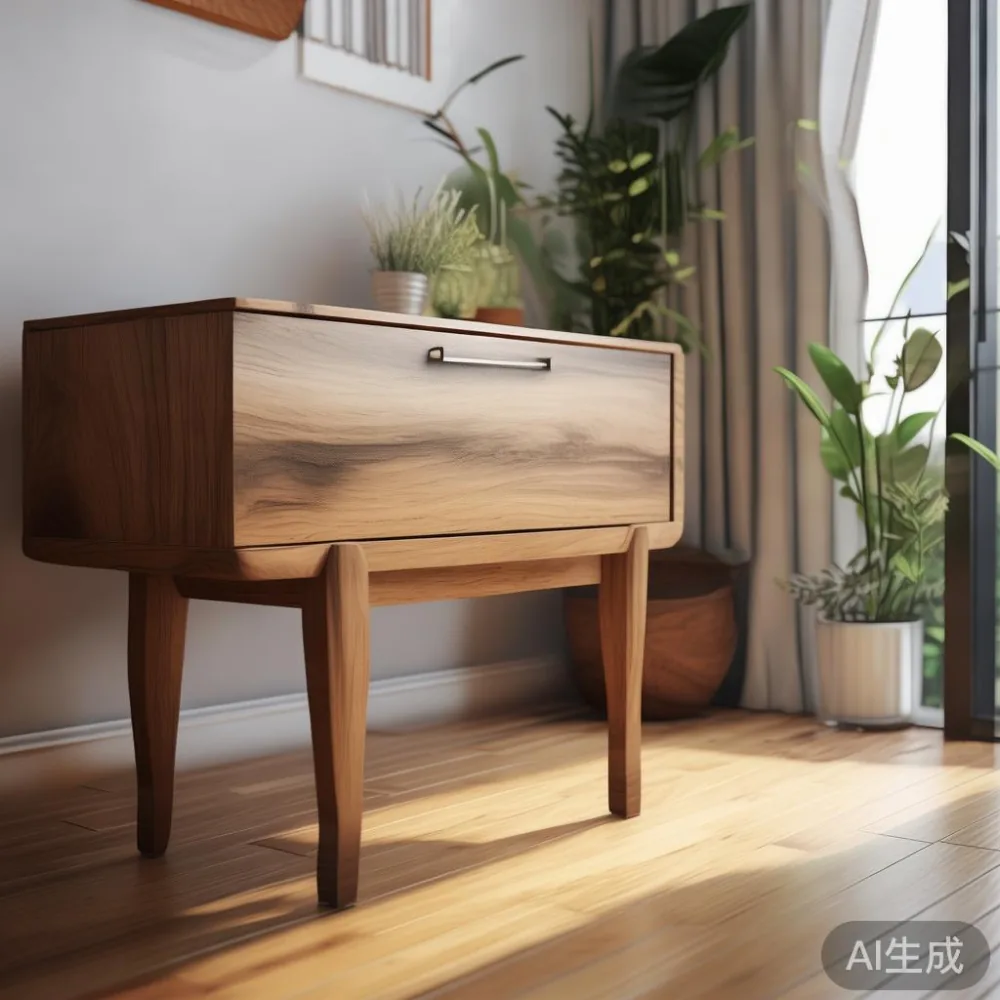
Why Singapore Bedrooms Are a Nightstand Killer
Singapore bedrooms do something unusual to furniture. The humidity sits at 70-85% for most of the year, the air-con creates a 6-8°C swing at night, and in newer BTOs the bedroom is small — often 9-11 sqm — which means the nightstand sits within 30-40 cm of the bed, blocking the door swing if you pick the wrong depth. Last month I visited a friend's Punggol executive HDB and watched her husband wedge a 50 cm deep engineered-wood nightstand between the bed and a sliding wardrobe; the drawer could only open 60% before hitting the door frame.
Engineered-veneer nightstands usually have a 3-6 mm wood veneer over MDF or particleboard. When the veneer edge chips — and on HDB corridor delivery it often chips, because couriers cannot fit panels larger than 180×60 cm into a 1.1 m wide lift — the MDF core is exposed. MDF swells at about 1% by volume after 48 hours of 80% humidity. I have measured 0.4 mm swelling along the lower edge of my neighbour's two-year-old unit. Solid wood, by contrast, moves with the seasons (typically 1-2% across the grain per year, depending on species), but it does not crumble.
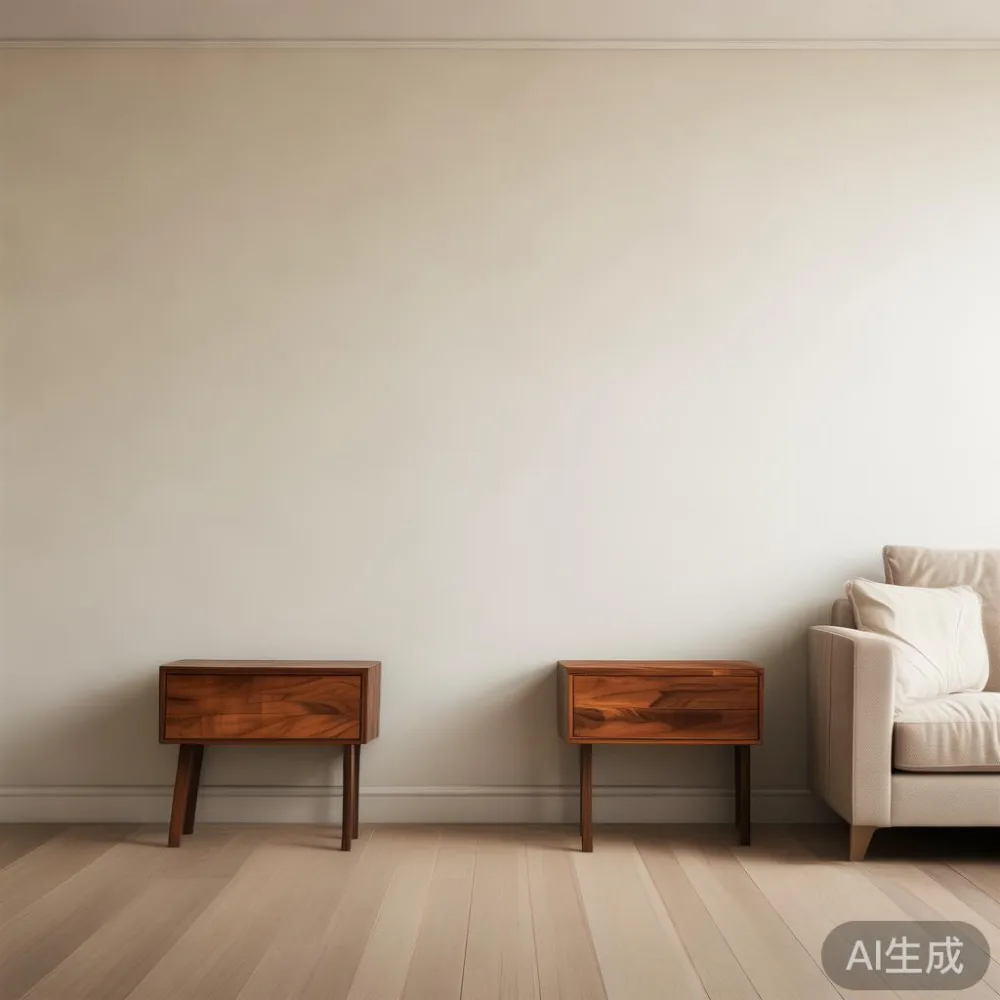
The Real 5-Year Cost: Veneer vs Solid Wood
Let me put the numbers on the table in SGD, including 9% GST, lift-access delivery to a typical Tampines or Bedok block, and one round of touch-up or refinishing.
Year 0 — Purchase:
Veneer nightstand (white oak-look, engineered): S$189 (S$206.01 with GST).
Solid wood nightstand (white oak, 45×40×55 cm): S$549 (S$598.41 with GST).
Difference at purchase: S$392.40.
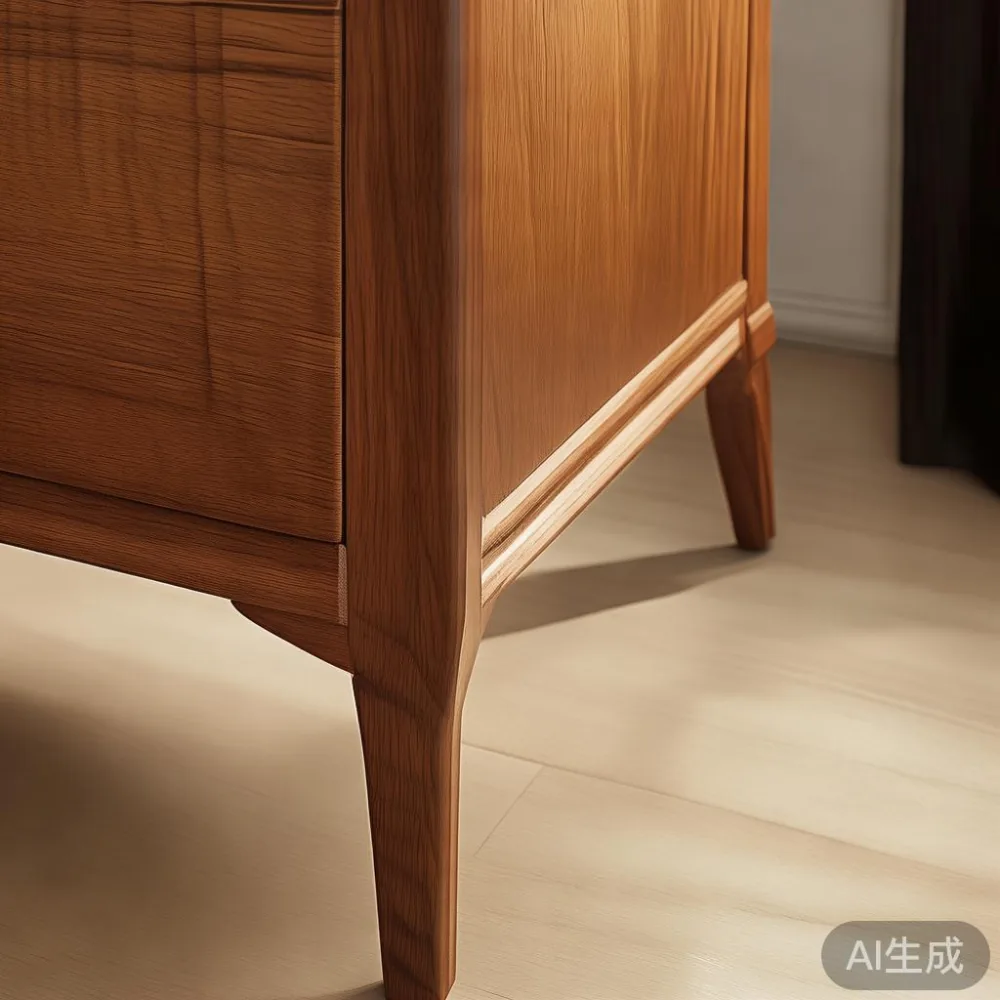
Year 1 — First damage:
Veneer: edge chip on the top left corner, S$45 in-house repair + S$15 touch-up pen. Solid wood: minor watermark from a water glass, wiped away with a damp cloth, S$0.
Year 2 — Climate stress:
Veneer: bottom drawer face warped, S$60 carpenter adjustment or you live with a sticky drawer. Solid wood: a faint hairline crack on the side panel — common in kiln-dried oak — S$0, because it stabilises by year 3.
Year 3 — Refinish or replace:
Veneer: cannot be sanded (sanding strips the 0.5 mm veneer layer), so you replace. Resale value on Carousell: S$40-60. Replacement cost of a similar new unit: S$199. Net spend so far: S$189 + S$60 + S$199 = S$448. Solid wood: light sanding (180-grit) and one coat of hard wax oil, S$35 in materials or a S$80 refinishing service if you outsource. Net spend so far: S$549 + S$80 = S$629.
Year 4 — Continued use:
Veneer: replaced unit shows scuffs, no repair possible. Solid wood: still in service, one drawer slide tightened, S$0.
Year 5 — End of comparison window:
Veneer total cost: S$448 + S$206 (replacement with GST) = S$654.
Solid wood total cost: S$629 + S$0 = S$629.
At year 5, the solid wood nightstand is already S$25 cheaper — and it still has another 10-15 years of service life, while the veneer unit is one humid season away from its second replacement.
Extend the window to year 10 and the gap widens dramatically. Veneer total: roughly S$1,060 (two full replacements plus repairs). Solid wood total: roughly S$709 (one mid-life refinishing at S$80). That is a S$350 difference, which is enough to cover a small bedside lamp, fresh bedding, or a 6-month grabfood subscription.
What "Solid Wood" Actually Means in a Foshan Factory
Not every nightstand labelled "solid wood" is the same thing. In Foshan workshops — and I toured three with a sourcing agent in March — the term covers at least four grades:
1. Finger-jointed solid wood: short 5-12 cm oak or ash pieces glued together. Structurally sound, price around S$349-449 for a nightstand, but the joint lines show under raking light.
2. Plank-panel solid wood: 18-25 mm single boards with 3-5 mm width variation. This is the MIDHILL sweet spot — kiln-dried to 8-10% moisture content so it survives Singapore shipping without cracking. Their 45×40×55 cm oak nightstand lands at S$549 delivered, with a 10-year structural warranty that explicitly covers joint failure and warping.
3. Quartersawn or rift-sawn premium: vertical-grain cuts that move less in humid climates. Often S$200-300 above plank-panel pricing.
4. Reclaimed or hand-finished: S$699+ for small-batch runs, often with French light luxury detailing such as fluted legs, brushed brass pulls, and a hand-rubbed matte finish that catches the bedside lamp beautifully.
The Foshan workshops that supply American light luxury brands typically use ash or white oak with a 6-8 step matte lacquer. The same workshops supply post-modern light luxury collections, which lean on slim 12 mm tops, geometric pulls, and softer curves. If your bedroom already has a solid wood bed frame or a marble table in the dining area, matching the nightstand to that grain colour matters more than matching the style label.
How Do I Style a American Country Accent Chair in a Small Apartment?
Pair it with a plank-panel solid oak nightstand, a cream boucle cushion, and one warm 2700K bedside lamp — the warm wood tones pull the chair's spindle legs forward without crowding a 10 sqm bedroom, and the nightstand's 45 cm width fits beside a standard 150 cm bed without blocking the wardrobe door.
This is the question I get most often from clients who buy an American country accent chair — usually a spindle-back or windsor-style piece in oak or ash — and then panic about the bedroom layout. The trick is repetition of material, not repetition of style. An accent chair is meant to contrast with the bed and the nightstand, so do not buy a matching set. Buy the chair for its silhouette and its comfort (most quality windsor-style chairs are 48-52 cm seat height, perfect for a 45 cm mattress), then anchor it with a solid oak nightstand that shares the chair's warm undertone. In a 10 sqm HDB bedroom, keep the nightstand depth at 40 cm or less — any deeper and you will elbow the chair every time you sit down. Push the chair into the corner opposite the wardrobe, ideally near a window for natural light, and let the nightstand do the visual heavy lifting on the bed side.
Delivery, Lifts, and the Coridor Test
A practical note that Singaporean buyers often forget: most HDB corridor widths are 1.2-1.5 m, and lift cabins in newer BTOs are 1.1 m wide × 1.4 m deep with a 630 kg load limit. A flat-pack nightstand in a 185×65×12 cm box will not fit up some Bukit Batok or Sengkang lifts diagonally; a fully assembled unit simply will not. This is why MIDHILL ships their nightstands knocked-down with a 5-minute cam-lock assembly, and why their free-shipping threshold (US$350, roughly S$475) covers most bedroom orders including a nightstand, a bed frame, or even a compact dining table. The flat-pack also protects the solid wood edges during the container voyage — I have opened enough Foshan cartons to know that a 25 mm oak edge in an unassembled box arrives cleaner than a fully built one.
For condo corridors in developments such as The Treasure At Tampines or D'Leedon, the lift cabins are larger but the service lift rules still apply between 10 am and 4 pm on weekdays. Plan your delivery for a Saturday morning if you work from home.
What I Would Buy Again
After tracking four nightstands across my own home and two relatives' units in Bedok and Punggol, my recommendation is straightforward: spend the extra S$340 upfront for a solid wood nightstand with a real warranty, kiln-dried to under 10% moisture, and a maker who offers lifetime refinishing. The S$189 veneer unit is fine for a guest room you use twice a year, or for a child's bedroom that will be redecorated before the MDF gives up. For a primary bedroom where the nightstand holds a phone, a glass of water, a book, and 2-3 hours of lamp light every night for the next decade, solid wood wins on month 60 of the comparison and keeps winning for another 120 months after that.
If your budget stretches a little further, look at the same Foshan workshops for the wider collection — a matching solid wood bed frame in the same oak or ash, a dining table with the same edge profile, and a slim wardrobe with the same pull hardware. The coherence across those pieces is what turns a flat into a room that feels considered, and it is what American light luxury and French light luxury showrooms have understood for decades: the nightstand is not a footnote to the bed, it is the piece you touch every single morning before your eyes are open.