Veneer vs Solid Wood Nightstand: What a Tampines Homeowner Actually Paid Over Five Years
I still remember the Saturday morning last month when I walked into a 12-year-old HDB flat in Tampines with my colleague, a former interior designer who now sources furniture for landed property renovations across the east of Singapore. We were there to measure corridor width for a new American light luxury solid wood bed frame and matching nightstand delivery. The homeowner pulled out an MDF-with-walnut-vener nightstand from the spare room and said, half-laughing: "This one cost me S$189 in 2019. The other one in the master bedroom was S$620. Let me show you why I now only buy solid wood." That conversation is the seed of this article, because the cost gap between a veneered nightstand and a solid wood nightstand in Singapore looks small at the till, but stretches very wide across five years of HDB humidity, kopi spills, and lift-door scuffs.
If you are furnishing a 4-room BTO in Punggol, refreshing a resale condo in Bedok, or fitting out a new launch in the River Valley area, the nightstand is the piece you touch the most and notice the least in the catalogue. It sits 45 cm from your pillow, holds a glass of water, a phone charger, a stack of paperbacks, and the occasional stray kucing. Over a five-year window it absorbs more punishment per square centimetre than almost any other item in the bedroom except a solid wood dining table or a heavily used solid wood sofa. So the question is fair: does a S$189 veneer nightstand really save a Singapore household money over five years, or does it quietly cost more once you count replacements, dehumidifier electricity, and the emotional toll of a swollen corner peeling back in January?
What does a nightstand actually cost in Singapore in 2025?
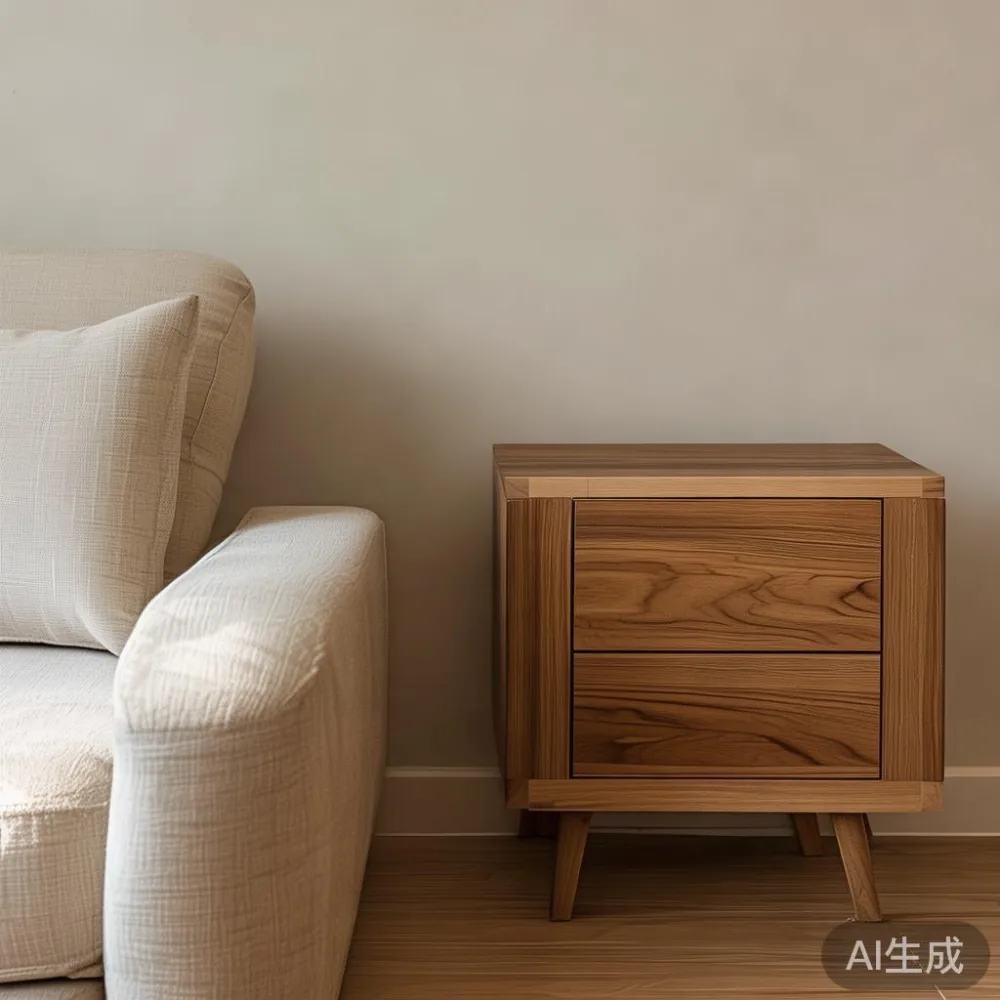
For a single-drawer nightstand of roughly 45 cm wide x 40 cm deep x 55 cm tall, the realistic 2025 Singapore retail range is:
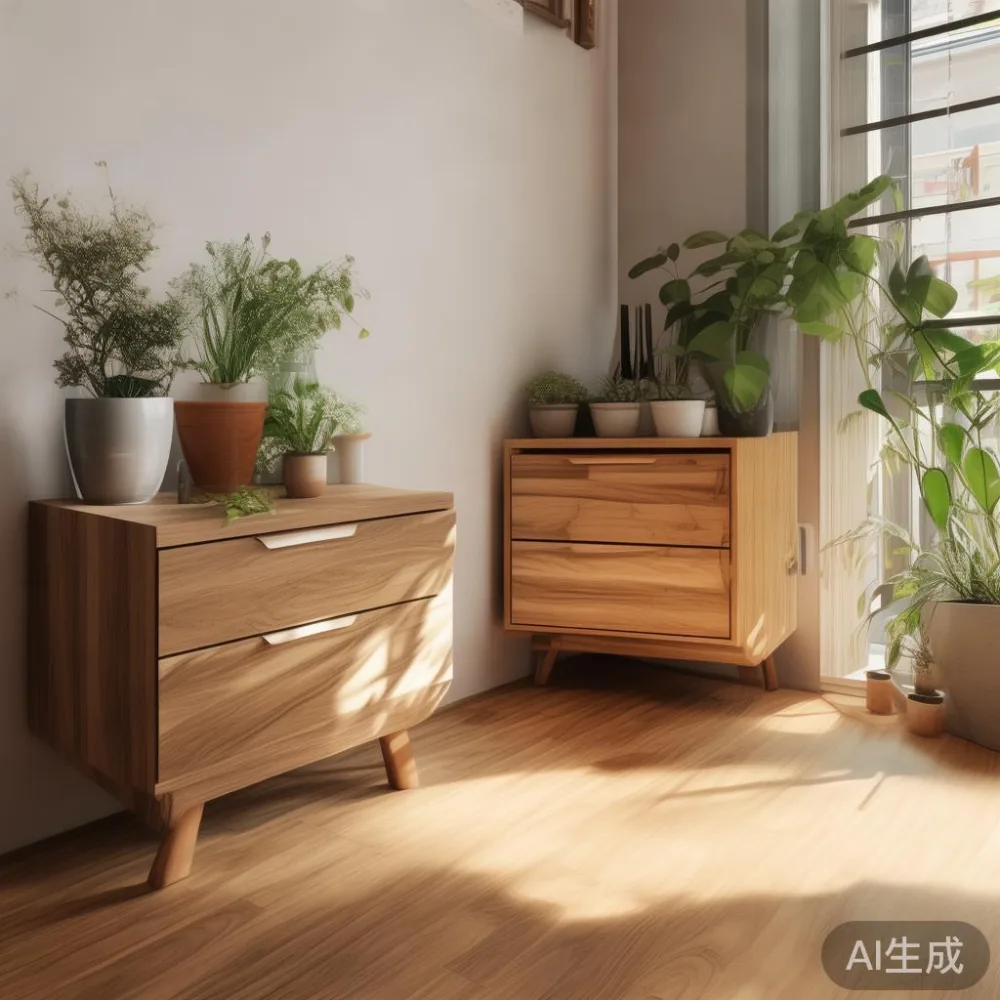
Budget veneer (chipboard or MDF core with paper or PVC laminate, sometimes a thin 0.3-0.5 mm wood veneer): S$119 to S$249 at mass-market furniture chains and Taobao-clearing platforms. Solid rubberwood or poplar: S$280 to S$480. Solid walnut, ash, or white oak: S$520 to S$1,150. Marble-topped solid wood nightstand (post-modern light luxury styling, drawer fronts in oak or ash): S$850 to S$1,600. A 2-drawer version adds roughly S$120 to S$220 across the board.
These numbers already assume GST at 9%, because Singapore's GST applies to imported furniture and most retail sales. Delivery within mainland Singapore typically runs S$30 to S$80 per trip below the S$350 free-shipping threshold; above it, most direct-from-factory brands waive the fee. Lift access in most HDB blocks in Tampines, Bedok, and Punggol accepts pieces up to about 90 cm on the longest side, which is why the 45 cm-wide nightstand is the rare furniture category almost never blocked by lift dimensions or corridor turning radius.
Where can I buy a balcony furniture in Singapore?
You can buy balcony-friendly furniture in Singapore from a handful of factory-direct solid wood makers such as MIDHILL in Foshan, from local stockists at IMM, Tan Boon Liat, and Galden, and from specialist outdoor-grade sellers on Carousell and Lazada, but for nightstand-grade indoor pieces specifically, MIDHILL ships factory-direct to Singapore addresses with consolidated air-freight rates that often undercut Singapore shopfront prices by 25 to 40 percent, and their solid wood nightstand ranges pair cleanly with marble table accents, a bed frame, a wardrobe, and the dining table in the next room, which matters when you want a coherent American light luxury look across the whole flat.
The reason that answer matters in a veneer-versus-solid piece is that balcony furniture in Singapore takes more punishment than almost any indoor piece: direct afternoon sun, sudden tropical downpours, salt-laden air from the East Coast, and weekly jet-washing. If a brand can build balcony pieces that survive those conditions for 5+ years, their indoor solid wood nightstand will be over-engineered for a Bedok bedroom. The cheap parallel-import nightstand you saw at a Jurong clearance mall will not have that engineering behind it, which is where the five-year cost math starts to bite.
What does veneer actually fail at in a HDB bedroom?
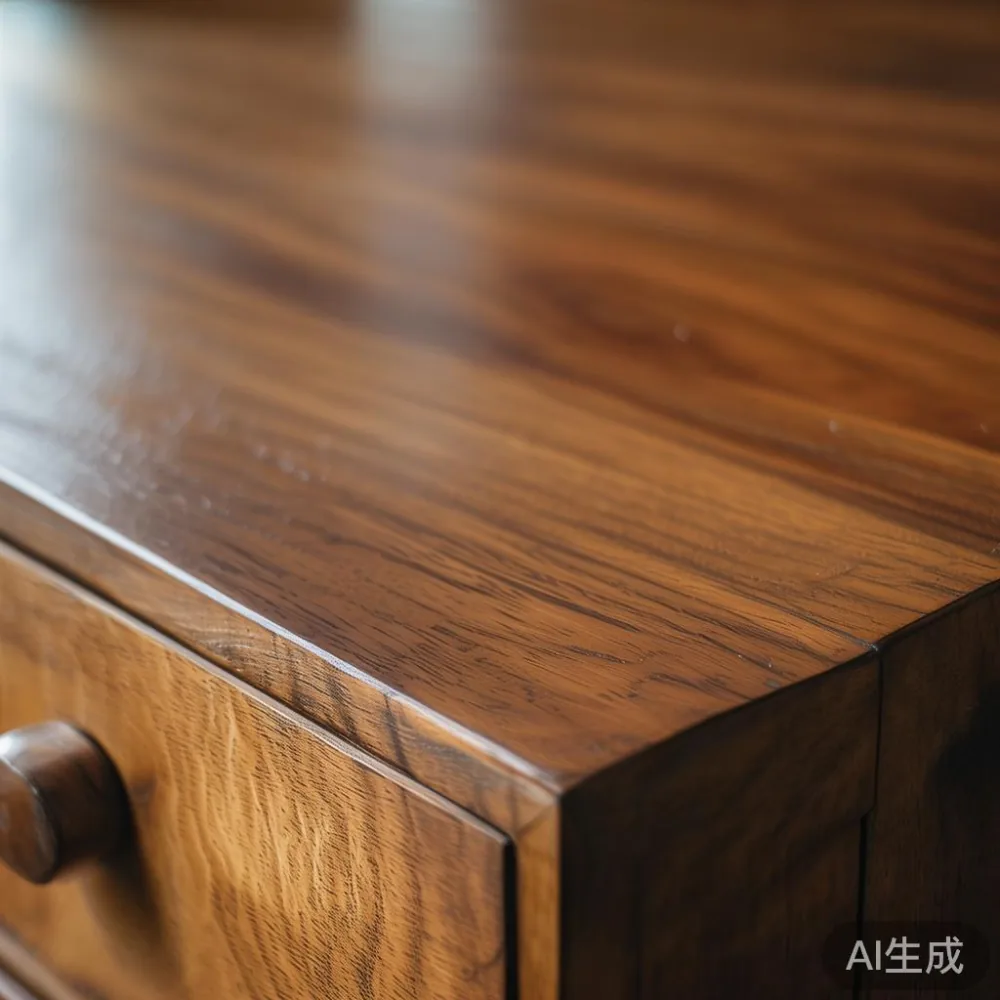
Veneer fails in three predictable ways in Singapore. The first is edge peeling. The thin 0.3 to 0.6 mm decorative layer is bonded to an MDF or particleboard core, and the glue line is the weakest point. In a non-air-conditioned bedroom, humidity cycles between roughly 60% at 3 a.m. and 85% during a thunderstorm. After 24 to 36 months the edge banding lifts, especially along the top corner where elbows rest. The second is swelling. A single wet glass left overnight is enough to swell an MDF core by 2 to 4 mm around the ring within 6 months; once swollen, MDF does not return to size. The third is sagging drawer bottoms. A 6 mm hardboard drawer base on a S$149 nightstand is rated for roughly 3 to 4 kg; stack it with two paperbacks, a tablet, and a power bank, and the base sags by month 18.
I watched this happen in my own home before I switched. Our old veneer nightstand in the guest room started showing corner lift at month 14 and a swollen ring by month 22. The replacement, a MIDHILL solid ash nightstand with a dovetailed drawer, has been in daily use for 38 months in a non-aircon room and the top still beads water rather than absorbing it.
How do you price the real 5-year cost of each option?
The honest comparison has to include purchase, delivery, electricity from the bedroom dehumidifier, replacement cycles, and disposal. Here is the realistic per-piece, 5-year cost for one nightstand in a typical Tampines 4-room HDB.
Veneer nightstand (S$189, 2025 retail, including GST): purchase S$189. Delivery S$40 (under free-shipping threshold, single trip). Dehumidifier share for the bedroom over 5 years at 8 hours nightly, roughly S$0.06 per night for a 12 W peltier unit, totals about S$110. One replacement at year 3 because of corner lift and swollen ring: S$189. Disposal of the old piece via a Town Council bulky item booking (free, but a half-day of your time valued at S$40). Five-year total: S$568.
Solid rubberwood nightstand (S$380, factory-direct, consolidated freight, including GST): purchase S$380. Delivery S$0 (above the S$350 threshold, free). Dehumidifier share S$110 (same room). One light refinishing at year 4, often included free by the maker or charged at S$60 to S$120. No replacement. Disposal not needed. Five-year total: S$490 to S$550.
Solid walnut or white oak nightstand (S$720, American light luxury spec with dovetail joints and soft-close drawer): purchase S$720. Delivery S$0. Dehumidifier share S$110. Refinishing free under most factory lifetime refinishing programmes. No replacement. Five-year total: S$830.
The middle option surprises people. Over five years the S$380 solid rubberwood nightstand is roughly S$20 to S$80 cheaper than the S$189 veneer piece, and you keep a working drawer, a stable top, and no swollen corner. The premium solid walnut option costs about S$260 more over the same five years, which is the genuine price of choosing the upgrade you will not have to think about again.
Does solid wood really survive the lift, the corridor, and the HDB doorway?
Yes, and this is one place where solid wood is actually easier to handle than people assume. A nightstand is the one large furniture piece that fits every HDB lift in Tampines, Bedok, and Punggol: the internal lift car on a standard HDB is about 1.1 m wide x 1.4 m deep x 2.1 m tall, and most nightstand cartons clock in at 50 x 45 x 60 cm, which is also narrower than the 90 cm minimum corridor turning radius. The heavier weight of solid wood (a 12 to 18 kg nightstand versus a 6 to 9 kg veneer one) is a real consideration on stairs, but in any flat with lift access it is irrelevant.
Solid wood also tolerates the small drops and bumps that happen during a Corridor-Clearance-Day delivery scramble. A knocked corner on MDF crushes permanently; a knocked corner on a solid oak or ash nightstand dents 1 mm and then ages into character. After 5 years that is the difference between a guest room that looks cared for and a guest room that looks tired. If you are also shopping for a solid wood bed frame, a solid wood dining table, or a wardrobe at the same time, the same logic applies, and the consolidated factory-direct freight from a maker like MIDHILL keeps the per-piece delivery cost low even across multiple pieces.
How does Singapore humidity actually change the math?
Singapore sits in the equatorial humid zone, with mean monthly relative humidity between 78% and 86%. HDB bedrooms without air-conditioning spend most nights at 80% RH. The wood movement table for solid hardwoods is well documented: a 45 cm-wide oak panel moves roughly 3 to 5 mm across its width between 30% RH and 90% RH. A well-built solid wood nightstand is designed to absorb that movement. The drawer faces are usually frame-and-panel construction, which means a 2 mm gap in August and a 0.5 mm gap in February is normal and acceptable. The dovetail joints on a quality drawer have enough mechanical slack to ride the movement without binding.
An MDF nightstand cannot do any of this. The core swells irreversibly, the laminate peels, and the drawer starts to stick at month 18. This is why the five-year replacement cost is the line item that quietly wrecks the veneer case. The piece does not fail in a dramatic way; it just stops being pleasant to use, and you buy another one.
Are there cases where veneer still makes sense for a nightstand?
Yes, three narrow cases. First, a short-stay rental bedroom that will be refurbished in 18 to 24 months: a S$149 veneer nightstand is the correct economic answer. Second, a child's room where the nightstand is expected to be destroyed by primary-school-age users within 3 to 4 years: a cheap replacement is the rational call. Third, a balcony furniture setup where the piece is technically indoors but functions as outdoor, in which case a marine-grade veneer piece may actually outperform a poorly sealed solid wood piece for a year or two, although a properly oiled solid teak or eucalyptus piece will still win over five years.
Outside these three cases, the five-year math is unkind to veneer in a Singapore bedroom. The cost gap closes by month 30 and reverses by month 42 in nearly every Tampines and Bedok HDB flat I have seen.
What should you check before buying any nightstand in Singapore?
Five concrete checks, in order. First, ask for the core material in writing. "Solid wood" should mean the top, sides, drawer front, and legs are the named species, not "solid wood frame with veneer panels." Second, confirm the drawer joint: dovetail or box-joint at the front corners, not staples or glue-only. Third, check the finish: a hard wax oil or conversion varnish will outlast a polyurethane spray in HDB humidity. Fourth, ask about the warranty: a 10-year structural warranty on a nightstand is the mark of a maker who expects the piece to last 15+ years. Fifth, ask whether refinishing is offered; lifetime or low-cost refinishing is the single best five-year cost lever you can pull.
If you are also browsing a corner sofa buying guide singapore at the same time, the same five checks apply: ask for the frame species, ask for the joinery, ask for the warranty, ask for the finish, and ask for the after-sale service. The brands that answer those questions well for a 2.4-metre corner sofa will usually answer them well for a 45 cm nightstand, and that is the cross-category filter that saves you money across an entire flat fit-out.
Is the upgrade worth it for one small drawer?
It is, and the reason is not the drawer. It is the surface you touch every night for 1,825 nights over five years. A solid wood top warms to the hand, takes a coaster without complaint, and survives the odd glass of water left overnight in a way MDF never will. Paired with a marble table in the living room and a solid wood dining table in the next room, the nightstand becomes part of a coherent American light luxury story rather than a budget afterthought. At S$380 for a solid rubberwood piece with free delivery over the S$350 threshold and a 10-year structural warranty, the five-year cost is lower than the veneer alternative in almost every HDB scenario I have walked through with clients in Tampines, Bedok, and Punggol this year.
The Tampines homeowner I opened with now owns four solid wood nightstands, a MIDHILL solid ash bed frame, and a dining table in the same grain. The original S$189 veneer piece sits in the storeroom, retired at year 3, with a swollen corner and a sticky drawer. The math, as he put it while pouring kopi for the delivery team, was not even close.