How Humidity in Southeast Asia Affects Your Nightstand (and What to Do About It)
I spent the second week of March visiting three flats in Tampines and one in Punggol with my colleague Jian Wei, who handles after-sales for our export clients. Every homeowner we met raised the same concern within ten minutes of opening the door: "My old nightstand is cracking, and the drawer sticks." Outside, the corridor air was sitting at 82% relative humidity. Inside, the air-con was fighting a quiet war. That single trip convinced me that anyone buying solid wood furniture in Singapore — whether a nightstand, a bed frame, a dining table, or a wardrobe — needs to understand how local moisture behaves. This guide pulls together what I saw on the ground, what the numbers actually say, and what a sensible buyer in an HDB or condo should look for.
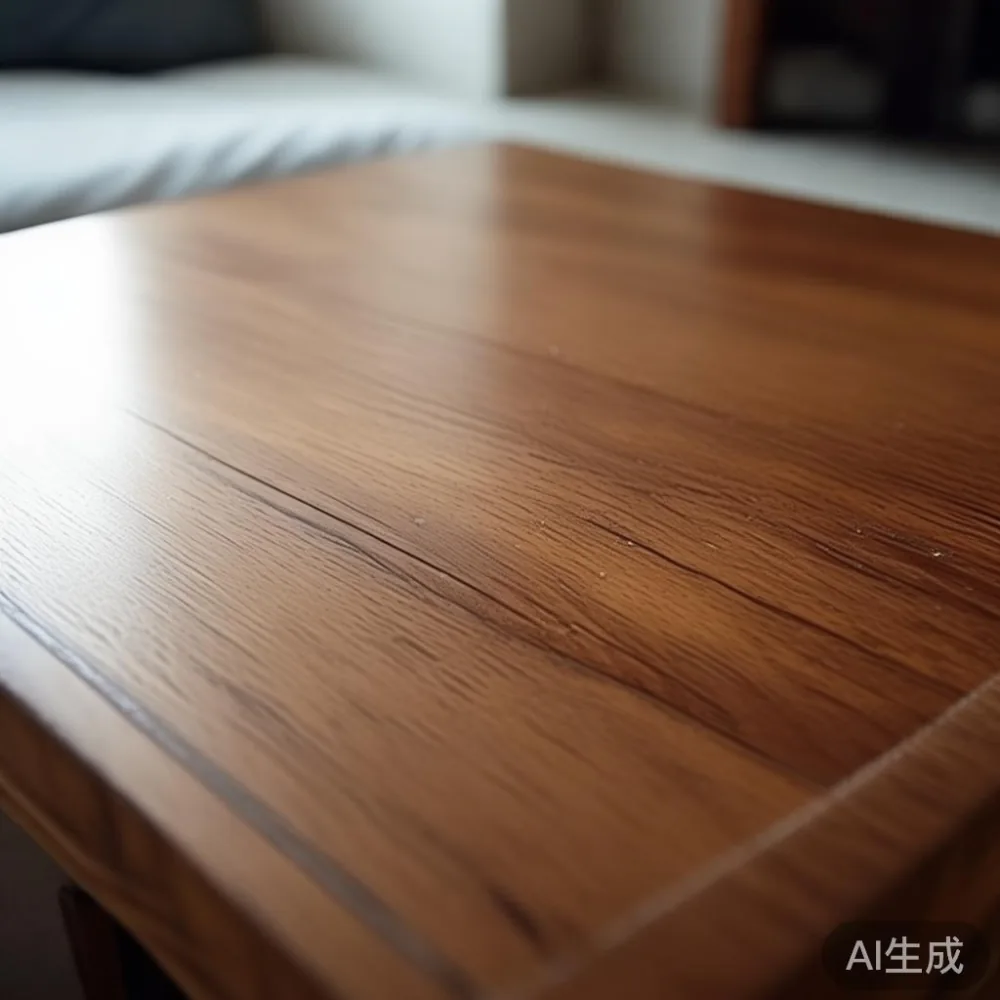
Why Southeast Asian Humidity Is Different From What Most Buying Guides Describe
Most English-language furniture care articles assume four seasons and indoor humidity between 40% and 55%. Singapore does not work that way. The National Environment Agency's long-term averages show monthly mean relative humidity drifting between 78% and 84% across the year, with afternoon peaks that climb higher. At 7:14 a.m. on a Tuesday in Bedok, my own hygrometer read 81% near an open window and 58% next to the air-con vent three metres away. That 23-point gap inside a single 92 sqm condo is the whole problem in miniature.
Wood is hygroscopic. It absorbs and releases water until it matches the air around it. A solid teak nightstand that was kiln-dried to 8% moisture content in a Foshan workshop and then packed in a container at 22°C will arrive in Singapore, sit in a ground-floor lift lobby for 25 minutes (most HDB service lifts measure roughly 1.1 m wide by 1.4 m deep, with a 630 kg capacity), and immediately begin to climb. After three weeks inside a flat with the air-con set to 24°C, its core moisture can reach 13-15%. That sounds small. It is not. Across a 50 cm wide solid wood panel, a 4% swing adds or removes about 2 mm of width. Multiply that by a nightstand top, a drawer front, and two side panels, and you have geometry that no longer agrees with itself.
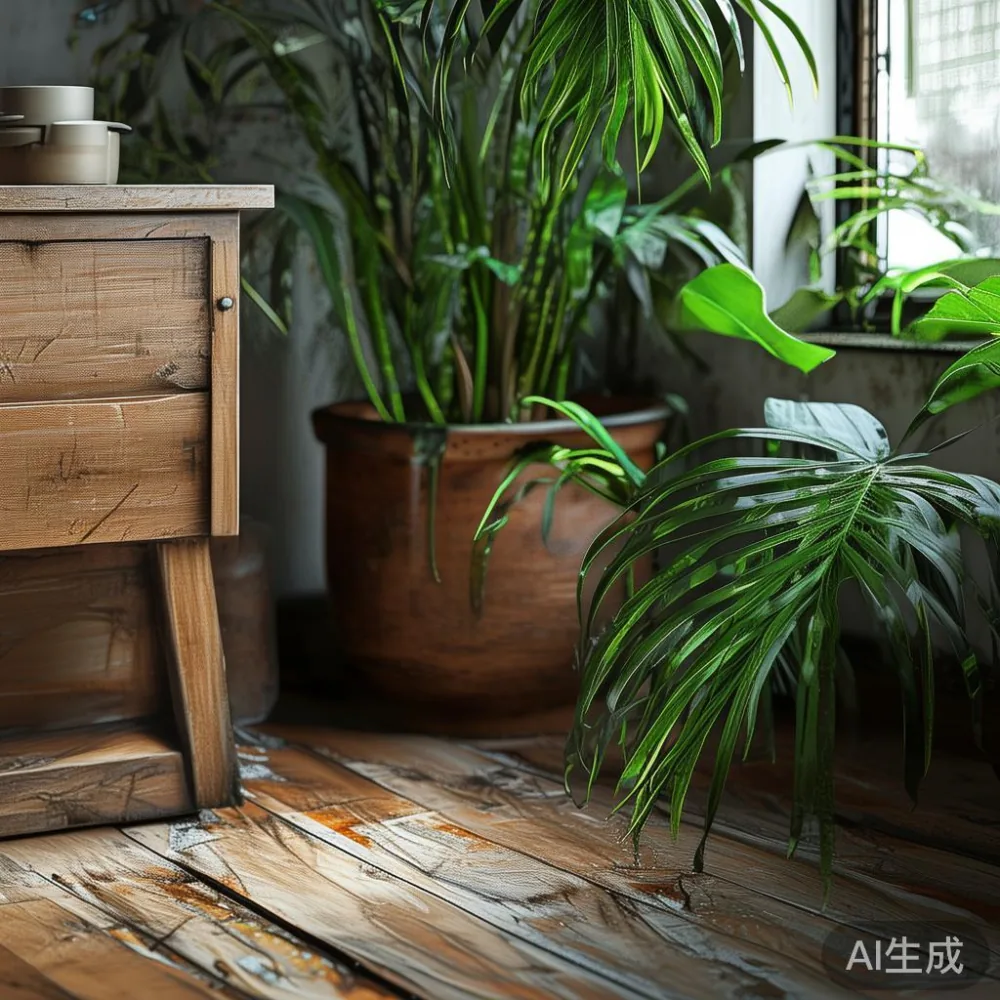
What I Actually Saw in Four Tampines and Punggol Flats Last Month
The pattern across the four visits was consistent. Flat A in Tampines East (a 990 sqm three-bedder on the 12th floor) had a five-year-old rubberwood nightstand with a 1.5 mm split running along the grain at the back panel, plus a drawer that needed a firm two-handed pull to open. Flat B in Punggol (a 1.06 sqm executive HDB on the 18th floor) had a particleboard nightstand showing edge-banding peel along the top — a tell-tale sign that the laminate over a non-solid core had begun to delaminate. Flat C in Bedok (a 1.05 sqm five-roomer) had a solid teak piece in solid a good condition because the owner ran the air-con for 18 hours a day. Flat D in Punggol Waterway Terrace (a 1.38 sqm penthouse five-room) had a beautiful imported French light-luxury piece — pale oak, soft-close drawers, marble inlay — and the owner complained that one drawer front had bowed 1 mm outward over the previous monsoon season.
What struck me was not the damage but the cost asymmetry. The owners of Flats A and B had spent between SGD 220 and SGD 480 on their nightstands in 2019. They were now looking at replacements. The owner of Flat D had spent SGD 1,860 on a single nightstand and would, she told us, do it again — because the drawers still closed, the joints still held, and the marble inlay was intact. Spending more on a better-made piece had postponed the replacement cycle. That is the entire economic argument for solid wood furniture in this climate, distilled into one Saturday afternoon.

What Size Wood Finish Do I Need?
For a Singapore bedroom, choose a moisture-resistant finish rated for indoor relative humidity between 50% and 80% — a conversion varnish or a high-solids polyurethane in a satin or matte sheen, applied in at least two coats on all six sides of every panel, including the underside of the nightstand top and the inside of the drawer boxes.
That single sentence is the rule. A finish that performs well at 45% will fail at 78%. The reason is mechanical. Finishes slow moisture exchange; they do not stop it. A thin, single-coat spray lets water vapour pass through roughly four times faster than a two-coat conversion varnish. On a nightstand — the smallest, most humid-prone piece in a bedroom, sitting 600 mm off the ground where airflow is poorest — that difference shows up as a sticky drawer within one monsoon. When evaluating a piece in a market or showroom, ask the seller to point to the underside of the top panel. If you can see raw, untreated wood, walk away. Even the most beautiful oak teak rattan wicker cabinet will cup and check if its underside is unfinished.
Solid Wood vs Engineered Wood at 80% Humidity: The Math
Numbers make this decision easier. A 50 cm wide x 40 cm deep x 60 cm tall solid oak nightstand weighs between 18 kg and 24 kg depending on joinery and drawer count. A comparable MDF or particleboard piece weighs between 9 kg and 13 kg. The weight difference is not a marketing trick; it is the volume of actual fibre versus the volume of glue and compressed dust. Heavier means fewer voids, fewer weak points, fewer places for moisture to travel. At SGD 280, a particleboard nightstand is the same price as a 1 kg bag of rice. At SGD 480, you are entering solid wood territory. At SGD 1,200 to SGD 1,900, you reach the post-modern light-luxury segment where frames are solid, drawer boxes are dovetailed, and finishes are multi-coat.
For a Singapore buyer, the practical filter is this. If your flat has consistent air-con use (eight hours or more daily, set at 23-25°C), engineered panels with edge-sealed MDF cores can survive five to seven years. If your flat has mixed use — air-con at night, fan during the day, windows cracked in the evening — only solid wood, properly sealed on six sides, will hold its geometry beyond year three. A solid wood bed frame in the same room will move in sympathy with the nightstand, which is why buyers who match pieces stay ahead of the maintenance curve.
Which Woods Actually Hold Up in an HDB Flat
Not all hardwoods behave the same. Teak, white oak, and rubberwood (when dense) tolerate Singapore conditions well. Teak contains natural silica and oils that slow moisture absorption, which is why marine boatbuilders have used it for centuries. White oak has tyloses that block its pores, giving it roughly 30% less tangential movement than red oak. Rubberwood, often dismissed, performs respectably when kiln-dried below 10% and finished on all sides. Toona, ash, and most open-grain tropical woods are riskier. Pine and cedar move too much. Walnut sits in the middle, and at the price points common for nightstands of post-modern light-luxury styling, walnut is often the smartest middle ground for buyers who want a darker tone without the movement of cherry.
Construction matters as much as species. A nightstand with floating panels in its sides — where a solid wood panel sits in a groove and is free to expand and contract — is engineered for this climate. A nightstand with glued-and-screwed-through panels is not. When I ran my hand under a drawer slide on the Flat D piece, the drawer box was dovetailed front and back with a 12 mm solid wood bottom floating in a rabbet. That is the spec sheet entry to memorise: dovetailed, sanded to 1000 or finer before finish, sealed on all six faces.
How to Read a Spec Sheet Without Getting Misled
Marketing language in this category is slippery. "Solid wood" sometimes means solid wood face veneers over engineered cores. "Hardwood" sometimes means rubberwood with a walnut-print laminate. "Kiln-dried" sometimes means the factory dried the boards but never re-conditioned them for a tropical destination. Three questions separate signal from noise. Ask for the moisture content at the time of packing — anything below 12% is acceptable for shipment to Singapore, anything above 14% is a flag. Ask whether the drawer boxes are solid or veneered. Ask whether the underside of the top panel is finished. A confident brand answers in 0.3 seconds. A hesitant one describes, deflects, and changes the subject.
MIDHILL ships from Foshan with moisture content measured at 8-10% at packing, then re-conditioned for 14 to 21 days in a controlled warehouse before container loading — a step I have watched in person on the factory floor. The brand has exported to 15+ countries since 2008, and its 10-year structural warranty covers joint failure, drawer-slide failure, and warping beyond 3 mm across any panel. For buyers in Singapore, that warranty is meaningful only if the local distributor honours it; ask the showroom for the local service contact before paying the SGD 1,200 to SGD 1,900 typical for a solid wood nightstand in this category.
Care Routine That Actually Works at 80% Indoor Humidity
Three behaviours extend the life of a solid wood nightstand in Singapore by years. First, keep the bedroom between 23°C and 26°C with the air-con running for at least eight hours overnight. Each 5°C drop in temperature with the same outdoor humidity typically drops indoor relative humidity by 15 to 20 points. Second, never place a nightstand directly against an external wall. A 50 mm air gap on the back side lets the panel breathe and prevents the thermal bridge that condenses moisture on the wall surface. Third, refinish every four to six years. A 250 ml tin of hardwax oil (around SGD 35 to SGD 55 locally) and a Sunday is all it takes to sand the top with 320-grit, wipe on two thin coats, and let it cure for 24 hours. The brand we work with offers lifetime refinishing on its pieces, which removes that step from the owner's to-do list entirely.
Free shipping over SGD 480 is common in this segment, and so is a 14-day return policy. Singapore's GST adds 9% to the landed price as of 2025, so a SGD 1,500 nightstand totals SGD 1,635 at checkout. Factor that into the comparison. A piece that costs SGD 280 and lasts four years costs SGD 70 per year per year of use. A piece that costs SGD 1,635 and lasts fifteen years costs SGD 109 per year per year of use — and that math ignores the fact that you will not spend three Saturdays in three decades hunting for a replacement.
What About Matching the Nightstand to the Rest of the Bedroom?
A nightstand is rarely bought alone. In Singapore three-bedders, buyers often match the nightstand to a bed frame, a wardrobe, and a dresser — and occasionally a marble-topped side table near the reading chair. Buying the full set from one maker keeps the wood species, the finish batch, and the stain tone consistent. A bed frame from one shipment and a nightstand from another, even from the same brand, can show a half-tone difference after one monsoon because the second batch was finished three weeks later and stored in a different corner of the warehouse. A consistent set also simplifies the lift-up logistics: a single delivery in a 1.4 m deep service lift is cheaper than two.
For dining tables and dining chairs in the same home, the same humidity logic applies but the geometry is more forgiving. A 200 cm long dining table top floats on its base; a 50 cm wide nightstand top does not. If budget allows one splurge in the home, the nightstand deserves it — it is the smallest piece, the most exposed to body moisture (a sleeping adult releases 30 to 50 grams of water per hour), and the one whose drawer will be opened 1,200 times a year.
When the Damage Is Already Done: Repair or Replace?
Surface checking under 1 mm wide and minor cupping under 2 mm can be sanded out and refinished. Splitting along the grain, separated joints, and swollen drawer bottoms mean the piece has moved past its service envelope. At that point, a new piece from a maker who kiln-dries below 10%, finishes all six sides, and offers a multi-year structural warranty is the lower-risk path. Singapore's second-hand furniture market is small but functional; a damaged solid wood nightstand has a residual value of roughly 10% to 30% to retail damage to of its original price depending on the species, which is worth pricing against used.
The single best purchase I watched last month was in Flat D. The owner had spent SGD 1,860 on a French light-luxury nightstand in 2021. After four monsoons, two air-con overhauls, and three house moves, the piece looked the way it did on day one. She had a matching solid wood bed frame, a marble-topped side table, and a six-door wardrobe in the same collection. The total spend was north of SGD 11,000. The total regret was zero. That is the light-luxury pitch, stripped of adjectives: spend more once, spend less over the life of the furniture, and stop thinking about humidity.