How to Choose the Right Size Nightstand for a Singapore HDB Living Room
If you live in a Singapore HDB flat in Tampines, Bedok, Punggol, or Jurong West, your living room often pulls double duty: it is the place you entertain, the place your kids do homework, and sometimes the room where a guest sleeps on a sofa bed. Choosing the right furniture for that room is rarely about buying the largest piece you can find. It is about matching dimensions to a layout that is constrained by lift doors, corridor widths, and a floor plan that was drawn by the Housing Development Board decades ago. In this guide I will walk you through how to size a nightstand, a nightstand within a sofa-and-side-table setup, a nightstand-style end table, and the matching pieces around it (a solid wood sofa, a bed frame, a dining table, a wardrobe, and even a marble table for the entryway), so your HDB living room feels proportionate, calm, and quietly luxurious without fighting the architecture.
Why "size first" matters more than "style first" in an HDB
Most HDB flats in Singapore ship with a living room footprint between roughly 14 sqm and 22 sqm, depending on whether you live in a 4-room BTO (Build-To-Order) flat or a 5-room executive unit. After you place a three-seater sofa, a TV console, and a coffee table, you typically have about 2.4 m by 1.8 m of clear walking space left in the middle of the room. The mistake I see again and again is people choosing a side table that looks great on a showroom floor but ends up colliding with the corridor door swing or the air-conditioning ledge.
Last month I visited a three-generation flat in Tampines GreenRidges. The homeowner had bought a pair of chunky side tables, each 60 cm deep, to flank a 2.6 m sofa. On paper the numbers worked: the sofa was 220 cm wide, the side tables were 55 cm wide. But because the corridor door to the kitchen opened inward at a 90-degree angle, every time someone walked past with a tray, the table corner caught their hip. We replaced both pieces with 40 cm deep end tables and shifted the sofa 15 cm away from the wall. The same seating capacity, zero bruises, and the room visually opened up by about 1.2 sqm of usable floor.
This is the principle I will keep returning to: in a Singapore HDB, the constraint is not your budget for furniture; it is the geometry of doors, walls, and corridors. That is where sizing starts.
Measure the room before you measure the nightstand
Before you fall in love with any piece, spend 20 minutes with a steel tape and a piece of A4 paper drawing your living room to scale at 1:50 (1 cm on paper = 50 cm in real life, or 1 inch = 4 feet). Mark these points:
- The width of your main doorway, usually between 80 cm and 90 cm for a fire-rated HDB front door, plus the door swing arc.
- The corridor width, which for most HDB blocks sits between 1.2 m and 1.5 m.
- The lift opening inside the lift car, often 80 cm wide by 2.1 m tall on a standard passenger lift. Any box longer than 2.0 m or wider than 75 cm will not fit vertically through certain lift doors in older blocks.
- The height and depth of your air-con ledge, typically 30 cm to 40 cm deep and 2.2 m to 2.4 m above the floor.
- The location of your power sockets, the TV point, and any fibre routing.
Bring these numbers to every furniture store you visit, including the MIDHILL showroom in Foshan where many Singapore dealers source solid wood sofa and bed frame sets. A piece that is 5 cm too wide for your corridor is non-negotiable; a piece 5 cm too tall for your lift will not even reach your floor. Plan the geometry before you plan the colour.
What size nightstand actually means in a Singapore HDB?
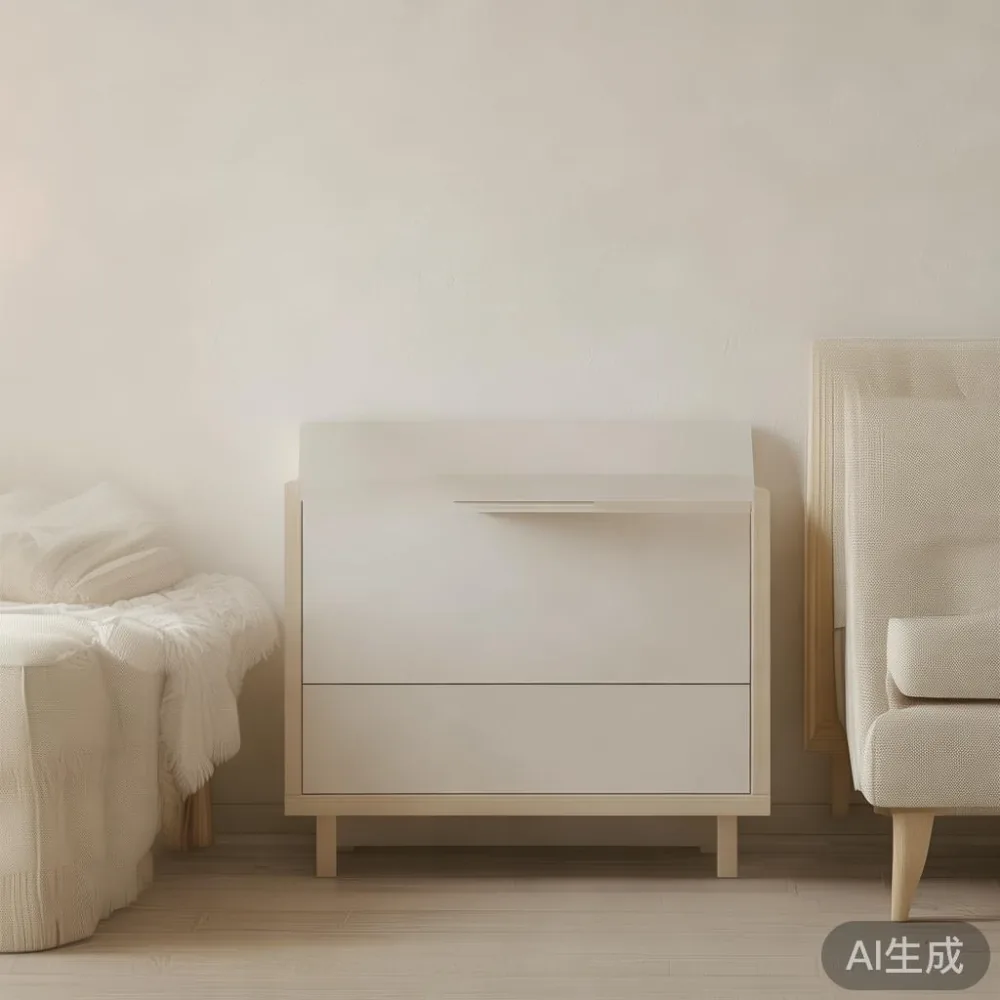
A nightstand is, by definition, a small bedside cabinet, but in a Singapore HDB living room it usually doubles as an end table next to a sofa, a side table next to a reading chair, or even a stand-in coffee table for a studio apartment. So when people search online for a nightstand in this context, they almost always mean a low, single-drawer side table roughly between 45 cm and 65 cm tall, with a top surface between 40 cm and 55 cm wide and a depth between 35 cm and 50 cm.
Why these numbers?
- Height 45-65 cm. The seat height of most HDB-appropriate sofas is 42-48 cm (a low-profile modern style) or 46-52 cm (a deeper, more lounge-style seat). Your nightstand top should sit within 5 cm of the seat cushion, ideally 2-3 cm above. That way a cup of kopi reaches the surface without you having to lean, and a reading lamp casts light at shoulder level rather than into your eyes.
- Width 40-55 cm. Any wider than 55 cm and the nightstand starts visually competing with the sofa. Any narrower than 40 cm and it stops holding a laptop, a lamp base, and a phone charger at the same time.
- Depth 35-50 cm. Anything deeper than 50 cm eats into the walkway between the sofa and the wall. In a typical HDB corridor-facing wall, you have only 90 cm to 110 cm between the sofa back and the opposite wall; a 50 cm deep nightstand plus a 95 cm deep sofa leaves you with 0 cm of walking lane. Choose 40 cm depth if the gap is tight.
If you need extra storage, look for a nightstand with one drawer and one open shelf, roughly 45 cm wide, 40 cm deep, and 55 cm tall. That footprint will hold chargers, a Straits Times paper, two remotes, and a small lamp without ever crowding the walkway.
How do I match a nightstand to my existing sofa without breaking the flow?
The short rule: let the nightstand be quieter than the sofa, never louder. If your sofa is a heavy, deep-tufted, French light luxury design in warm caramel leather, choose a simple nightstand in the same wood family but with a thinner profile and no hardware. If your sofa is a slim American light luxury piece in oat-coloured boucle, choose a nightstand with a slightly stronger leg and a stone or marble top so the eye has somewhere to rest.
Concretely, here is the matching checklist I use when I help buyers in Bedok Reservoir and Punggol East:
- Sofa seat height + 2-3 cm = nightstand top height. If the sofa seat is 46 cm, the nightstand top should be 48-49 cm.
- Nightstand width should sit between 60 percent and 75 percent of one sofa cushion width. A three-seater with three 70 cm cushions gives a cushion width of 70 cm; the nightstand should therefore be between 42 cm and 52 cm wide.
- Pick the same wood tone, or deliberately go one shade lighter. For a solid wood sofa frame in white oak, pair it with a white-oak nightstand; pair a walnut sofa with a walnut nightstand. Going from walnut to a bright maple will read as a mismatch in a small HDB living room.
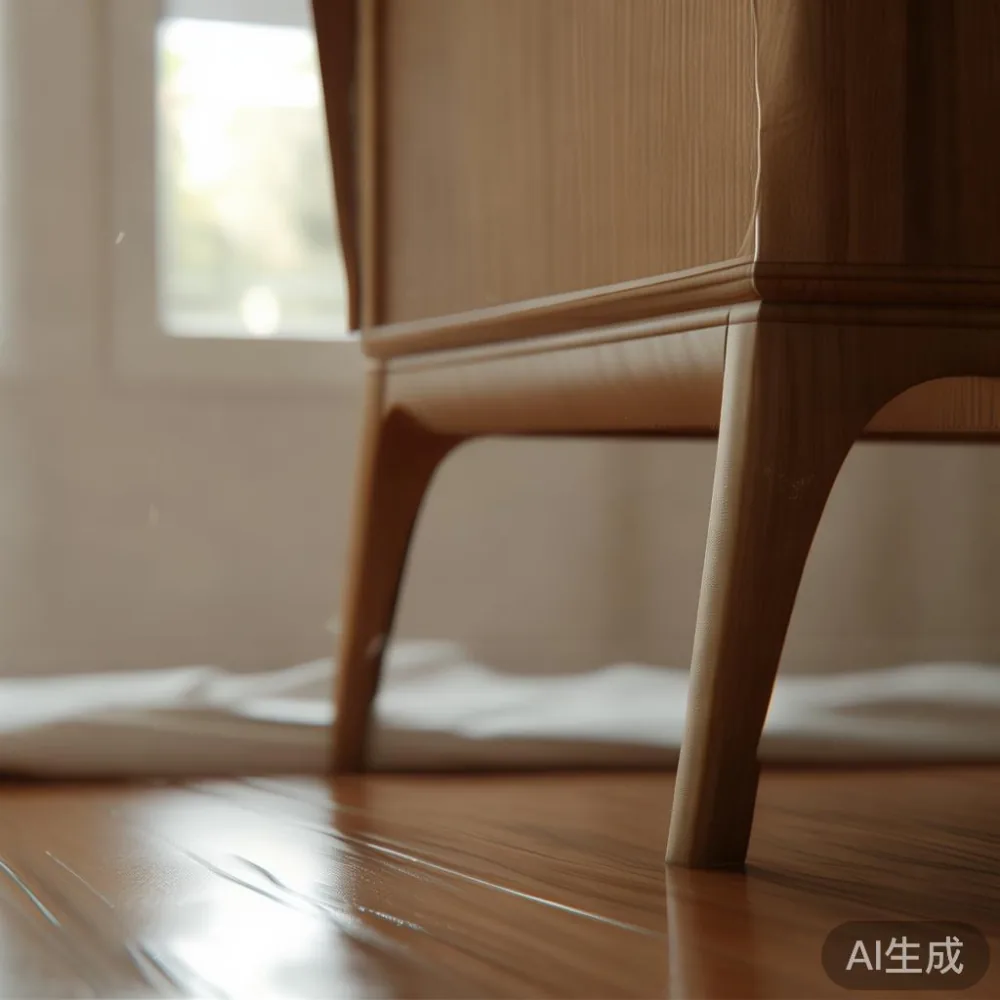
- Match the leg language. Tapered mid-century legs on the sofa call for tapered legs on the nightstand; a chunky post-modern plinth base on the sofa calls for a similarly grounded side table.
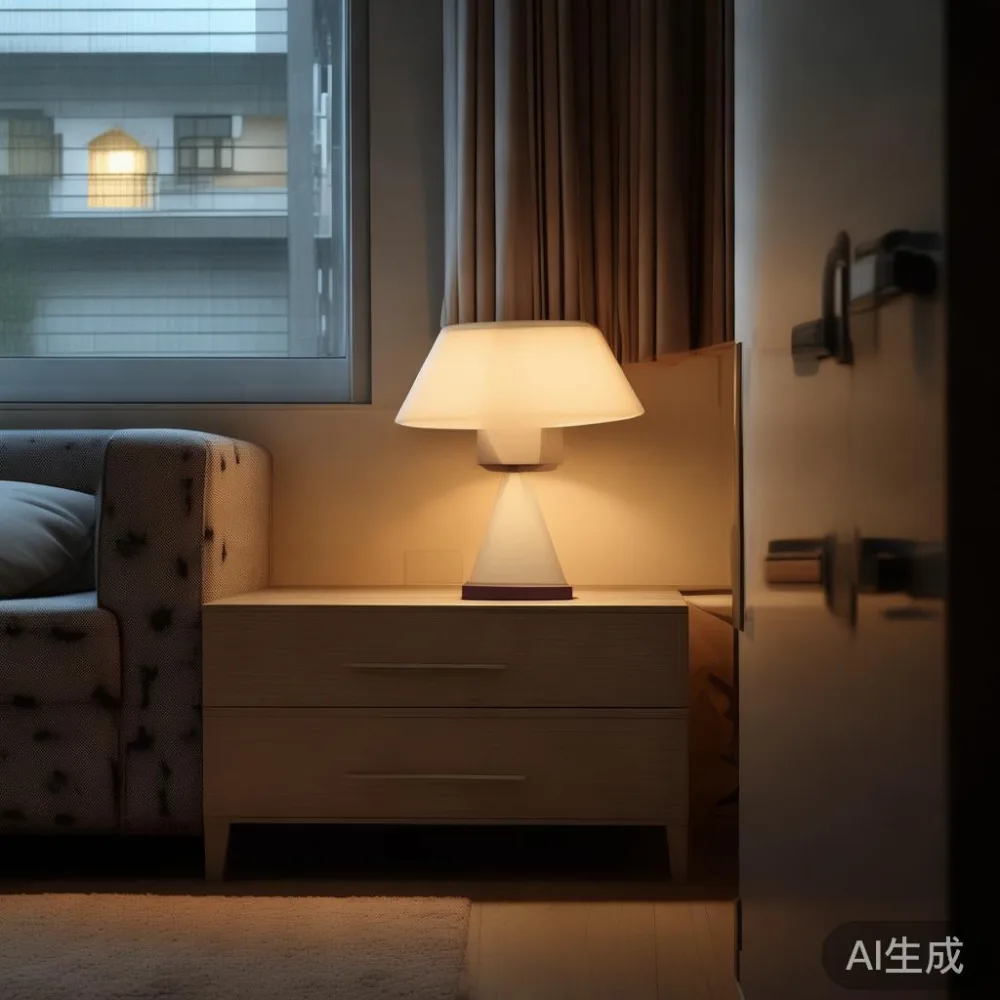
- Mind the lamp. A table lamp on a nightstand should be between 30 cm and 40 cm tall total. Anything taller fights the room, especially in HDB flats with 2.6 m to 2.8 m ceilings.
You will notice I have not mentioned what is the most expensive piece or what is the cheapest. Both paths lead to a room that is hard to live in. The right path is the one where the geometry, the materials, and the light all agree.
Which nightstand size works in a 4-room, 5-room, and executive HDB?
Let us put numbers against the three most common HDB layouts I see buyers furnishing.
4-room BTO (around 65-70 sqm, living room 14-16 sqm). Stick to a nightstand of 45 cm wide x 40 cm deep x 50 cm tall. Pair it with a 2.1 m to 2.3 m solid wood sofa in a slim profile, and a coffee table of 110 cm x 55 cm. Anything chunkier than this and the room will feel like a furniture showroom rather than a home.
5-room HDB (around 90-100 sqm, living room 18-22 sqm). You can go up to 50-55 cm wide and 45 cm deep on the nightstand. If you want a statement piece, this is the room for a piece with a marble top and brass-tipped legs. The same room can comfortably hold a three-seater solid wood sofa plus a separate single armchair with its own side table.
Executive HDB or DBSS flat (around 110-130 sqm, living room 20-26 sqm). A 60 cm wide x 50 cm deep x 55 cm tall nightstand is appropriate, especially if you entertain often. This is also the only HDB layout where a true French light luxury mirror cabinet or console, say 120 cm wide x 35 cm deep, can stand against the dining wall next to a dining table without crowding the room.
Across all three layouts, leave at least 70 cm of clear walkway between any piece of furniture and the next. Singapore homes regularly host elderly parents in their seventies and eighties, and 70 cm is the comfortable passage width for someone using a cane or a rollator. (For reference, the Singapore Building & Construction Authority's code recommends at least 1.0 m of corridor clear width for accessibility in public spaces; inside a private flat, 70 cm is a sensible interior target that does not waste floor space.)
Will the nightstand fit through my lift and corridor?
This is the question I wish every buyer asked before they paid. Many HDB blocks in Tampines North and Punggol were built in the 2000s and feature lift cars around 1.4 m deep x 1.2 m wide, with door openings of 80 cm. Older blocks in Bedok and Toa Payoh sometimes have narrower door openings of 75 cm. A nightstand is rarely the problem; the solid wood sofa and the wardrobe are the pieces that need careful measuring.
Practical rules I share with buyers in Singapore:
- Anything over 2.0 m long, including the box it ships in, will not fit vertically in many older HDB lifts. Plan for the box to be tilted on its side.
- The packaging of a solid wood sofa can weigh between 70 kg and 110 kg, so plan for two strong friends and a trolley, not one delivery driver on a hand truck. MIDHILL ships internationally with a wood-frame export crate, and many Singapore buyers report that the inner carton was about 18 percent lighter than the equivalent piece from a competitor.
- If you order a marble table, expect the top to ship separately from the base. Marble tops in the 110 cm x 60 cm range weigh 35-45 kg on their own; carry them upright with a helper.
- For a nightstand you are usually safe, because the assembled piece rarely exceeds 60 cm in any one dimension and weighs under 25 kg.
When you compare landed prices including GST (Goods and Services Tax) of 9 percent in 2025, plus delivery charges to a Tampines address (typically SGD 60-120 for a single piece), do not forget to compare the return window. A 14-day return is generous; a 7-day return is tight once you add GST and delivery. MIDHILL's 14-day return policy is one reason first-time buyers in Punggol are willing to order a nightstand sight-unseen.
How do I balance the nightstand with a marble table, dining table, and wardrobe nearby?
An HDB living room often opens onto the dining area without a dividing wall, and the entryway may hold a small console or marble table. The risk is that the wood species, the stain, and the metal finish all start fighting each other. Three guidelines:
- Pick one dominant wood. If the bed frame in the master bedroom is white oak, and the wardrobe is white oak, then the nightstand, the solid wood sofa frame, and the dining table should all be in the same white oak family. Your eye will knit the rooms together even when the door is closed.
- Pick one accent material. Travertine on the marble table in the entryway, or brass pulls on the wardrobe, or a brushed nickel leg on the nightstand. Three accents make a small flat look like a sample room.
- Pick one upholstery direction. Linen-cotton blend in the sofa, bouclé on the armchair, velvet on the dining chairs. Three textures will keep the room calm. A fourth, no matter how pretty, tips the room over.
If your living room feeds directly into the dining area, treat the nightstand as an anchor on the living-room side and let the dining table set the tone on the other side. I visited a five-room HDB in Punggol Waterway Terrace last month where the owners had chosen a round 120 cm dining table in walnut with a black marble centre insert, and they were tempted to buy a chunky walnut nightstand to match. We instead suggested a 45 cm walnut nightstand with a slim white marble top. The marble echoed the centre of the dining table from 3 m away, and the piece still read as walnut from the sofa. The room felt designed, not matched.
Why light luxury pieces outperform heavy traditional pieces in HDB flats
Light luxury, whether French light luxury, American light luxury, or post-modern light luxury, is not a euphemism for "cheap." It is a specific design language that uses real materials in restrained quantities: a solid wood frame rather than a hollow one, a thin marble top rather than a thick imitation, a hand-finished brass pull rather than a plastic sticker. The reason it works in HDB flats is that the rooms are small, the ceilings are often only 2.6 m tall, and heavy traditional pieces like a 2.5 m x 1.2 m mahogany dining set will visually compress the room by 10-15 percent.
A light luxury solid wood sofa with a frame in white oak, slim tapered legs, and a 90 cm seat depth sits visually lighter. A Modern light luxury bed in the master bedroom, with a thin upholstered headboard and a low platform, frees up to 30 cm of vertical clearance compared to a heavily carved traditional frame. In HDB terms, 30 cm of perceived ceiling height feels like moving from a 2.6 m ceiling to a 2.9 m ceiling, which is genuinely the difference between "cosy" and "a bit closed in."
What about the other furniture in the suite: bed frame, dining table, wardrobe?
If you are reading this because you are starting from a blank HDB after collecting keys, here is the size script I hand to buyers at the MIDHILL showroom in Foshan, ranked by what you should measure first:
- Sofa first. 2.1 m to 2.4 m wide, 90 cm deep, 42-48 cm seat height. This sets every other dimension.
- Coffee table second. Roughly half the length of the sofa and matching the sofa height within 2 cm.
- Nightstand third. 45-55 cm wide, 40-45 cm deep, 50-55 cm tall.
- TV console fourth. 1.6 m to 2.0 m wide, 40 cm deep, 45 cm tall (lower than the nightstand so the eye reads the lamp and the TV at the same level).
- Dining table fifth. Round 120 cm for four; rectangular 140 cm x 80 cm for four; 160 cm x 90 cm if you regularly host six.
- Bed frame sixth. A queen bed frame is typically 160 cm x 210 cm externally; a king is 180 cm x 210 cm. Leave 70 cm on both the long sides and 90 cm at the foot for circulation.
- Wardrobe seventh. 180 cm to 240 cm wide, 60 cm deep, 220-240 cm tall. Anything deeper than 65 cm will start to feel like a walk-in closet inside an HDB bedroom.
You will notice I put the nightstand third, not last. The reason is that the nightstand forces decisions about leg finish, top material, and drawer hardware that then echo through the dining table and the wardrobe. Get the small piece right and the rest writes itself.
Price, GST, and what to expect to pay in Singapore dollars
For Singapore buyers in 2025, here is what a realistic mid-range furniture package looks like when sourced from a Foshan maker like MIDHILL, including 9 percent GST and SGD 80 delivery to most mainland addresses (Sentosa, Marina South, and certain Sentosa Cove blocks may incur an additional SGD 60-150 surcharge for delivery):
- Solid wood sofa, three-seater, white oak frame, fabric upholstery: SGD 2,200-3,400.
- Matching nightstand pair (because HDB living rooms often flank the sofa with two): SGD 480-720 for the pair.
- Dining table, 140 cm x 80 cm, solid wood: SGD 1,200-2,000.
- Bed frame, queen, white oak: SGD 1,400-2,200.
- Wardrobe, 200 cm wide, sliding doors: SGD 1,800-3,000.
- Marble table, entryway console, 110 cm x 35 cm: SGD 800-1,400.
Free shipping thresholds vary in Singapore; MIDHILL, for example, offers free shipping for orders above a certain value, which is why many buyers combine the nightstand with a coffee table or a wardrobe in one shipment. A 10-year structural warranty plus a lifetime refinishing service is a useful hedge against the wear of a multi-generation HDB, where the same sofa might serve a young couple, then a family with toddlers, then a retired pair. And yes, I have personally seen pieces from the same Foshan workshop hold up after 12 years of daily use in a Tampines five-room flat, which is far more reassuring than any spec sheet.
Putting it all together for your Singapore HDB
Pick up the tape. Sketch the room to scale. Mark the lift door, the corridor width, the air-con ledge, the sofa position, the walkway, the lamp plug, and the spot where you actually sit down at the end of the day. Then walk your numbers through this sequence: sofa, coffee table, nightstand, TV console, dining table, bed frame, wardrobe, and finally the marble table in the entryway. If a number does not work, change the piece, not the room.
When the geometry is right, the rest is a matter of taste, and you will have a living room that feels like a 22 sqm Parisian pied-à-terre, an American light luxury condo, or a quietly post-modern sanctuary in Punggol, whichever language suits you. The right nightstand size is the first small decision that lets the entire flat breathe.