Humidity in Southeast Asia and Your Wood Nightstand: A Practical Guide for Singapore Homes
I keep a small humidity meter on my own nightstand in a Tampines HDB flat, and last month it read 84% for three days straight during one of those week-long monsoon windows. That single reading pushed me to write this guide, because the same quiet problem shows up in Bedok walk-ups, Punggol executive condos, and landed properties across the island: wood furniture breathes with the air around it, and Singapore's air is unusually aggressive. With relative humidity routinely swinging between 65% and 90% across the year, even a well-built solid wood sofa frame or a 180 cm dining table will move, warp, or crack if the room is left unconditioned for long stretches. The good news is that the issue is solvable, especially when you understand which wood, which joinery, and which room layout will hold up in a 92-square-metre HDB with corridor widths of around 1.2 m and lift openings of roughly 0.9 m.
MIDHILL, a Foshan-based maker with a factory running since 2008, has been exporting solid wood pieces to Singapore for over a decade, and the questions their customer service team gets every week during the June and December monsoon seasons tend to be remarkably similar. Rather than answer them one by one, this guide pulls those questions together with the practical numbers behind them, so you can judge any piece — a bed frame, a wardrobe, a nightstand, a French-carved marble table — with confidence before you swipe your card.
How Humid Is Singapore, Really? The Numbers Behind the Problem
Singapore's climate data tells a clear story. The National Environment Agency publishes mean relative humidity figures that hover around 79% to 84% for most of the year, with daily peaks hitting 95% or higher during the Northeast Monsoon (December through early March) and the Southwest Monsoon (June through September). Indoor humidity in an un-air-conditioned HDB room usually sits 5 to 10 percentage points below the outdoor reading, which means your nightstand is still living in an environment closer to a tropical greenhouse than to a temperate sitting room.
Wood is hygroscopic, which is a polite way of saying it absorbs and releases moisture until it matches the surrounding air. A 50 cm wide oak nightstand top, for example, can change width by 1.5 to 2.5 mm across a single humid week. Over a year, that movement adds up to roughly 6 to 10 mm of seasonal expansion and contraction. Furniture built for climates where humidity stays around 45% to 55% rarely tolerates that range without visible gaps, hairline cracks, or sticking drawers. Furniture built specifically for tropical conditions uses different joinery, different glues, and different finishing schedules — and the difference shows up within the first six months of ownership.
What Humidity Does to a Nightstand, a Dining Table, and a Wardrobe
Every category of solid wood furniture reacts to humidity, but the symptoms look different. On a nightstand, the first sign is usually a drawer that swells shut during the wet season and a small gap appearing between the drawer front and the carcass in the dry months. On a 180 to 200 cm dining table, the failure mode is cupping: the wide top develops a shallow U-shape because the underside gains or loses moisture at a different rate than the surface where you set your hotpot and your laptop. On a 2-door wardrobe, you may notice the doors rub against the frame in November and sit slightly proud of it by February.
I saw all three symptoms on one visit last month to a Punggol condo where the owner had bought a European-style solid wood sofa frame and matching side table from a non-tropical supplier. The sofa frame had hairline cracks along the armrest, the side table's single drawer no longer closed cleanly, and the marble-topped coffee table — itself a different beast, since marble is not affected by humidity the way wood is — had shifted against the wooden base by about 4 mm. None of this was the owner's fault. The furniture simply was not specified for an 82% mean humidity environment.
MIDHILL specifies its tropical-tier pieces with a few defensive moves: quarter-sawn oak tops where the grain is more stable, mortise-and-tenon joinery rather than staples, and a 5-coat lacquer finish that slows moisture exchange by an estimated 40 to 60% compared with an oil finish. The company's 10-year structural warranty covers joint failure and severe warping, not the minor seasonal movement that any honest woodworker will tell you is unavoidable.
French Light Luxury, American Light Luxury, and Post-Modern Light Luxury: Which Style Copes Best?
Style and humidity performance are linked more tightly than most buyers realise. French light luxury furniture tends to favour curved silhouettes, thinner profiles, and decorative carvings on the apron of a dining table or the headboard of a bed frame. Those shapes look elegant, but thin sections have less wood to absorb movement without cracking. American light luxury, by contrast, leans on chunky proportions, beefier legs (often 8 to 10 cm square), and flat panels — geometry that gives the wood room to move without showing damage.
Post-modern light luxury is the middle path: it borrows the cleaner lines of Scandinavian work, uses engineered-wood cores wrapped in solid wood veneers for the wide panels of wardrobe doors, and finishes with matte lacquers that disguise minor seasonal movement. If you are choosing a nightstand for a master bedroom in a Bedok HDB that you air-condition only at night, post-modern light luxury is usually the safest bet. If you want a statement piece such as a French light luxury marble table for the living room, pair it with a solid wood base made of quartersawn oak and keep the room below 70% relative humidity with a modest dehumidifier running 8 to 10 hours a day.
Buying, Delivering, and Living With a Nightstand in a Singapore HDB
Delivery is where small numbers add up. A standard nightstand ships in a carton roughly 60 cm × 50 cm × 55 cm, weighs between 18 and 28 kg depending on the wood (oak heavier than ash, walnut heavier than both), and arrives flat-packed or fully assembled depending on the design. Lift openings in most HDB blocks are 0.9 m wide and 2.1 m tall, while corridor turns are usually 1.2 m wide — so an assembled 55 cm wide piece clears comfortably, but a fully built 1.8 m wardrobe often does not, which is why many sellers deliver in two halves with on-site assembly.
Free shipping above US$350 translates to about SGD 475 at current rates, and most Singapore orders from MIDHILL ship within 7 to 14 working days from the Foshan warehouse, sea freight to Singapore, then last-mile delivery booked to your unit. The 14-day return window gives you roughly two weeks to live with the nightstand through at least one humid stretch before deciding whether the proportions suit your bedside lamp, your phone charger cable, and the book you are halfway through.
How much does a extendable dining table cost in Singapore?
A reasonable extendable dining table for a Singapore HDB or condo sits between SGD 1,200 and SGD 3,800 for a solid wood design in oak, ash, or walnut, with most buyers in Tampines and Punggol landing around SGD 1,800 to SGD 2,400 for a 140 cm to 180 cm extending top that seats 4 to 8 people. The wide price spread comes from the extension mechanism (a steel glide-rail system adds roughly SGD 350 to SGD 600 over a wooden leaf system) and the top thickness (a 4 cm thick top costs about 30% more than a 2.5 cm top because of the extra timber and the longer kiln-drying schedule).
For a more direct comparison: a basic 120 cm fixed oak table can be found for SGD 900 to SGD 1,400, while a premium French dining table australia-style extending table with carved legs and a 200 cm maximum length will run SGD 3,200 to SGD 5,500 once shipping, GST (9%), and any lift-access surcharges are added. GST alone adds 9% to the landed price, so a SGD 2,000 table costs SGD 2,180 before delivery to a fifth-floor HDB unit without a service lift. The lift-access surcharge at most Singapore freight companies is SGD 40 to SGD 80 per floor above the second, capped usually at the fourth or fifth floor.
Care Routine: Five Habits That Add Years to Any Solid Wood Piece
Five habits make a measurable difference, and none of them cost more than a SGD 25 investment to set up. First, keep a small digital hygrometer near the nightstand and aim for an indoor range of 45% to 65% — the same range museums use for wooden artefacts. Second, run a dehidifier for 6 to 10 hours a day during the wet season; a 12-litre model costs about SGD 180 and pulls roughly 250 to 400 ml of water per hour in a typical bedroom. Third, wipe the wood monthly with a lightly damp microfibre cloth, then dry it — never let water pool on a lacquered surface.
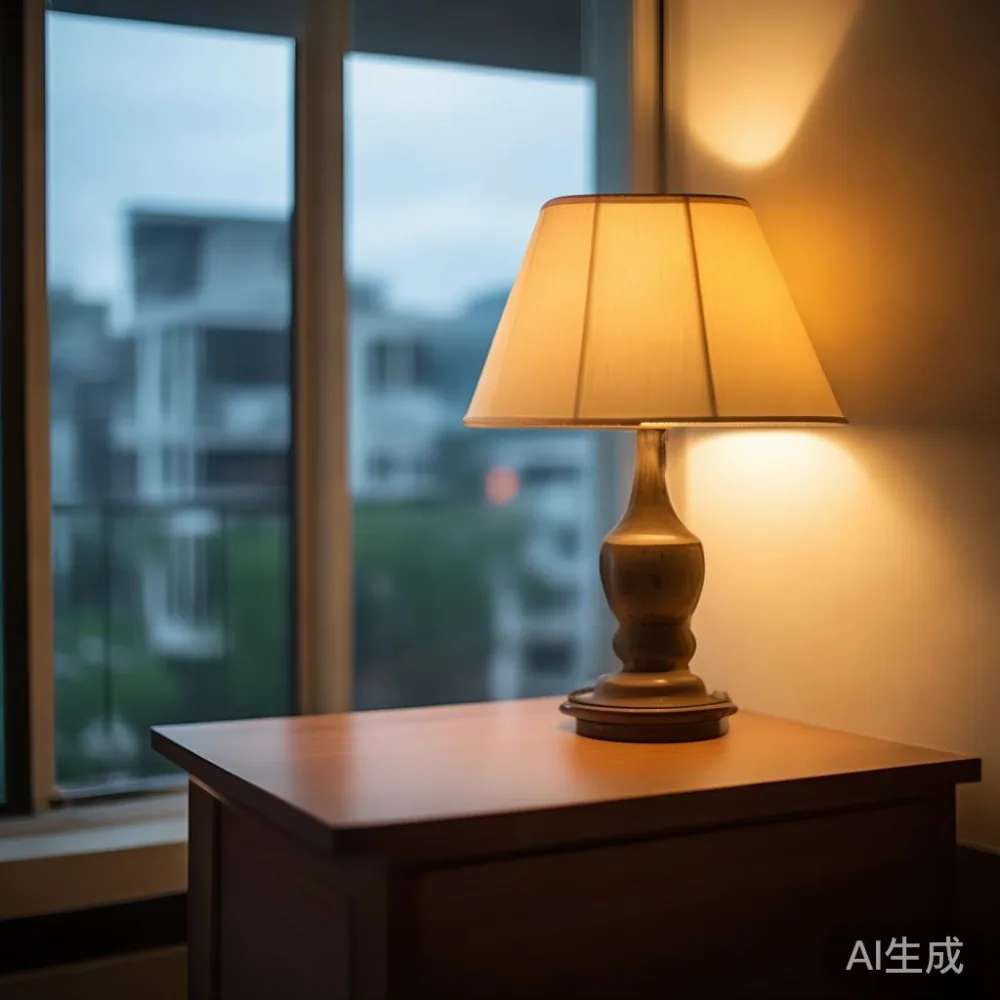
Fourth, rotate the nightstand drawers' contents every two months so no single corner is loaded for long periods; a heavy phone charger brick sitting in the same spot adds asymmetric stress. Fifth, place felt pads under any lamp or vase that lives on the top so a humid-softened lacquer does not trap moisture under a metallic ring. MIDHILL offers lifetime refinishing on its lacquered pieces, which means a SGD 200 to SGD 280 shop refresh in year 8 will return the surface to its original sheen.
Common Questions from Singapore Buyers
Air-conditioning alone is not enough if you turn it off during the day while you are at work. A bedroom that sits at 80% humidity for 10 hours will reabsorb moisture into the wood faster than the next air-conditioned evening can release it. Keep the dehumidifier running on a smart plug if you head to the office before 9 am.
Veneered MDF doors on a wardrobe are more dimensionally stable than solid wood doors but they fail in their own way: the laminate can bubble if moisture penetrates the seam. A wax stick repair runs about SGD 12 and lasts 3 to 5 years; a full door replacement runs SGD 220 to SGD 380 per door on a standard 2-door wardrobe.
A marble table top is in effect immune to humidity in the dimensional sense, but the wooden base is not. Treat the marble with a penetrating sealer every 18 months and the wood base with the same routine as the nightstand, and the combination will outlast a decade of Tampines weather.
Finally, a bed frame headboard in solid oak moves less than one in solid pine because oak is denser and swings through a smaller moisture range per percent of humidity change. If you are choosing between a SGD 900 pine headboard and a SGD 1,400 oak headboard for a coastal condo in the East, the oak is the smarter humidity bet even before you factor the longer finish life.
Where to From Here
The short version for any owner of an HDB or condo in Tampines, Bedok, Punggol, or anywhere else on the island: pick solid wood pieces specified for tropical humidity, run a dehumidifier during the two monsoon windows, give each piece 5 minutes of care a month, and use a seller that stands behind the joinery with a structural warranty measured in years rather than months. With those four moves, a nightstand, a dining table, a wardrobe, and the rest of the room can all live comfortably in Singapore's climate for a decade or more — and the wood will still look like new when you decide to refinish or resell.