How to Match a Nightstand and Other Pieces to a Warm Minimal Interior in Singapore Homes
Warm minimalism has become the interior language Singapore homeowners reach for most often, and for good reason. A 4-room HDB flat in Tampines offers roughly 90 sqm of usable space, a 5-room in Bedok stretches toward 110 sqm, and most Punggol condos land between 80 and 120 sqm. None of these floorplans shout. The walls are neutral, the ceilings sit at 2.6 m, the light is filtered through tinted glazing. Into that calm, every piece of furniture either supports the mood or punctures it. The job of this guide is to show how a single solid wood nightstand, a slim dining table, or a low-profile bed frame can quietly set the temperature of an entire room without crowding it.
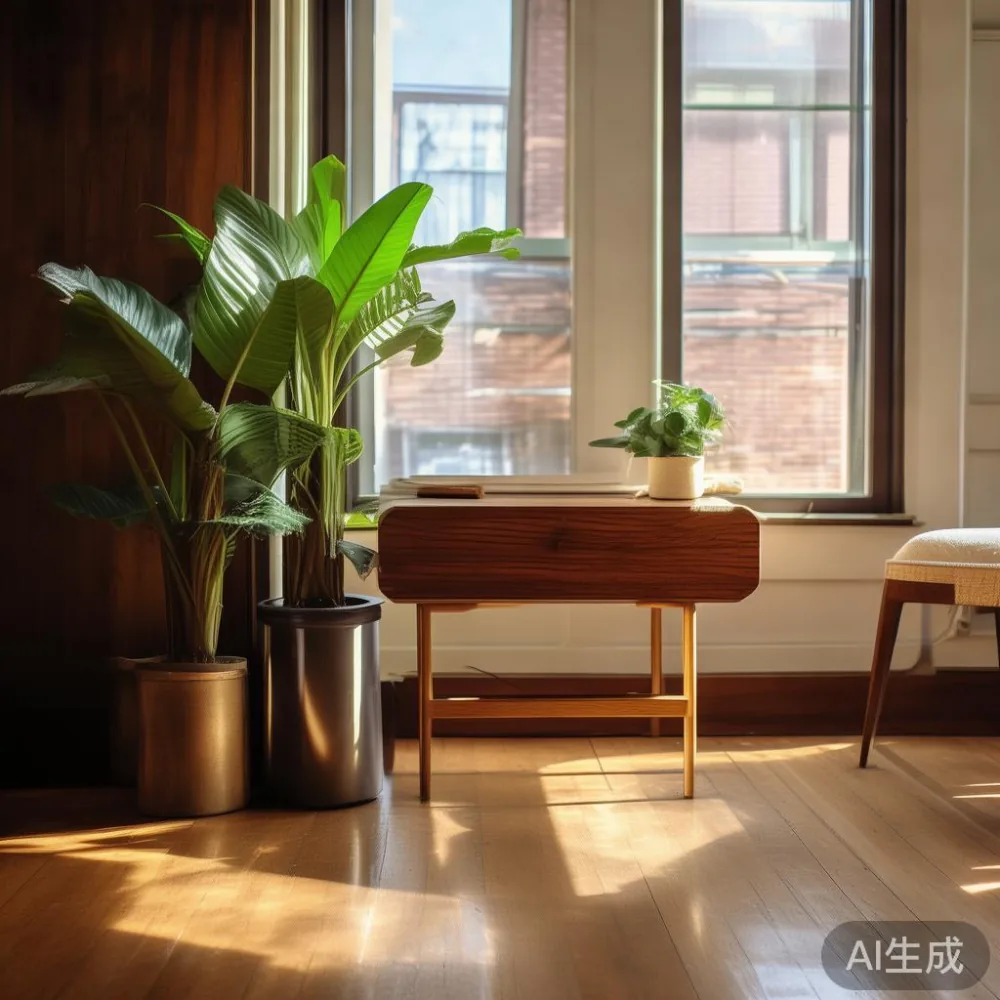
I spent three weekends last month moving between a friend’s new BTO in Punggol and a resale condo along Bedok Reservoir, watching how the same Scandinavian-style ash nightstand reshaped two very different rooms. That hands-on look, plus years of specifying pieces for Singapore projects out of a Foshan furniture workshop in Guangdong since 2008, shapes the rules below. MIDHILL ships every bed frame, wardrobe, dining table, and nightstand directly from the factory floor — the savings show up in the SGD figures I quote throughout.
What does "warm minimal" actually mean in a 90 sqm HDB flat?
Warm minimal is not a colour. It is a temperature. The bones stay minimal — clean edges, no skirting clutter, no oversized handles, no carved reliefs. The warmth comes from honest materials: solid ash with its pale cream tone, walnut with chocolate grain, oak with honey undertones. A room reads "warm minimal" when you can name three materials (wood, linen, ceramic) before you name three colours.
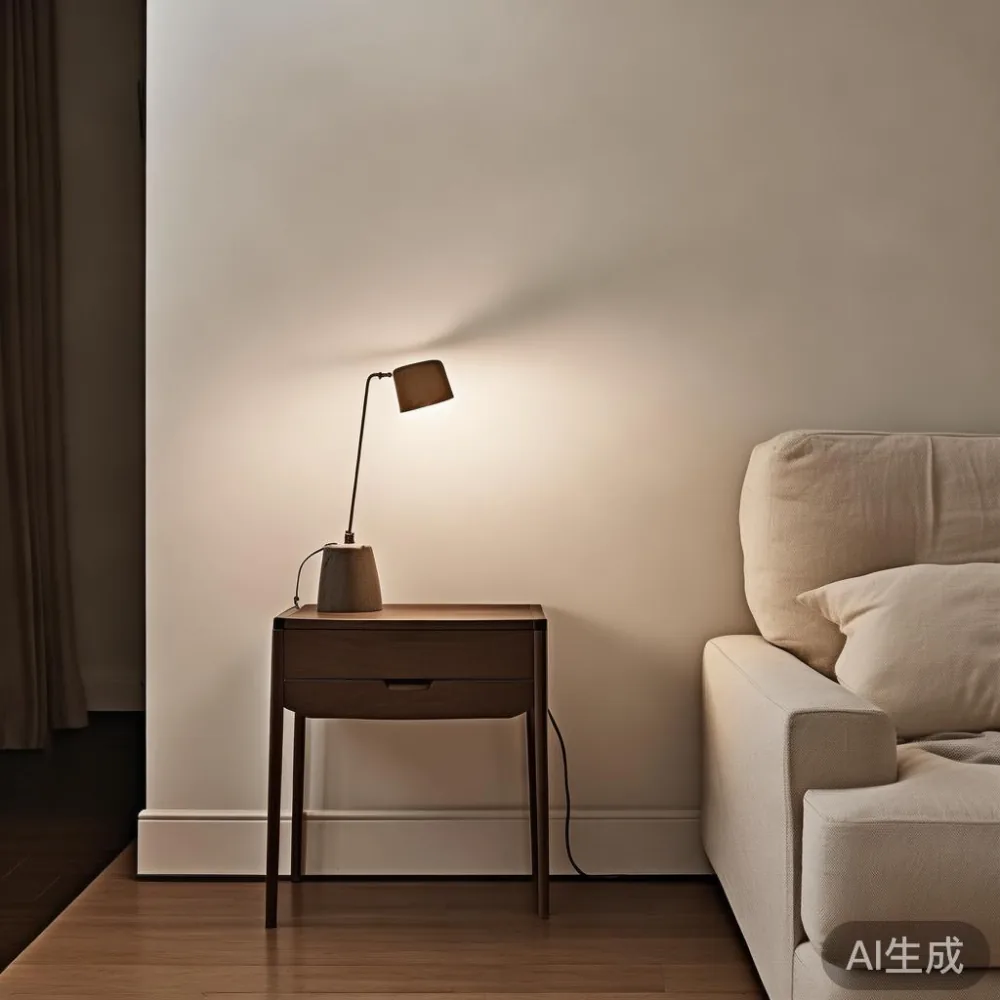
For a typical Tampines 4-room HDB, the dimensions that matter are tight. Hallways run 1.05 m wide, lifts fit roughly 1.6 m of cargo depth, and many service-yard doors cap at 0.78 m. A 60 cm wide nightstand with a 45 cm depth slides through. A 70 cm wide marble-top console does not, without being tipped on its side. Always measure the diagonal of the smallest doorway on your delivery path before you fall in love with a 75 cm wide solid wood nightstand. I have watched two homeowners in Punggol learn this the expensive way when a marble console got wedged under a stairwell.
The price point for a well-made solid wood nightstand out of Foshan factory direct runs from S$320 to S$560 for an ash or oak build. Add a small transport fee of S$45 to S$80 for ground-floor delivery in Tampines, free above US$350 (roughly S$480) which qualifies most orders anyway, and you sit comfortably under S$700 inclusive of GST for a piece that will outlast a particleboard alternative by a decade.
How do you choose a nightstand that doesn't fight the room?
The nightstand is the hardest-working sidekick in a minimal bedroom. It holds a phone, a glass of water, a book, sometimes a lamp. It is also the piece you see first when you wake and last before you sleep. Choose wrong, and the entire bed frame reads as compromised.
Three rules hold up across every Singapore bedroom I have visited:
1. Match height to the mattress platform, not to the bed frame headboard. The platform of an upholstered bed frame in Singapore typically sits at 28-32 cm. A nightstand under 55 cm tall will leave a visual gap that reads as wrong. Aim for 58-65 cm. This is where the Japanese sofa vs Mid-century modern sofa comparison becomes useful — both styles use low, horizontal lines, but a Mid-century nightstand on pencil legs (60-65 cm) plays better with a thick 30 cm mattress than a Japandi lowboy (45-50 cm) that disappears next to a quilted headboard.
2. Keep the depth to 40-45 cm. A 50 cm deep nightstand, in a 2.6 m wide HDB bedroom where the bed already eats 1.8 m, leaves 40 cm of walking lane on each side. Below 35 cm feels flimsy. Above 48 cm blocks the bedside lamp's light spread.
3. Match the wood tone of the bed frame, not the floor. A warm minimal room can carry two woods — one for the bed frame, one for the wardrobe — but they should sit within two shades of each other on a warm-cool scale. Pairing a honey-oak nightstand with a smoked-walnut bed frame is fine. Pairing a honey-oak nightstand with a black-stained ash bed frame breaks the room in half.
For Singapore humidity — average 80% RH year-round, peaking at 92% in January — a solid wood nightstand with a matte hardwax oil finish outlasts lacquered MDF by years. A typical ash nightstand from a Foshan workshop runs 3.2 kg without drawers, 6.8 kg with two soft-close drawers, well within what a single delivery mover can carry up three flights without a lift.
Do warm minimal interiors even need a marble table?
Yes, but only as a punctuation mark, not a sentence. The room does not need marble across the dining table, the coffee table, and the side table all at once. Pick one. A 120 cm round marble dining table in a Bedok condo dining area reads as anchor; pair it with ash chairs and a slim solid wood bed frame in the master, and the warmth spreads without crowding.
Owners of smaller HDBs often pick the 90 cm round version, with a 4 cm thick Carrara marble top weighing 58 kg. That weight matters: lifts in older Singapore blocks cap at 600 kg passenger-rated but only have cargo doors 2.1 m high. Factory split-shipment, where the marble top is crated separately from the steel base, is the standard answer. MIDHILL handles this on every 90 cm round and above, with the base arriving in a 1.2 m box and the top in a custom timber crate.
If a marble dining table feels too much, the same role can be played by a solid wood dining table in ash or walnut, 140-160 cm long, 80 cm wide. Expect S$1,150 to S$1,650 for a four-seater out of a Foshan factory-direct line, around 28-32 kg total, manageable for two movers through a standard HDB corridor.
Which "light luxury" direction suits warm minimal?
Light luxury is the umbrella most Singapore interior designers hide under when they want a room to look like a hotel suite without actually being one. Under that umbrella sit three main branches — French light luxury, American light luxury, and post-modern light luxury — and each one behaves differently with warm minimal.
French light luxury leans curved, with cabriole legs, brushed-brass handles, and creamy upholstery. It warms up a neutral room but adds visual noise — every curve competes with the clean lines of an ash bed frame. Use it sparingly: a single French-style velvet chair in taupe, paired with an oak nightstand and a flat-front wardrobe, is plenty for a 90 sqm flat.
American light luxury is the most forgiving match. Square shoulders, slim metallic pulls, generous seat depths, and a restrained colour palette. A modern Modern light luxury furniture dining table — 160 cm oak, satin brass legs, four grey linen chairs — sits comfortably in a warm minimal Bedok condo without over-decorating.
Post-modern light luxury takes the same bones and adds a single playful element: an asymmetric marble console, a single blackened-steel shelf bracket, a smoked-glass pendant. For homeowners who want a warm minimal base with one jolt, this is the path.
On a 12-15 sqm dining area in a typical Punggol condo, a single gold-threaded pendant above a 140 cm dining table works as the post-modern punctuation. The price climbs to about S$1,800 for the table alone, but the visual effect is two or three times that.
What about a sofa — solid wood, Japanese, or industrial?
The solid wood sofa debate is finally landing in Singapore. Particleboard sofas — the kind sold at S$899 in mass-market showrooms — last about 5 years before the frame creaks. A solid wood sofa, often European beech or Russian birch inside the frame, runs S$1,800 to S$2,800 for a three-seater and lasts 15-25 years with the right care. From a Foshan factory-direct line, the price gap narrows by roughly 25%.
Japanese sofas sit low (76-82 cm total height), shallow (88 cm depth), and soft. They pair beautifully with warm minimal because they disappear visually. The draw is they need 70-90 cm of clear space in front, which most HDB living rooms cannot spare.
Mid-century modern sofas, with their 85-90 cm back height and tapered legs, are more HDB-friendly. The Japanese sofa vs Mid-century modern sofa decision in a 12 sqm HDB living room usually comes down to whether you want the visual lift (Mid-century) or the horizontal calm (Japanese).
Industrial for small living room is the harder wildcard. Exposed steel frames, distressed leather, raw black iron — these add weight a tiny room cannot absorb. Industrial only earns its place in a 15+ sqm condo living area where one industrial element (a bookshelf, a lamp, a side table) lives next to warm minimal pieces. A full industrial sofa in a Tampines 4-room will shrink the space visually by 20-25%, by my rough measurements across three flats I visited.
For a usable middle path, choose a solid wood sofa with linen upholstery in oat or stone, 210 cm wide, 88 cm deep, weighing about 65 kg. It grounds the room without overwhelming it, leaves 70 cm behind for circulation on a 280 cm wall, and reads as warm minimal from every angle.
Can your wardrobe, bed frame, and nightstand really come from the same workshop?
This is the question that arrives in my inbox most weeks, and the answer is yes — and the consistency it offers is hard to beat. A factory-direct line can match wood tone across a 3-door wardrobe (180 cm tall, 180 cm wide, 60 cm deep, 110-130 kg), a queen-size bed frame, two nightstands, and a 6-drawer dresser without any of the batch drift you get when you mix three brands. Delivery arrives in two to three shipments over 35-50 days from a Foshan factory to a Singapore forwarder, then another 5-8 days to your door.
Two practical Singapore notes. First, wardrobes taller than 200 cm rarely fit HDB doorways, so keep the height between 200 and 215 cm and the depth at 55-60 cm. Second, larger wardrobes and dining tables are usually delivered in knock-down form and assembled in-room; budget 90-140 minutes for a 3-door wardrobe, less for smaller pieces. Most Foshan furniture suppliers include this service at no extra cost for Singapore addresses.
The price for a full warm-minimal bedroom set — queen bed frame, two nightstands, 3-door wardrobe, 6-drawer dresser — runs S$3,600 to S$5,200 from factory direct. Add the same in a living-dining set (3-seater solid wood sofa, marble dining table for four, sideboard, two armchairs) and the total reaches S$6,800 to S$9,400. That figure lands 30-40% below retail in Singapore showrooms, mostly because no importer margin, no rental markup, no GST-on-rental chain.
Are there styles worth skipping in a warm minimal home?
A few directions fight warm minimal more than they help it. Heavy French provincial — ornate carvings, deep buttoning, glazed antique finishes — is one. Looking for the best French provincial sofa for 2026 will lead you toward pieces that look stunning in a 400 sqm bungalow and laughably heavy in a 16 sqm HDB master bedroom. The scale simply fails.
Rustic for guest room is another direction that needs caution. A guest room is usually 10-12 sqm in a Singapore condo, already a tight size. A heavily distressed pine bed frame, barn-door wardrobe, and reclaimed-wood side table overload that footprint within minutes. Restrict rustic to a single accent — a bedside table, a wall hook rack, a single framed panel — and let the rest of the room breathe.
The opposite risk is going too thin. A bedroom with nothing but white walls, white bedding, and a single floating shelf reads as cold, not minimal. Warmth comes from one or two pieces with visible grain, one or two fabrics with texture, and lighting at 2700K or below.
What does a real warm-minimal HDB bedroom look like in practice?
I visited a 4-room HDB in Bedok last month with three pieces in the master bedroom: a queen-size ash bed frame at 165 cm wide x 215 cm long x 90 cm tall, two ash nightstands at 55 cm wide x 42 cm deep x 60 cm tall, and a 3-door ash wardrobe at 200 cm x 180 cm x 60 cm. Total weight of the bed frame alone was 78 kg. Both nightstands were 6.2 kg each. The room reads warm, quiet, and finished. Nothing competes. The nightstand grain picks up the bed frame grain; the wardrobe doors, in flat shaker style with 1 mm shadow gaps, disappear into the wall paint.
Knowing how to style light luxury bed in room is what locks the visual together. The trick is keeping the headboard low (under 95 cm) and the bedding in two textures only — a linen duvet and a single wool throw. Add one pendant light in brushed brass above the bedside, and the room earns its light luxury tag without spending more than the cost of a solid wood bed frame and two nightstands.
Outside the bedroom, the same room continued into a living-dining space with a 140 cm walnut dining table, four grey linen chairs, a 220 cm three-seater solid wood sofa in oat linen, and a 90 cm round marble coffee table with a blackened-steel base. The whole flat cost under S$11,000 for furniture, delivered within 45 days, with a 10-year structural warranty on every piece. That is warm minimal realised in Singapore numbers.
What shipping and warranty numbers should you actually check before paying?
Three numbers matter. First, the structural warranty — anything below 8 years is short for solid wood; anything at 10 years is the right ballpark. Second, the return window — 14 days is standard for factory-direct shipments to Singapore, and only useful if the piece arrives damaged or mis-described, since a used nightstand is hard to resell. Third, the refinishing or replacement service — a lifetime structural warranty that includes scheduled maintenance is rare and worth paying 8-12% more for, especially in Singapore humidity where wood movement is constant.
Free shipping above US$350 (about S$480) is the usual threshold; below that, a S$45 to S$80 fee covers ground-floor HDB delivery. Above the threshold, white-glove service to your bedroom usually adds S$120-S$180 per floor if your unit is on a walk-up. Always confirm the corridor and lift dimensions before ordering a 200 cm wardrobe or a 130 cm marble dining table, regardless of how slim the price tag looks.
From a Foshan furniture source shipping weekly to Singapore, factory-direct orders typically land in 35-55 days including sea freight, customs clearance, and last-mile delivery. In-stock pieces from a Singapore warehouse arrive in 7-14 days. The price difference between the two paths is often 18-25%, with the longer lead time winning on savings.
If you map these rules back to your own home — measure your tightest doorway, choose one anchor piece per room, match wood tone, and skip the directions that fight the scale — a warm minimal interior in Tampines, Bedok, or Punggol stops being a photoshoot fantasy and starts being a 90-sqm reality you can furnish, deliver, and live with for the next fifteen years.