How Southeast Asian Humidity Affects Solid Wood Nightstands
Singapore’s tropical climate can change the dimensions, joints and surface of a solid wood nightstand more than many buyers expect. In an HDB flat in Tampines, a nightstand may sit beside an air-conditioned bedroom yet remain exposed to humid corridor air whenever the door opens. In a Bedok condo, coastal moisture can reach rooms through open windows and balcony doors. In Punggol, newly painted interiors may release moisture into the air during the first 6 to 12 months after handover.
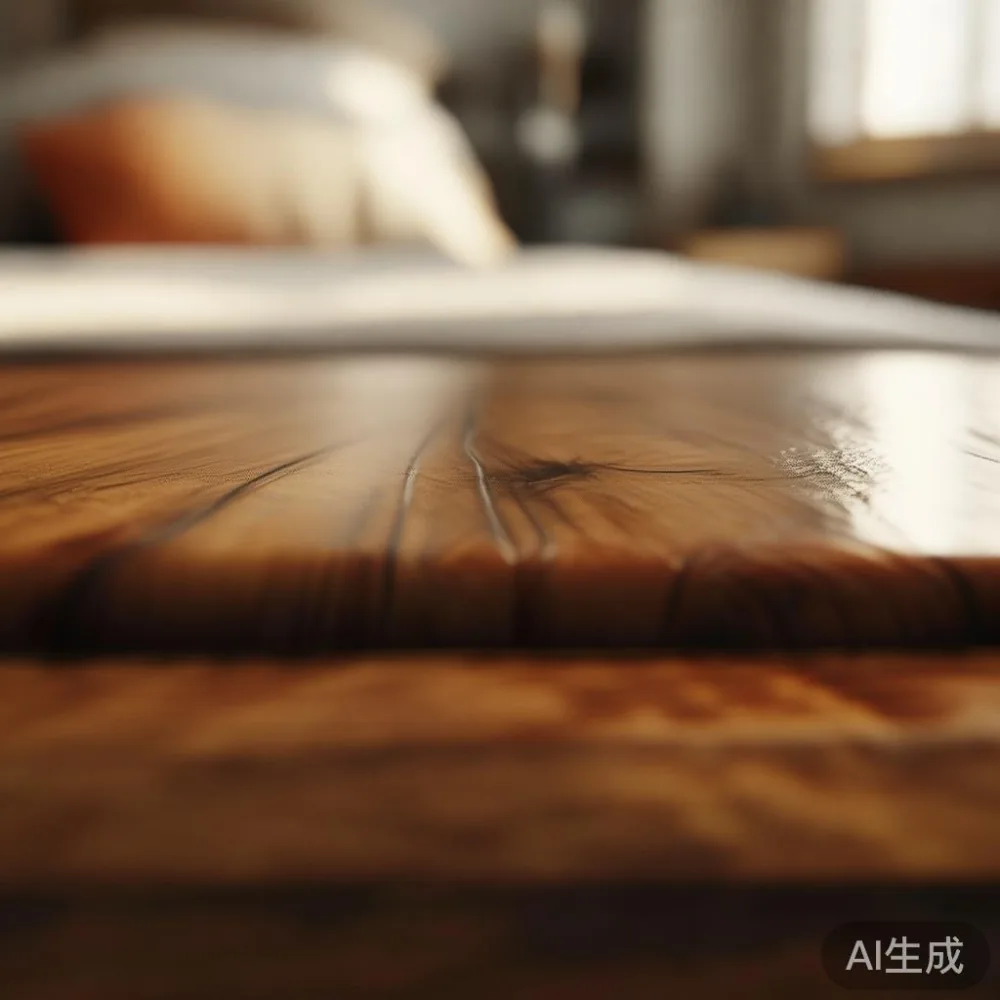
Humidity does not automatically ruin solid wood. It mainly causes wood to absorb and release moisture, making it expand, contract, swell or warp if its moisture content does not match the surrounding air. Small movements of 2 to 5 mm across a drawer front may not be visible, but a tighter tolerance of 1 mm is preferable for cabinet doors that must remain aligned. Understanding this behaviour helps Singapore households choose, place and maintain a nightstand suited to local conditions.
MIDHILL designs solid wood furniture for international use and provides a 10-year structural warranty, lifetime refinishing and a 14-day return period. These are useful safeguards, but correct sizing, delivery timing and humidity management still determine how a piece performs in a local home.
Why does tropical humidity make solid wood move?
Wood is hygroscopic, meaning it exchanges moisture with the surrounding air. Its cell walls gain moisture when relative humidity rises and lose it when the air becomes drier. The direction and magnitude of movement depend on the species, panel construction, grain direction, thickness and finish.
For a nightstand measuring 45 cm wide, 40 cm deep and 55 cm tall, seasonal movement can affect the carcass, drawer runners, door hinges and veneered or solid timber surfaces differently. Solid panels usually show movement across the grain. A 45 cm-wide side panel might expand by several millimetres, while a 20 cm-deep drawer bottom may move less. If the drawer is fitted into a fixed opening with no clearance, that difference can cause binding.
Singapore’s monthly relative humidity can commonly fall from roughly 70% to 90% during wet periods to around 50% to 65% under sustained air-conditioning. Those swings are more demanding than a stable 55% relative humidity. Outdoor readings can also exceed 90% during storms, whereas an air-conditioned bedroom may settle near 50% to 60%.
Engineered panels such as plywood or MDF are not immune to moisture, although their layered structure can distribute changes differently from solid timber. Edge sealing, factory-applied finishes and sound drawer engineering still matter. The key is to avoid describing one construction method as completely unaffected by humidity.
What does humidity mean for a nightstand in an HDB flat?
The tight dimensions of many Singapore homes make installation planning important. A standard HDB bedroom may offer only 60 to 90 cm of usable space beside a bed. A nightstand with a width of 40 to 50 cm fits comfortably in that zone, while a 55 cm model may crowd the bed frame or obstruct a corridor.
Older HDB blocks often have corridors about 120 to 150 cm wide, although local renovations and building regulations vary. Lift cars are commonly around 80 to 110 cm deep, with door openings near 70 to 90 cm. Before delivery, measure the lift entrance, internal diagonal, corridor turns and bedroom doorway. A nightstand may fit upright in the lift but become difficult to rotate if its diagonal exceeds the available turning space.
For example, a 50 × 40 × 55 cm nightstand has a maximum diagonal of about 84 cm. It can fit through a 70 cm doorway if turned correctly and carried by at least 2 people, yet the handles and drawer can add another 4 to 8 cm. A flat-pack nightstand is easier to manoeuvre through narrow corridors, but solid wood construction can still require partial assembly.
Humidity also affects where a nightstand should stand. Keep it 15 to 30 cm away from an open bathroom, balcony door or window that remains exposed during heavy rain. Do not place it directly against a cold exterior wall or next to a sunlit window. A bedroom maintained between 24 and 27°C, with relative humidity near 50% to 60%, will offer more stable conditions than an unconditioned room.
GST-inclusive pricing should be compared carefully because a lower pre-GST figure is not the final purchase amount. Singapore’s standard GST is 9%. At a listed price of SGD 289, the inclusive total is SGD 315.01. Confirm that quotations include GST, delivery and any lift or corridor charges before payment.
Which solid wood species and construction suit Singapore conditions?
Teak, ash, beech, rubberwood and other kiln-dried hardwoods can work in Singapore, but the product specification matters more than a fashionable species name. Ask whether the timber has been kiln-dried to a moisture content appropriate for the destination climate. A factory moisture content around 8% to 12% is commonly used for furniture made for moderate climates. Some export production is adjusted to approximately 10% to 14% for humid and air-conditioned interiors.
The construction should include tolerances for dimensional movement. Look for drawer runners that allow sideways expansion, floating or adjustable hinge hardware where applicable, and rear ventilation gaps. A closed nightstand with solid side panels, a back panel and a drawer will usually need at least 5 to 10 mm of breathing space behind it where the design allows.
Finishes also influence maintenance. A water-based polyurethane or lacquer coating can offer useful moisture protection, while an open-pore oil finish requires more frequent care. Avoid leaving a damp glass, bottle or wet hand towel directly on the top. Use a coaster of at least 10 × 10 cm and allow any spill to dry within 30 minutes.
Light-luxury styling is not limited to glossy surfaces. French light luxury often uses pale oak, ash or warm cream finishes with restrained profiles. Post-modern light luxury may pair rounded edges with clean geometry. An American light luxury bedroom can feel calm and architectural, with a dark walnut nightstand placed beside a solid wood bed frame. None of these styles can compensate for poor moisture control.
How should a nightstand be delivered and installed in a humid home?
Delivery timing can prevent a freshly delivered piece from sitting in a humid room before it is used. Singapore delivery windows may range from 5 to 14 working days after order confirmation, depending on stock and production schedules. Ask the supplier to confirm whether the nightstand is made to order. If it arrives during a particularly wet spell or immediately before handover of a newly renovated flat, request a later delivery date where storage is available.
Acclimatisation should be gradual. A new nightstand can be unpacked in its protective packaging for 24 to 48 hours in the intended room. Remove any plastic wrapping from the finished surfaces so the wood can exchange moisture with the air. Increase ventilation over the first 7 to 14 days, and avoid placing the piece beside an open window during that period.
MIDHILL offers free shipping for orders over US$350, although the threshold is stated in a different currency from Singapore. Local delivery terms should be confirmed directly. Some couriers may charge an additional SGD 20 to SGD 60 for a lift move, stairs, extended carrying or an oversized item. Two-person delivery is sensible for a solid wood nightstand weighing 18 to 30 kg, especially beside a queen-size bed frame in a compact bedroom.
Before moving furniture into place, photograph the lift, corridor and bedroom route. Measure the nightstand at its widest point, including handles and projecting feet. Protect corners with 2 to 3 mm padding and keep cardboard underneath for at least 24 hours. Lift by the base and structural frame rather than pulling a drawer or door.
How do I prevent humidity damage to the nightstand?
Use a hygrometer with a range of at least 20% to 99% relative humidity. Place it near the nightstand, not beside an air-conditioner vent. Record readings at about 9 a.m. and 9 p.m. for 7 days. A reading around 50% to 60% is suitable for most occupied bedrooms. Brief periods above 70% are less concerning than constant exposure, particularly if the wood remains cool and damp.
Wipe the top every week with a soft, slightly damp cloth and dry it immediately. Do not use household glass cleaner, ammonia or harsh bleach on a natural wood finish. If the finish loses its sheen, refinishing may be needed. MIDHILL provides lifetime refinishing, although the customer may need to cover return or transport charges depending on the policy terms.
Check the drawer movement twice each year, especially before the monsoon season. A drawer should slide with a light touch and show no more than 1 to 2 mm of side clearance on each side. If a door binds, identify whether the cause is humidity-related movement, a loose hinge or the nightstand sitting unevenly. Adjust the feet before tightening hardware.
For a coordinated bedroom, buyers often compare the nightstand with a solid wood sofa in another room, a dining table in the dining zone, a wardrobe near the entry or a marble table in the living area. A marble table may need different environmental care because stone and wood react differently to moisture. Likewise, a solid wood bed frame should be positioned with enough space for airflow.
Can dry air damage solid wood furniture too?
Yes. Constant low humidity can cause contraction and checking, just as persistent high humidity encourages swelling. Air-conditioning can reduce relative humidity to 30% or less if the system runs continuously at a low setting. In a bedroom where the nightstand sits directly beside the cooling airflow, an indoor hygrometer can show the difference within 1 to 3 hours.
Aim for gradual adjustment rather than repeatedly moving furniture between wet and dry zones. If readings remain below 45%, use a room humidifier with a clean reservoir and target 50% to 60%. Do not direct mist or vapour toward the furniture. Keep the nightstand at least 30 to 60 cm from a humidifier outlet when possible.
Weight and stability deserve attention alongside moisture. A solid wood nightstand may weigh 18 to 30 kg, while a smaller model could weigh 11 to 17 kg. Make sure the surface is level and the anti-tip system is fitted if the unit includes an anchoring kit. In a family home, anchor the nightstand to the wall where children are present, particularly if the top is used for a lamp or monitor.
How do I choose a nightstand that will age well in Singapore?
Choose based on room dimensions, construction, moisture performance and maintenance rather than appearance alone. A 40 cm-wide nightstand may suit a compact HDB bedroom, while a 50 cm unit can create a stronger composition in a larger condo room. Height should align closely with the bed frame mattress top, usually within 5 to 10 cm for easier reach.
Check the drawer and door specification in person or through clear measurements. Ask about timber moisture content, finish type, movement clearance and warranty coverage. A 10-year structural warranty indicates manufacturer confidence in the frame and joints, while a 14-day return period gives buyers time to assess fit and finish after delivery. Confirm what must be returned and whether original packaging is required.
Design vocabulary should remain coherent without treating every piece as interchangeable. The phrase Modern light luxury dressing table refers to a separate category with its own drawer and storage proportions, so it should not substitute for the practical selection of a nightstand. Likewise, references such as how to choose French provincial sofa, the best Italian light luxury sofa for 2026, Industrial for dining room, luxury Mid-century modern furniture and Mid-century modern accent chair belong to other design decisions.
For a complete house, specify whether the bedroom uses a solid wood bed frame, matching nightstand and restrained wardrobe, then allow room for coordinated finishes elsewhere. For example, French light luxury dining pieces might use a pale oak dining table, while an industrial for dining room scheme can introduce blackened metal accents without forcing unrelated forms onto the bedroom.
What should I do if the nightstand reacts to humidity?
Separate visible swelling from actual structural failure. A drawer that closes after 3 to 7 days of stable weather may simply have adjusted to changing conditions. A split, loose joint, fungal growth or persistently warped panel requires closer inspection. Do not sand or force the piece back into position while the wood is still wet.
Move the nightstand away from damp walls and exterior openings, improve ventilation and use a dehumidifier if the room remains above 70% relative humidity for long periods. Bring conditions toward 50% to 60% before assessing the fit. Keep the room between 24 and 27°C, and allow up to 14 days for small dimensional changes to settle.
If the finish feels tacky, smells persistently musty or shows black spotting, stop using the surface and have it assessed. Excess moisture can affect coatings, and trapped dampness may encourage mould. Professional cleaning or refinishing is more suitable than applying oil over a damp surface.
Last month, I visited a colleague’s three-room HDB flat in Bedok after a week of heavy rain. Their solid oak nightstand sat against an external wall near a frequently opened balcony door. The drawer was tight, and the top had collected condensation from a cold water bottle. We moved it 25 cm into the room, removed the bottle and kept the balcony door shut except when the flat was occupied. Readings fell from 72% to 58% over 4 days, and the drawer began closing normally after 7 days. The experience confirmed that small environmental changes can resolve many apparent joinery problems without replacing a sound piece.
What is the practical buying checklist for a solid wood nightstand?
Measure the available width, depth and height, then measure the route from the lift to the bedroom. Record the narrowest doorway, lift door, internal diagonal and tightest corridor turn. Check whether the nightstand can be carried by 2 people without removing doors or rails. Confirm the assembled weight and ask whether the supplier offers delivery through HDB corridors and condo loading areas.
Ask for the timber species, panel construction, finish, moisture treatment, drawer-clearance details and warranty terms. Compare the final GST-inclusive price in SGD. For example, a SGD 349 nightstand becomes SGD 380.41 after 9% GST, before any delivery surcharge. A supplier should also explain the 14-day return procedure in writing.
Plan the placement around airflow, sunlight, water sources and daily use. Keep at least 15 cm from an exterior wall where possible, avoid direct air-conditioner outlets and use a coaster beneath drinks. Maintain 50% to 60% relative humidity, inspect fittings every 6 months and address finish wear before moisture reaches bare timber.
Foshan Lingzhan, a furniture manufacturing area in Foshan, is relevant because many export makers operate nearby, yet regional origin alone does not prove moisture performance. Request product-level information, inspect moving parts and review care requirements. MIDHILL’s export experience across 15 or more countries and its lifetime refinishing service provide useful support, provided the buyer follows the recommended humidity range and maintenance schedule.