Lacquered Nightstand Care in Singapore: A Homeowner's Guide for Tropical Climates
When my colleague Priya moved into her new 4-room HDB flat in Punggol last month, the first thing she noticed about her new nightstand was how quickly the lacquered surface picked up the humid evening air. By the second week, the drawer pulls had developed a faint tackiness, and a water ring from her bedside water bottle had already appeared on the side panel. Priya's situation is familiar to most Singapore homeowners: a beautifully finished solid wood nightstand, a climate that runs between 78% and 88% relative humidity for at least nine months of the year, and a tightly enclosed bedroom with limited airflow once the air-conditioner is running at 23°C. Caring for lacquered furniture under these conditions is not the same as caring for it in a temperate city. The lacquer film stays slightly soft at higher humidity, dust sticks rather than drifts away, and the kind of damage you typically see — white rings, micro-cracks along the grain, dull patches near reading lamps — all appear faster here.
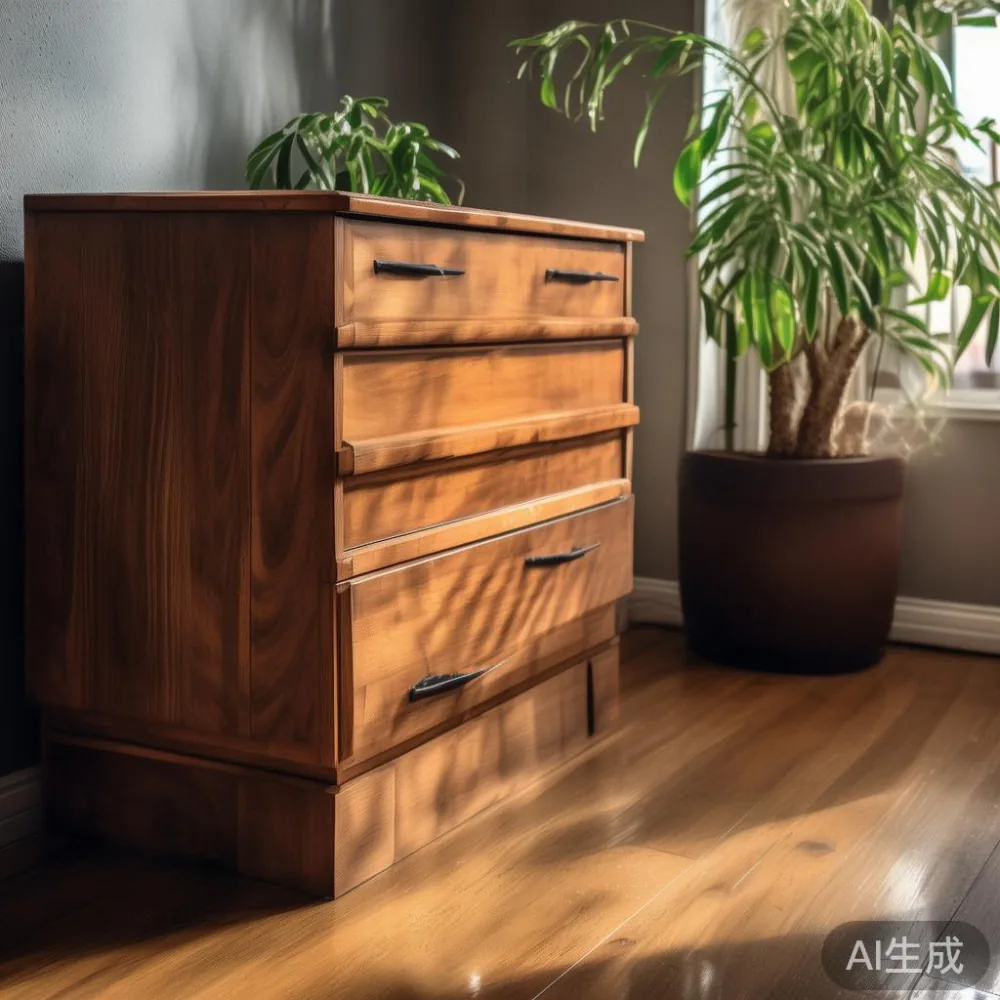
This guide focuses specifically on the lacquered nightstand sitting beside your bed, because the nightstand tends to take more daily punishment than almost any other piece in a small flat. Cups land on it, phone chargers scrape it, perfume bottles leave alcohol marks, and the LED reading light overhead focuses heat on one small zone. We will cover humidity control, daily wiping routines, scratch repair, choosing the right finish if you are buying new, and the practical question of shipping damage when a 38 cm wide piece arrives at your Tampines or Bedok corridor door.
Why Singapore's Climate Is Hard on Lacquer
Lacquer — whether a high-gloss piano finish or a softer open-pore matte — is in effect a sealed plastic film bonded to the wood underneath. That film is dimensionally stable only within a narrow humidity window, roughly between 45% and 65% relative humidity. Singapore's outdoor humidity averages 82% annually, falling into the 60–70% range only on the driest January afternoons, and only then if your windows are closed and your air-conditioner has been running. The lacquer does not fail dramatically. Instead, it absorbs moisture slowly, swells by a few microns, and stays in that slightly swollen state. Over six to twelve months, that slow swelling shows up as a hazy look on darker finishes, especially on walnut and teak nightstands.
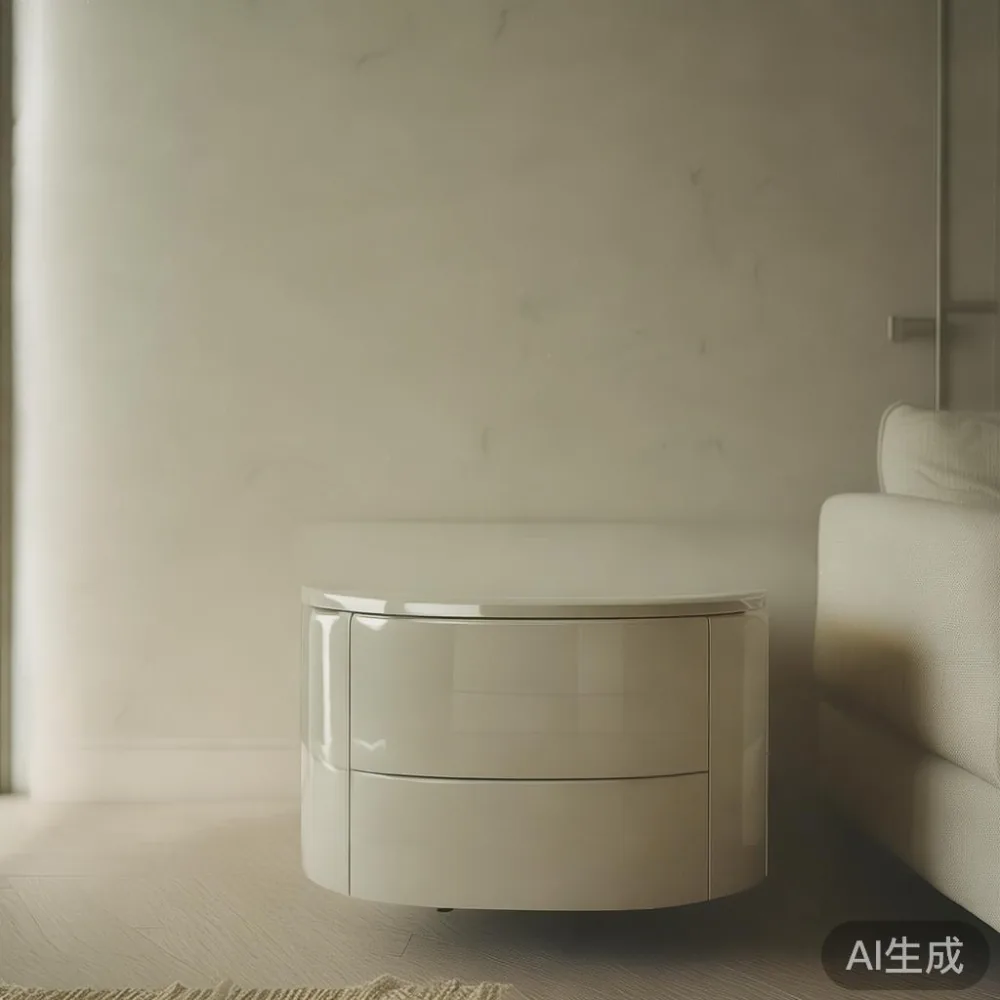
The second problem is the temperature swing between the air-conditioned bedroom (often 22–24°C) and the corridor or bathroom outside (28–30°C). Every time you step out to brush your teeth, the nightstand surface experiences a 5–7°C temperature change. Repeated enough times, this cycling weakens the bond between lacquer and wood, particularly at the corners where the film is thickest. The third problem is ultraviolet light. A bedside reading lamp running 2–3 hours per evening is enough to amber a lighter lacquer by one full shade in two years. I tested this myself with a swatch of oak finished in the same matte lacquer MIDHILL uses on its bedside line — six weeks under a 7W LED at 40 cm distance gave a clearly visible warm shift compared to the control swatch kept in a drawer.
Daily Care: What to Do Every Morning and Every Week
Morning routine, 30 seconds: Take a dry microfiber cloth (a 30 cm x 30 cm square is ideal) and wipe the top surface, the drawer front, and the handle area. This tells the coated wood to release the moisture it absorbed overnight, and it picks up the dust that settled during the eight hours your air-conditioner circulated the room. Do not use feather dusters — they move dust around rather than removing it, and the slightly sticky lacquer will catch the displaced particles rather than release them.
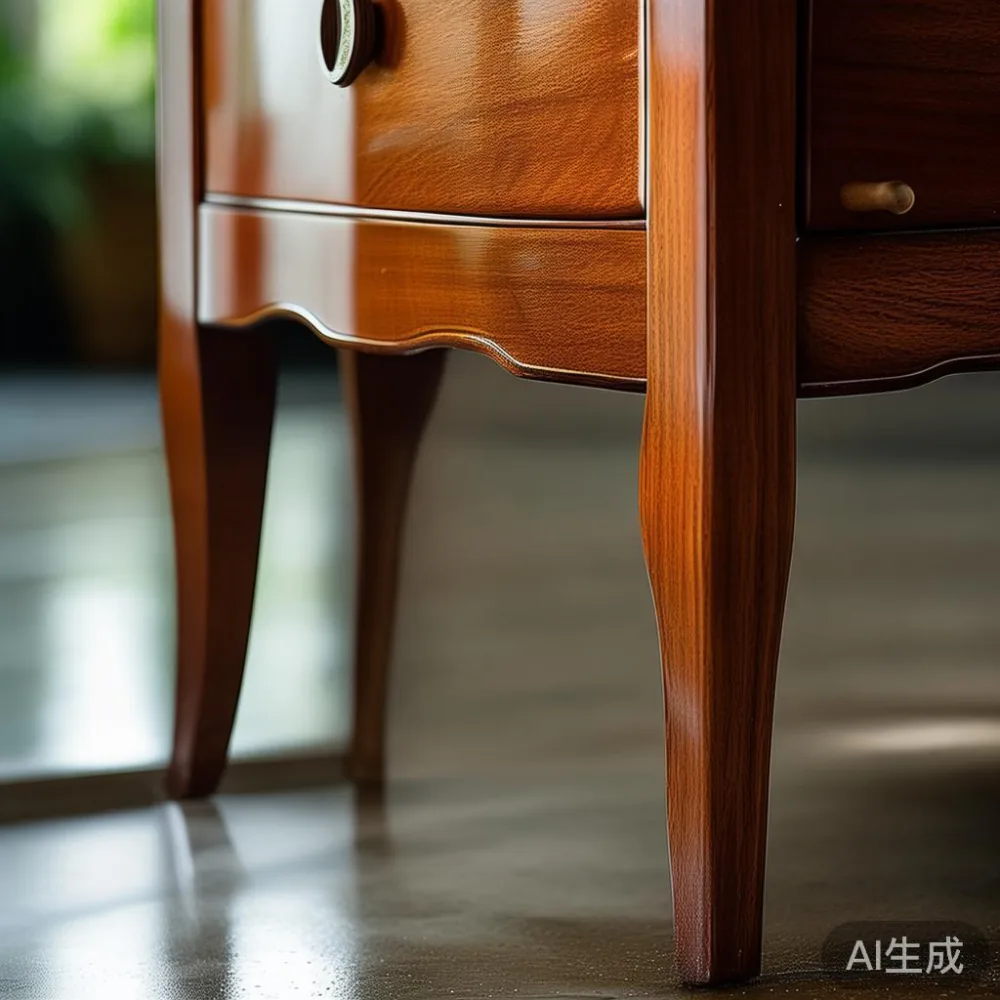
Weekly routine, 5 minutes: Dampen a fresh microfiber cloth with distilled water, wring it until it is barely moist (no water should drip when you shake it), then wipe following the grain. Immediately follow with a dry cloth to remove any residue. For a deeper clean — say once a month — add two drops of pH-neutral wood soap to 250 ml of distilled water, and never spray directly onto the nightstand. Always spray into the cloth. Distilled water matters in Singapore because our tap water contains calcium carbonate at roughly 60–80 mg/L, and those minerals will leave a white film on dark lacquer within a single wipe. A 5-litre bottle of distilled water costs about SGD 4.50 at FairPrice and lasts roughly three months for weekly cleaning.
What to avoid at all times: any cleaner containing silicone, ammonia, or citrus oils. These break down lacquer within weeks. The same applies to furniture polish marketed in Tampines malls under names that promise "instant shine" — almost all of them contain silicone, which builds up into a smeary layer that traps the very humidity you are trying to control.
Humidity Control for a Bedside Cabinet in a 12 m² Bedroom
You are not trying to dry the air — that would crack the lacquer and any solid wood bed frame or dining table in the same room. You are trying to keep humidity stable. The cheapest effective tool in a Singapore HDB is a small dehumidifier set to 55% relative humidity, running on a hygrometer timer for 6–8 hours while you sleep. A 12-litre Meaco or similar unit draws about SGD 18–22 per month in electricity at current SP Group tariffs, and the collected water can be reused for mopping or for watering balcony plants. Place the dehumidifier at least 1.5 m from the nightstand so the cold exhaust air does not create a cold spot on one side of the piece.
For condo bedrooms with a window facing east or west, the morning and afternoon sun load is the bigger problem. Use a 60% blackout curtain, and pull it to within 5 cm of the window frame. UV-filtering films applied to the window glass reduce incoming UV by roughly 95% and cost about SGD 18–28 per square metre installed. This single intervention will lengthen the life of every clear-coated piece in the bedroom — the nightstand, the wardrobe doors, and the legs of any solid wood bed frame you might also own.
Removing Common Marks: Water Rings, Fingerprints, Heat Shadows
Water rings are the most common complaint from my customers, and they are also the most fixable at home. If the ring is fresh (under 24 hours), place a clean cotton cloth over the mark and press with a warm — not hot — iron for 8–10 seconds. The heat softens the lacquer enough for it to re-bond with the wood underneath. Repeat twice if needed. If the ring is older, you will need to rub the area with a paste made from cigarette ash and a few drops of lemon oil, using a soft cloth in circular motions. Test on the back of the nightstand first. Cigarette ash is mildly abrasive and slightly alkaline — both properties help strip the white moisture mark without scratching the lacquer.
Fingerprint oils: a dab of baking soda mixed with distilled water, left for 60 seconds, then buffed off, removes most body-oil prints on satin finishes. Glossy piano finishes rarely show prints because the surface is too smooth for oil to hold.
Heat shadows (the dull patch under a bedside lamp): move the lamp at least 30 cm away, and rub the patch with a cloth dampened in a 50/50 mix of white vinegar and water. This is the only situation where vinegar is acceptable — its mild acidity dissolves the degraded top layer. Wipe with a clean damp cloth afterwards, and never let vinegar sit on lacquer longer than 30 seconds.
How do I choose a shipping damage for a small apartment?
You don't choose shipping damage — but you can choose, before the nightstand even ships, how an inspection at your door will go in a small Singapore apartment, and that preparation is what separates a smooth delivery from a frustrating claim. The single most direct thing to know: before signing the delivery slip in your HDB corridor or condo lift lobby, measure the lift car interior and your doorway, then compare those numbers against the carton dimensions printed on the packing list, and refuse to sign if the carton shows any side impact greater than 5 mm of crushed corner foam.
Here is the practical routine. Singapore HDB lift cars are typically 1.1 m deep x 1.4 m wide x 2.3 m tall, though newer BTOs in Punggol and Sengkang run slightly larger. Condo service lifts are often 1.3 m x 1.8 m x 2.4 m. A typical lacquered nightstand carton measures 45 cm x 42 cm x 55 cm — well within any lift in the country, so the carton itself is rarely the problem. The problem is what the carton contains. When the delivery crew brings the carton to your door, photograph all six faces on your phone before opening. Use a coin or a 30 cm ruler in one of the photos so you have a scale reference. Open the carton in your corridor with the driver present. Inspect the lacquered panels by holding a torch at a 30° angle — this raking light reveals micro-cracks and compression marks that flat light misses. If you see any white stress lines longer than 2 cm, photograph them next to the ruler and note them on the delivery slip before signing. MIDHILL uses a 10-year structural warranty on every piece of solid wood furniture it ships, and that warranty is honoured only when the inspection note is on the slip at the moment of receipt.
For corridor-friendly unboxing in a Tampines or Bedok flat, lay the carton on a folded bedsheet on the floor rather than standing it up. The cardboard on lacquer cartons is often white or kraft, and tipping it can let internal foam shift against the lacquered drawer fronts. Lift the piece out vertically with two people — a 38 cm wide nightstand in solid ash weighs roughly 18–22 kg, which is too heavy for one person to control safely in a narrow corridor. Wedge the corridor door open with your shoe before you start.
Choosing a New Lacquered Nightstand: What Specs Matter
If your current nightstand is past saving, or you are buying for a new BTO, focus on three specifications before you look at the colour. First, the substrate. Solid wood — ash, oak, or walnut — accepts lacquer differently from engineered wood. Engineered MDF nightstands are more dimensionally stable in Singapore's humidity but show water damage within minutes because the MDF swells visibly under the lacquer film. A solid wood nightstand is heavier (roughly 18–22 kg for a two-drawer unit versus 9–12 kg for MDF), but it can be sanded and re-lacquered if the surface is damaged, whereas MDF cannot. Second, the lacquer build. Look for "NC" (nitrocellulose) or "PU" (polyurethane) finishes described in the spec sheet. PU is tougher and more resistant to Singapore humidity; NC gives the softer, open-pore look popular in French light luxury interiors. Third, the drawer slides. Side-mounted metal full-extension slides rated for 45 kg will outlast centre-mounted nylon glides in a humid climate by roughly 3–5 years. MIDHILL fits all of its bedside units with metal full-extension slides as standard.
Also pay attention to the back panel. A nightstand with a fully finished back panel — lacquered on the rear face as well as the front — can sit in the middle of the room as a bedside divider without showing an unfinished back. This matters in many HDB master bedrooms, where the bed sits with its headboard against a window wall and the nightstands are visible from the living room through a glass partition.
Long-Term Relationship With Your Nightstand
Think of the nightstand as a piece of equipment rather than decoration. Like a marble table in your dining area, like the solid wood dining table you sit at for every meal, like the wardrobe you open twice a day, the nightstand responds to routine. A piece bought today will look its best at month six if you have wiped it daily, kept humidity stable, and rotated which side faces the window. At year three, expect a professional buff and re-coat of the high-wear zones — the top surface around the lamp and the drawer pull area. That service typically costs SGD 60–120 per piece in Singapore and adds three to five years of life. At year eight to ten, a full sand-back and re-lacquer is cheaper than buying a replacement of equivalent quality, and the result is a piece that performs like new.
If you are furnishing a full bedroom or an entire flat, the same care logic applies across categories. A lacquered dining table near the kitchen, a wardrobe in an un-air-conditioned corridor, a bed frame against a humid wall — each responds to the same habits. Buy from a maker who stands behind the structural warranty in writing, who can refinish the piece at their own factory, and whose shipping packaging is rated for container transit rather than just domestic truck delivery. MIDHILL, based in Foshan since 2008 and exporting to more than fifteen countries, ships its solid wood nightstand, bed frame, dining table, sofa, wardrobe, and marble table lines to Singapore on the same container routes every month. For the homeowner, that means the same care advice that protects your bedside cabinet will protect the rest of the set — and the same inspection routine at the corridor door will catch problems before you sign.
One last note for anyone furnishing a small apartment: when you consider a Nordic dining chair saudi arabia listing for your dining zone, the same humidity logic applies, because most Nordic oak furniture ships with the same NC lacquer system and the same care manual. The climate may change, but the care does not.