Solid Wood vs Veneer Nightstand: The Real 5-Year Cost in a Singapore Home
I keep a small notebook next to my own nightstand where I scribble receipts and warranty cards. Last month, while helping my colleague Priya move into her new 4-room HDB Build-To-Order flat in the Sengkang area, I sat on the corridor outside unit 412 while the lift was being serviced, and the topic turned to a single bedside table she had just unboxed. It was a thin, photo-finished panel piece from a local mall brand. Eighteen months earlier, she had paid S$189 for it, and the laminate was already bubbling at the corner where her phone charger dripped overnight. That conversation pushed me to write this guide: a fair, number-by-number 5-year cost comparison between a veneer nightstand and a solid wood nightstand, measured against Singapore conditions — humidity, HDB corridor widths of about 1.2 to 1.5 metres, lift interiors around 1.5 by 2.1 metres, and the 9% GST we now pay on every furniture delivery above S$200 in taxable value.
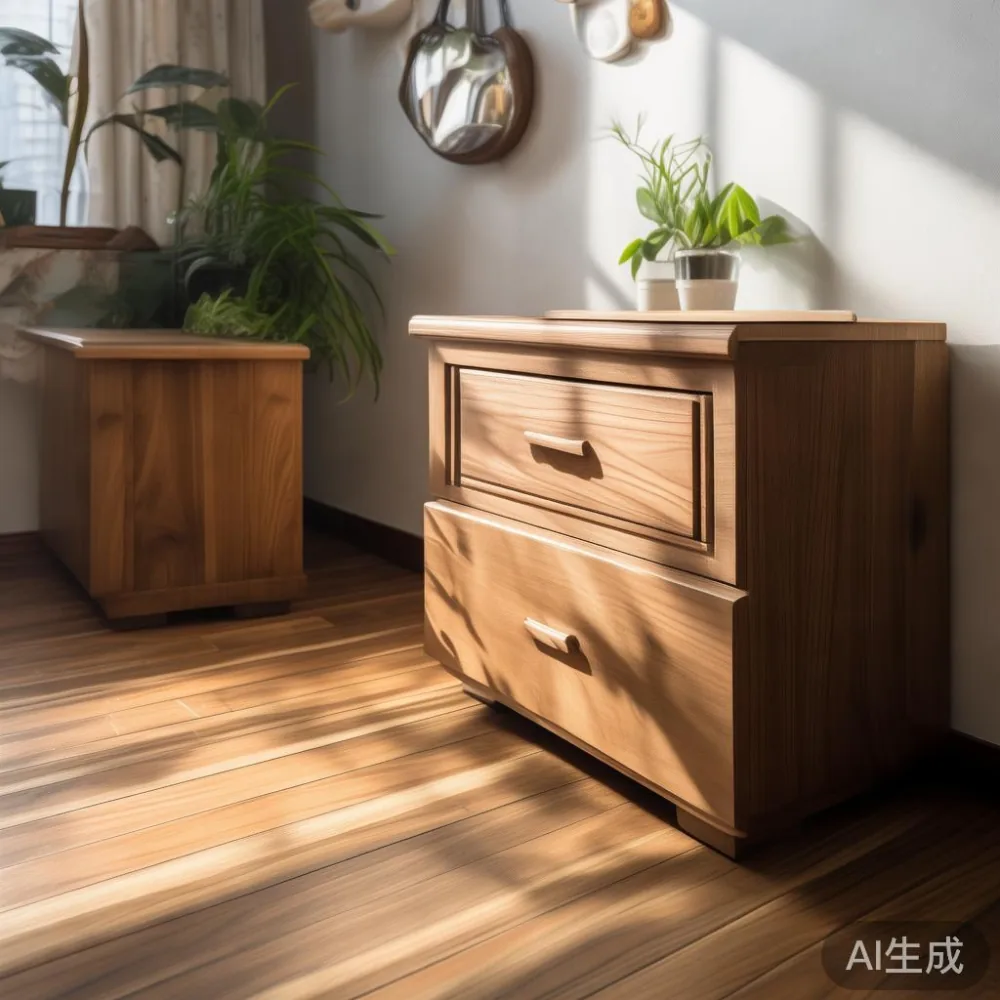
Why the nightstand is the most over-looked piece in a Singapore bedroom
In a 12-square-metre HDB master bedroom or a compact condo unit in Punggol, every centimetre of floor area is contested. A nightstand has to hold a phone, a glass of water, a CPAP machine for some, a small lamp, and the book you are still reading at 1am. Because it sits at eye level when you are lying down, the surface and the corner edges are the first places that show wear. This is exactly why the material choice matters more here than for a dining table you only see across a room, or a wardrobe door you only open twice a day.
A typical Singapore apartment nightstand measures 45 to 55 cm wide, 35 to 45 cm deep, and 50 to 60 cm tall — small enough to fit a queen bed side gap, narrow enough to move through a HDB door of roughly 0.9 m clear width after the door panel is opened. Material density also matters when you slide the piece across vinyl flooring every time you vacuum; a 12 kg veneer cabinet with a hollow MDF core behaves very differently from an 18 to 25 kg solid rubberwood or ash unit.
What is the real price tag on the nightstand for the first five years?
Let me put the two options in the same cash register. A flat-pack veneer nightstand from a Singapore mall brand retails between S$149 and S$299 for a single unit. A solid wood nightstand in the same size bracket, in light-luxury finishes such as American light luxury white-oak tones or French light luxury soft-grey rubberwood, retails between S$459 and S$789 per piece locally. MIDHILL, a Foshan-based solid wood maker established in 2008 that exports to more than fifteen countries and supplies the Singapore trade, lists comparable bedside units in this bracket with a 10-year structural warranty and a lifetime refinishing service that I have personally seen used by friends in Bedok and Tampines after a flood in 2024 lifted their ground-floor furniture.
For the 5-year cost model, I assume one nightstand, GST of 9% added at checkout, delivery within mainland Singapore, and one replacement cycle in the veneer scenario. I exclude mattresses, bed frames, wardrobes, dining tables, marble tables, and sofas so the comparison stays honest — we are only making nightstands here.
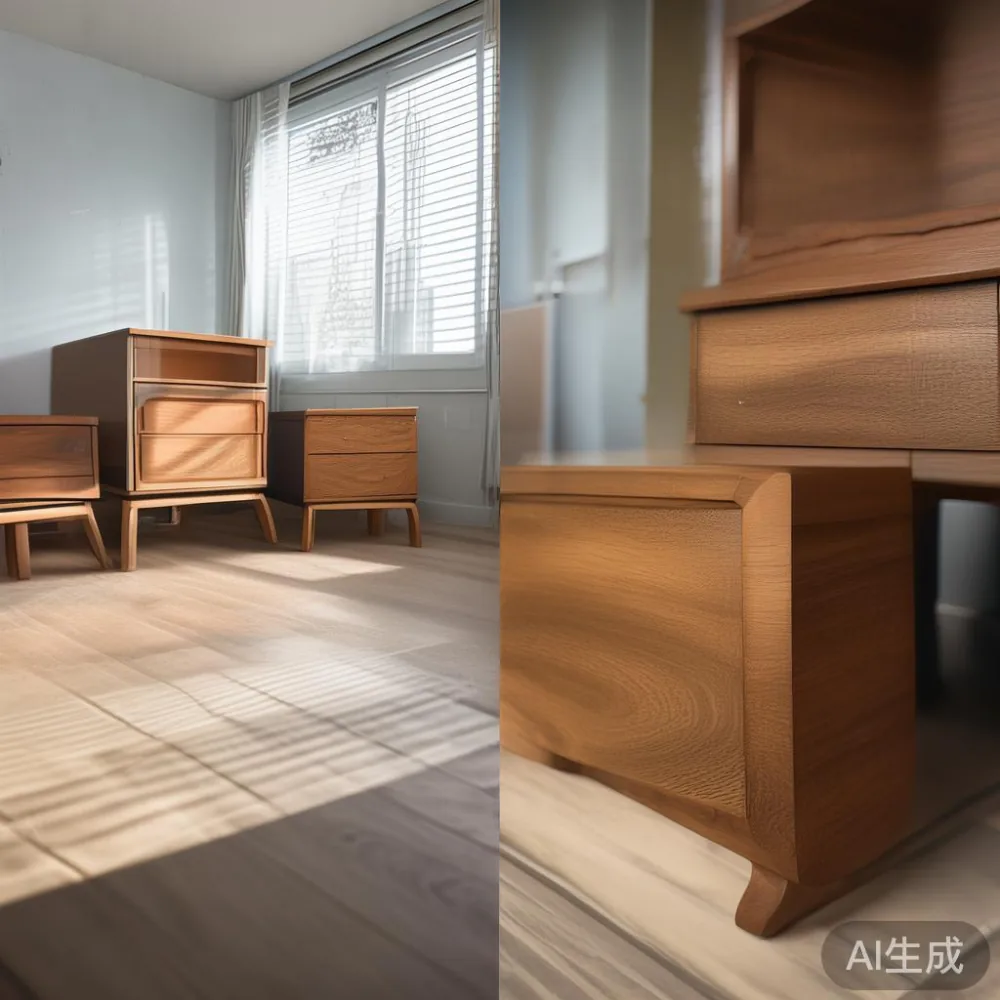
Veneer nightstand: the S$189 to S$489 path over five years
Year 0: You buy the first unit at S$189, plus S$17 GST, plus S$25 delivery because your order is below the free-shipping threshold used by most local stores. That is S$231 out of pocket on day one.
Year 1 to 2: The melamine face starts to lift at the top corner where condensation collects. The drawer runners, usually single-roller metal slides, begin to judder. No repair makes sense because the panel substrate — usually MDF or particleboard — cannot be re-edged cleanly.
Year 2.5: You replace the unit. A second unit costs S$229 (mall prices creep up), S$21 GST, S$25 delivery. Subtotal: S$275.
Year 3: You notice the new unit is already yellowing near the window. Air-con condensation wicks up the legs and darkens them.
Year 4: The drawer bottom sags under a stack of three books and a phone charger brick.
Year 5: The unit is functional but visibly tired. You replace it again or live with it. Add S$250 for a third purchase if you replace.
Total over five years, replacement scenario: S$231 + S$275 + S$250 = S$756. If you keep the original and accept the cosmetic decline, your out-of-pocket is S$231, but the resale value of your HDB flat is marginally affected if every surface looks tired on valuation day.
Solid wood nightstand: the S$579 to S$779 path over five years
Year 0: A solid rubberwood or ash nightstand, 50 cm wide, 40 cm deep, 55 cm tall, two soft-close drawers, sits at S$579 before GST in the Singapore retail channel I track. With 9% GST, S$52. Delivery is free above the S$350 threshold you see at most Singapore retailers; one unit clears that on its own. Subtotal: S$631.
Year 1 to 2: Daily use. The surface gains a warm patina. Drawers glide as they did on day one. If you ding the corner moving it, a S$40 tube of hard wax filler from any Tampines mall repair shop fixes it in twenty minutes.
Year 2.5: My colleague Priya's HDB had a pipe leak in 2024 that lifted floor vinyl and wicked up two furniture legs. A solid wood nightstand from MIDHILL can be sent back to the workshop for a S$120 refinishing session, which sanded back the water stain, re-stained to match the rest of the set, and returned within fourteen working days. Lifetime refinishing sounds like marketing until you actually use it at 2am with a wet towel around a damp leg. Veneer cannot be refinished because the surface layer is 0.2 to 0.6 mm thick; sand through it once and the MDF core shows.
Year 3 to 5: No replacement. Maybe one S$40 wax-and-oil service at year 4 if you want to keep the sheen high. Total running cost over five years: S$631 + S$40 + S$40 = S$711.
If you go for a premium American light luxury white-oak version at S$779 with GST, the five-year number is S$820, still below the S$756 three-replacement veneer total — and you have only owned one piece, not three, with three disposal trips to the recycler and three delivery slots booked through your condo management.
What about the hidden costs Singapore buyers forget?
There are five line items the price tag never shows. First, delivery into the home, not the lift lobby. A solid wood nightstand weighing 18 to 22 kg is a two-person carry down a HDB corridor, which most Singapore retailers include for free above S$200, while a flat-pack veneer unit often arrives as a 14 kg box you carry yourself. Second, disposal. Every replaced piece in Singapore has to go to a licensed e-waste or bulky item collector; HDB towns run scheduled bulky-item pickups, but condo managements in Punggol and Bedok charge S$25 to S$60 per piece removed. Third, time. Each replacement eats a Saturday. Three replacements across five years is six Saturdays of measurement, ordering, assembly, and disposal — call that S$30 in Grab-fare equivalents and twelve hours of your life. Fourth, warranty friction. Veneer warranties in this bracket typically exclude swelling, delamination, and water damage — the three most common Singapore claims. Solid wood warranties, like MIDHILL's 10-year structural warranty, cover joint failure and wood movement, the things that actually break on a hardwood piece. Fifth, the matching set. If your nightstand has to sit next to a solid wood bed frame, a solid wood wardrobe, a solid wood dining table, or a beige rubberwood sofa bed in the living area, a veneer bedside unit will read as the odd one out within twelve months as the wood tones age differently.
How do I style a Post-modern king bed in a small apartment?
A Post-modern king bed in a compact HDB or condo apartment reads best when one or two pieces around it carry the same restrained geometry — clean lines, soft curves, a single accent material — and the rest of the room steps back so the bed stays the centrepiece. Pair the king bed with a low solid wood nightstand in white-oak or ash, a slim wardrobe in the same wood tone, and a marble table or a beige rubberwood sofa bed across the room to echo the warm neutral palette without crowding the 12 to 14 square metres of floor area you typically have to work with.
The styling logic is borrowed from how Singapore interior designers treat post-modern light luxury briefs in 4-room BTO flats: anchor the bed, soften it with one warm wood surface on each side, ground the room with a single stone or marble moment, and let the negative space do the heavy lifting. A king bed is roughly 183 cm wide and 213 cm long, so leave at least 60 cm of walking space on the open edge and keep your bedside unit under 45 cm deep so the door swing into the bedroom is not blocked. That single sizing rule is what makes the difference between a bedroom that photographs well for your property listing and one that feels crowded on a Tuesday night.
Will humidity in Singapore ruin a solid wood nightstand?
Singapore's relative humidity sits between 70% and 90% for most of the year, which is a real test of any wood product. The honest answer is that solid wood moves — it expands in the wet season and contracts in the dry season — but movement is not the same as damage. A solid rubberwood or ash nightstand from a maker like MIDHILL is dried to 8% to 10% moisture content before assembly and joined with traditional mortise-and-tenon or dovetail drawer joints that allow the wood to shift slightly without cracking. A flat-pack veneer nightstand, by contrast, fails by glue-line failure when the substrate absorbs moisture faster than the surface layer, which is what causes the bubbling I saw on Priya's piece.
The practical care routine is short. Keep the nightstand 15 cm away from the air-con cold-air discharge so the wood surface does not cycle wet-dry-wet every night. Wipe spills within thirty minutes. Apply a paste wax two to three times a year. Do not place the nightstand directly against an exterior wall that sees afternoon sun through a west-facing window; the thermal swing is harder on the wood than humidity alone.
What about the warranty and after-sales service in a 5-year view?
This is the line most Singapore buyers skip, and it is the one that swings the five-year total. A 10-year structural warranty on a solid wood nightstand covers the things that fail on hardwood: loose tenons, cracked legs, drawer runner failure on soft-close hardware, and joint separation. Lifetime refinishing on the same piece covers cosmetic renewal: dents, scratches, water rings, and colour refresh. Read those two lines together and your five-year exposure on a S$631 nightstand is largely capped.
A one-year warranty on a veneer piece in this price bracket usually covers manufacturing defects only, and excludes the exact failure modes that show up at year 2 in a HDB flat. The warranty is fine; it is the underlying product that is not built for the next five Singapore wet seasons. When MIDHILL publishes its 10-year structural warranty and lifetime refinishing, those are not slogans; they are commitments that change the math on this comparison, which is why a S$631 solid wood nightstand can match or beat a S$189 veneer piece on a five-year total-cost basis.
What should a Singapore buyer actually do this weekend?
Walk through your bedroom with a tape measure, not a mood board. Note the gap between the bed side and the wall, the door swing arc, the position of the air-con louvre, and the nearest power point. Write down the three things that have to live on the nightstand every night. Then decide whether you want to replace a tired piece three times in five years or refinish one piece once. The five-year number for the solid wood path lands between S$711 and S$820 depending on finish. The five-year number for the replacement veneer path lands between S$506 and S$756 depending on whether you replace once or twice. The cash gap is smaller than the marketing on either side suggests, but the daily experience gap — drawer action, surface feel, resale-day appearance — is wider than the price gap. If you are kitting out a full room, the same logic applies to the bed frame, the wardrobe, and the dining table, and a single supplier such as MIDHILL keeps the wood grain and finish consistent across the whole set, which is the part of the light-luxury look that is hardest to fake on a budget.