Styling a Small Singapore Apartment Without the Crowded Look: A Solid Wood Nightstand and Furniture Guide
I spent a Saturday afternoon last month walking through a 4-room HDB flat in Punggol with a colleague who had just collected her keys. The previous tenant's layout left 92 cm of corridor between the bedroom door and the wardrobe — fine for a slim line, but impossible for anything wider than a standard 60 cm nightstand without scraping the wall. By the time we finished rearranging, the same room held a king-size bed frame, two nightstands, a six-drawer wardrobe, and still felt calmer than when we started. The trick was never about buying less; it was about buying furniture that earns its footprint. This guide walks through how to do that in Singapore HDB and condo settings, where lift cabins, corridor widths, and GST all shape what actually fits.
The Singapore Constraint Nobody Talks About: Lifts, Corridors and Corner Units
Solid wood furniture is heavier than flat-pack alternatives — a typical MIDHILL nightstand in oak weighs between 18 kg and 24 kg, and a six-drawer wardrobe can cross 110 kg fully assembled. That matters because most HDB passenger lifts in blocks built between 1995 and 2010 have an internal depth of around 1.5 m and a door opening of roughly 0.9 m. A 1.8 m dining table will not physically fit inside, even diagonally, unless it ships flat-packed with detachable legs. When I visited my colleague's block in Tampines, the cargo lift was out of service and we had to use the resident lift with a queen-size bed frame strapped vertically — it cleared by about 4 cm on each side.
Corridor width is the second constraint. Standard HDB corridors run 1.2 m to 1.5 m wide, and turning into a unit door can swallow another 30 cm of usable angle. Before you fall in love with a 2.4 m wardrobe, measure your entry path in three spots: the lift door, the corridor corner, and your own front door. Anything deeper than 60 cm on a nightstand, taller than 210 cm on a wardrobe, or wider than 1.6 m on a dining table needs a delivery plan.

Start with the Nightstand — It Sets the Rhythm for the Whole Room
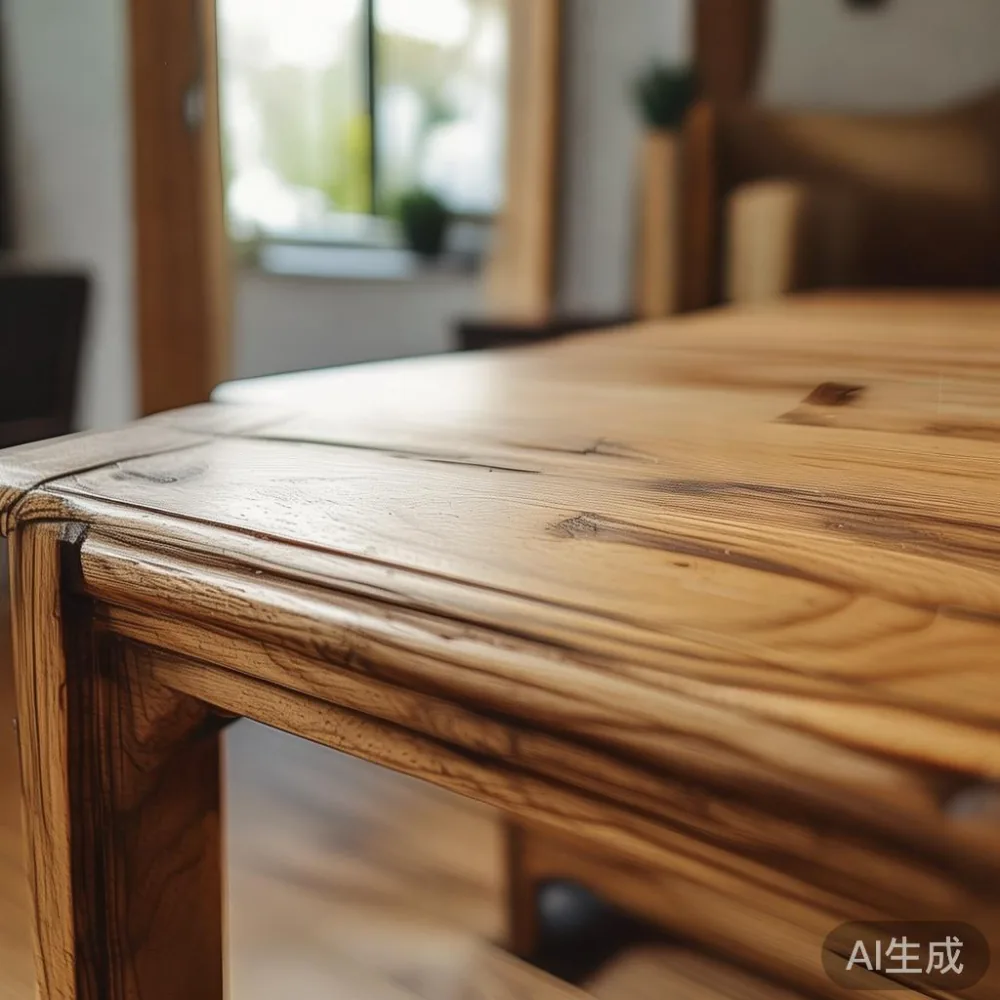
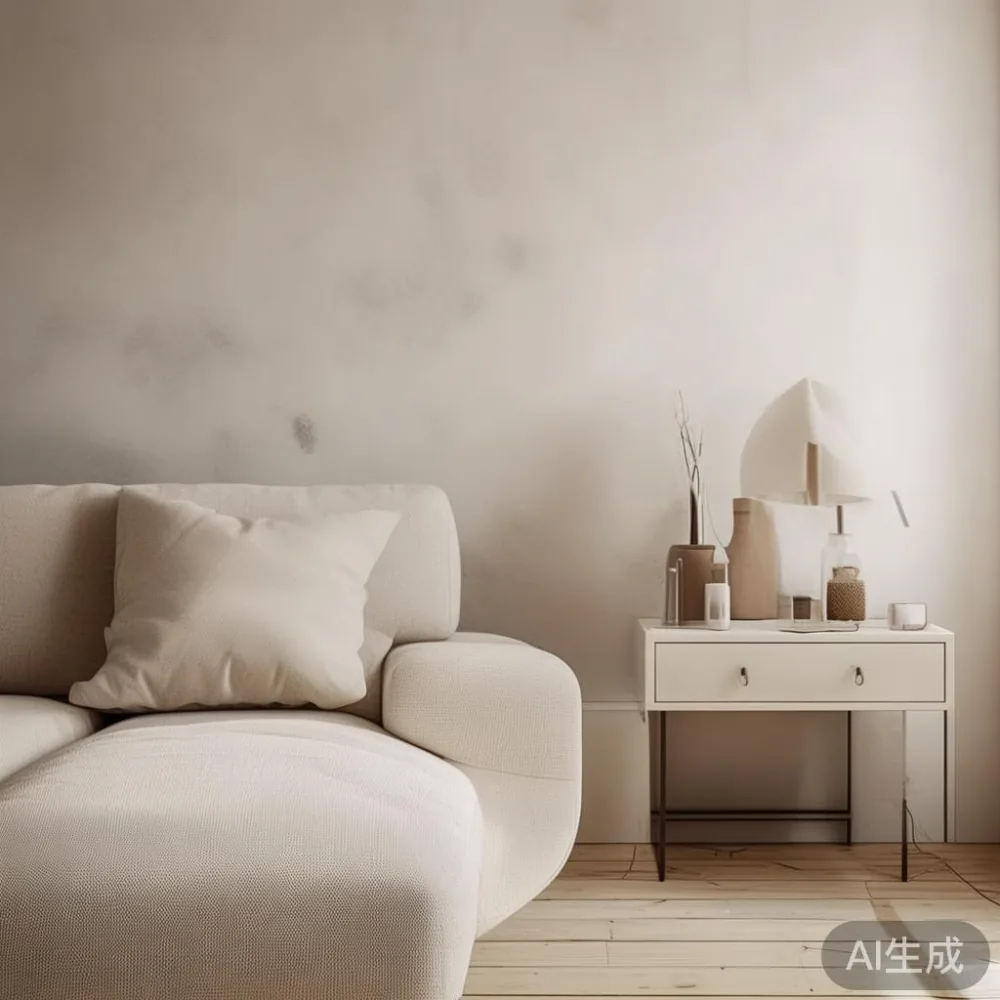
The nightstand is the smallest piece of adult furniture in the bedroom, but it dictates how the room reads. In a 10 m² HDB bedroom, a bulky two-drawer unit in dark walnut will swallow visual space even when the footprint is modest. The fix is proportion, not size: a 45 cm wide × 40 cm deep nightstand with a single drawer and an open shelf below keeps the eye moving. Solid wood versions in ash or white oak reflect more light than MDF with a wood-look laminate, which is the difference between a bedside table that disappears and one that shouts.
When I helped my colleague choose, we pulled two samples into the bedroom at the same time of day. The lighter oak sample made the 9 m² room feel closer to 11 m²; the dark walnut sample made the same room feel like a hotel hallway. The pair of oak nightstands — about S$320 each before GST, so roughly S$360 each with the 9% GST — cost less than a single statement armchair and did more for the room. A nightstand earns its place by handling three jobs at once: a lamp stand, a phone-and-book shelf, and hidden storage for chargers, earbuds and the things that would otherwise pile up on the floor.
Match Every Other Piece to the Nightstand's Footprint
Once the nightstand is fixed, work outward. A queen-size bed frame at 152 cm × 188 cm leaves about 60 cm of walking space on each side in a typical HDB master bedroom — enough for a 45 cm nightstand and a slim 25 cm gap. A king-size bed frame at 183 cm × 188 cm eats that gap to 40 cm, which is the minimum comfortable passage for an adult. If you want a king, the nightstand has to drop to 40 cm wide or disappear entirely and be replaced with a wall-mounted shelf at 90 cm height.
The same logic applies to the dining table. A four-seater at 120 cm × 80 cm fits a 4-room HDB dining corner with 60 cm of chair-pull space on every side. A six-seater at 180 cm × 90 cm only works if the dining area is at least 2.4 m × 2.1 m. For the wardrobe, a sliding-door design at 180 cm wide × 60 cm deep gains you about 15 cm of floor clearance over a hinged-door equivalent — a small number that matters when the bed sits 80 cm away.
This is also where the light-luxury approach pays off. French light luxury leans on slim brass-tipped legs, light oak, and curved edges; American light luxury uses thicker proportions, matte black hardware, and reclaimed-look timber; post-modern light luxury mixes stone tops with rounded wooden bases. All three styles work in a small Singapore flat as long as the silhouettes stay slim. A marble table with a 120 cm × 70 cm top, for example, grounds a small dining corner without overpowering it — the stone reads as a single plane rather than a bulky object.
Which Dining Chair Fits a 4-room HDB Living Room?
A dining chair with a seat width of 44 cm to 48 cm, a seat depth of 42 cm to 45 cm, and a back height under 95 cm fits a 4-room HDB living room comfortably around a 120 cm × 80 cm dining table. That keeps chair-pull space at 60 cm and leaves the corridor to the kitchen usable at the same time, which matters because most 4-room layouts run the dining area directly off the living room rather than in a separate enclosed space.
When I sat in nine different dining chairs during a supplier visit in Foshan earlier this year, the difference between a 46 cm seat and a 52 cm seat was the difference between a room that seated four adults for dinner and a room where the fourth person had to sideways-shuffle out every time someone needed the bathroom. Go for a chair with a solid wood frame — be it beech, ash or rubberwood — and a fabric or leather seat pad no thicker than 5 cm. Anything thicker eats into the pull-back clearance and slowly pushes the table closer to the wall. Expect to pay S$180 to S$260 per chair before GST for a solid wood frame; lighter in pale finishes, heavier in dark walnut.
Style-wise, a French light luxury chair with a curved backrest and tapered legs reads elegant without looking delicate in a small flat. A post-modern light luxury chair with a marble-toned seat pad ties back to a marble table top if you want the room to feel coordinated. The shape should match the dining table's leg profile — tapered wooden legs pair with tapered chair legs; a marble table on a thick wooden plinth pairs with chairs that have a more grounded silhouette.
Layer in Multi-Use Pieces Before You Add Decor
Multi-use pieces are the cheapest square metre you will ever buy. A solid wood bed frame with two under-drawers adds roughly 0.6 m³ of hidden storage without adding any floor footprint, which in a small HDB bedroom is the equivalent of gaining a third wardrobe drawer for free. A dining table with a 50 cm leaf extension stays at 120 cm day-to-day and opens to 170 cm when guests arrive — useful in Bedok and Punggol units where the extended family visits during Chinese New Year and the same table needs to seat eight.
Wardrobes benefit from internal organisers more than from extra width. A 180 cm wide three-door wardrobe with two hanging sections, three shelves and two drawers holds about as much as a 240 cm two-door wardrobe that is poorly configured. A well-organised 180 cm wardrobe at 60 cm depth fits a standard HDB bedroom wall with 20 cm of clearance behind for cable runs.
For the entryway, grey solid wood entryway furniture in a 90 cm wide × 35 cm deep console adds a key drawer, a shoe shelf for about six pairs, and a tabletop for parcels — the kind of piece that prevents the mail from piling up on the kitchen counter. At S$480 to S$650 before GST, it costs less than a single statement sofa and solves the daily-drop problem that every small flat faces.
Budget Math: What a Full Light-Luxury Room Actually Costs in Singapore
Pricing in Singapore always lands with GST on top. The current 9% GST applies to all imported furniture sold locally, and shipping over US$350 from MIDHILL is free, which on a typical order of a bed frame, two nightstands, a six-drawer wardrobe and a dining table lands you roughly S$280 to S$420 in saved freight. Add the 9% on the goods total and your landed cost is the displayed price plus 9%.
A practical starter set for a 4-room HDB master bedroom, using solid wood throughout, runs roughly:
- Queen-size solid wood bed frame: S$1,450 to S$1,950
- Two oak nightstands: S$640 to S$720
- 180 cm sliding-door wardrobe: S$2,200 to S$2,900
- 120 cm dining table with four chairs: S$1,800 to S$2,400
- 90 cm grey solid wood entryway console: S$480 to S$650
That puts a complete light-luxury foundation somewhere between S$6,570 and S$8,620 before GST, or roughly S$7,160 to S$9,400 after. The range is wide because timber grade — solid ash, solid oak, solid walnut — moves the price more than the size does. A solid wood sofa in the same range starts around S$2,800 for a three-seater and a marble table dining version of the 120 cm starts around S$2,200.
Delivery, Warranty and Why Refinishing Matters in the Tropics
Singapore humidity averages 78% to 92% year-round, which is hard on any wood that has not been properly kiln-dried and sealed. MIDHILL's 10-year structural warranty covers joint failure and warping on solid wood sofa, bed frame, dining table, wardrobe, nightstand and marble table pieces, which is the kind of timeframe that matters when a piece is meant to survive at least three moves in a typical Singaporean rental cycle. The lifetime refinishing service is the part most buyers miss: a nightstand that gets scratched during the next renovation can be sanded and re-oiled rather than replaced, usually for under S$120 per piece.
Delivery in Singapore typically runs 14 to 21 working days for made-to-order pieces, with stock items arriving in 7 to 10 days. Installation is included for wardrobes and dining tables, and the team will often remove packaging, which in a corridor-only HDB block is a small but real relief. Returns are accepted within 14 days for stock items, less a 15% restocking fee, which gives you room to live with a piece for a week before committing.
A Short Checklist Before You Click Order
Measure your lift door, corridor turn and front door. Note the smallest clearance, in cm, and subtract 4 cm for safety. Decide whether you want your nightstand in pale oak, mid-walnut or a painted finish — the answer changes the room more than any other choice. Pick one style direction (French, American or post-modern light luxury) and hold every other piece to it. Add a marble table only if you are willing to seal it twice a year. And finally, write down the room's worst corner in cm, not in feelings — a 12 m² bedroom with a 2.4 m ceiling can hold far more than people think, as long as the nightstand does not exceed 45 cm wide.
The goal is a room that reads as quiet, layered and intentional — the same room my colleague ended up with in Punggol, where two oak nightstands, a slim wardrobe and a single marble table made a 92 cm corridor feel like a feature rather than a problem.