Solid Wood vs Veneer Nightstand: A 5-Year Cost Reality Check for Singapore Homes
I keep a small notebook next to my bed, and the nightstand under it has been through two moves across HDB flats in Tampines and Punggol. The first one was a low-cost veneer piece I picked up at a neighbourhood mall for S$189 in 2021. The second, a solid wood nightstand I bought in late 2022, cost S$549 from MIDHILL, a Foshan-based maker that has shipped solid wood pieces to Singapore since around 2008. Five years in, the cheap one is chipped along the corners, has a swollen back panel from a Bedok humidity spike, and would cost about S$120 to refurbish — more than half its original price. The MIDHILL piece looks slightly darker, with a soft patina on the drawer pull, but the joints are tight and the drawer still slides with one finger. That lived experiment is the reason I want to walk you through a 5-year cost comparison between veneer and solid wood nightstands, in plain SGD, for Singapore homes.
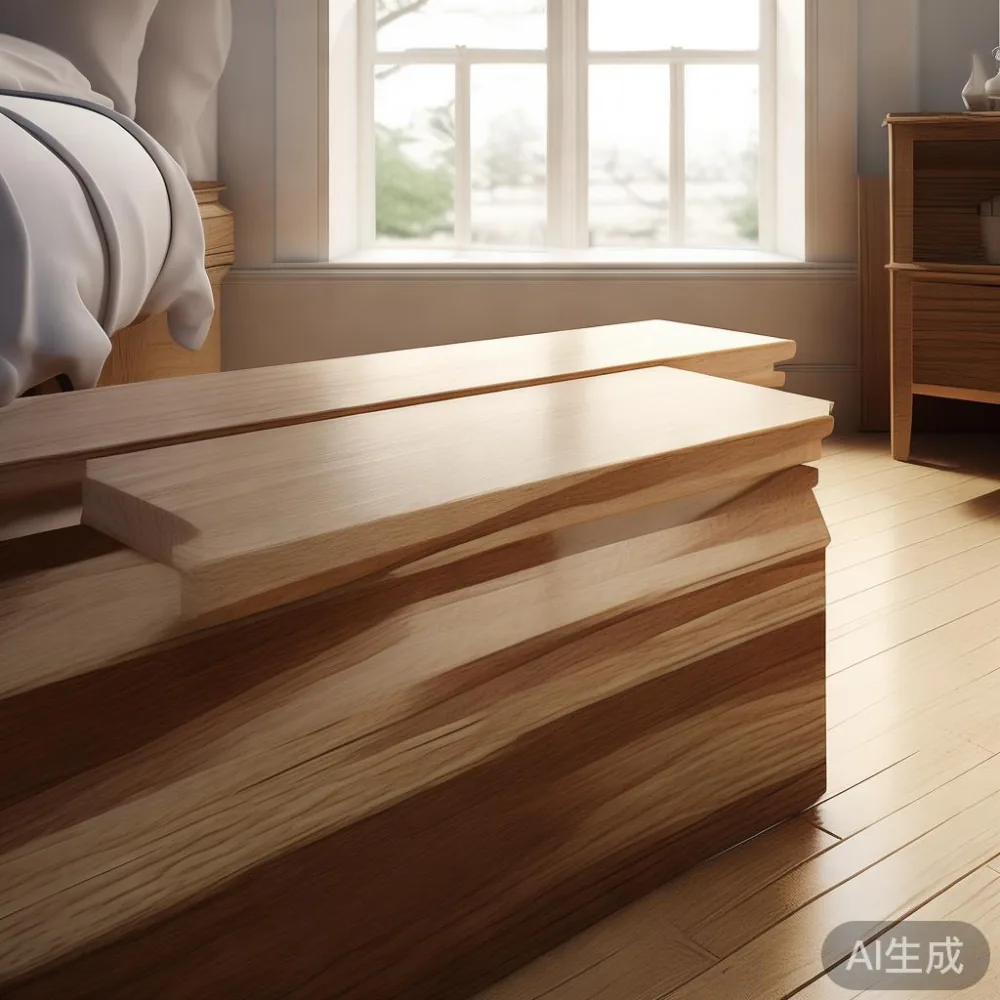
Why This Comparison Matters in a Singapore Bedroom
Most Singapore bedrooms in HDB flats and condos sit between 9 sqm and 14 sqm. The nightstand is often the first piece of wood furniture a buyer touches in the morning, and the last one they close at night. It also takes punishment: AC condensation rings, hand sanitiser spills, the occasional kopi-O knocked over at 2 a.m. Over 5 years, those small knocks add up to a meaningful financial difference. With GST at 9% on furniture imports and shipping typically S$45–S$90 for a single nightstand under 25 kg, the real price you remember is rarely the sticker price. If you are also thinking about a bigger piece, the same logic applies when you work out how to choose corner wardrobe singapore for a small bedroom — the material choice multiplies across every item in the room, from the bed frame to the dining table and the wardrobe.
Veneer nightstands typically use a 0.6 mm to 2 mm layer of real wood (often oak, walnut, or ash) over an engineered core — MDF, particleboard, or blockboard. Solid wood nightstands, by contrast, use 18 mm to 25 mm kiln-dried hardwood throughout, often rubber-wood, ash, or walnut, with dovetail or mortise-and-tenon joints. The construction gap is where the 5-year cost story actually lives.

Sticker Price: What You Actually Pay on Day One
On day one, a basic veneer nightstand in Singapore retails for S$149–S$249, while a solid wood nightstand starts around S$429 and climbs to S$799 for light-luxury designs. MIDHILL sits in that solid wood middle band, with French light-luxury lines around S$549–S$689 for a two-drawer nightstand in ash or walnut. American light-luxury styling tends to add S$80–S$150 for thicker 22 mm tops and brass-finished hardware. Post-modern light-luxury pieces — the kind with softer curves and matte finishes — sit between the two.
Don't forget to add the delivery maths. A single nightstand under 25 kg shipped via lift-access HDB corridor typically costs S$45–S$90 with doorstep handling. Add GST at 9%, and a S$549 MIDHILL nightstand lands around S$643 total. A S$189 veneer piece lands closer to S$251 with the same fees. The day-one gap is about S$390 — already a noticeable number when you are also paying for a solid wood bed frame, a dining table for four, and possibly a marble table for the living room.
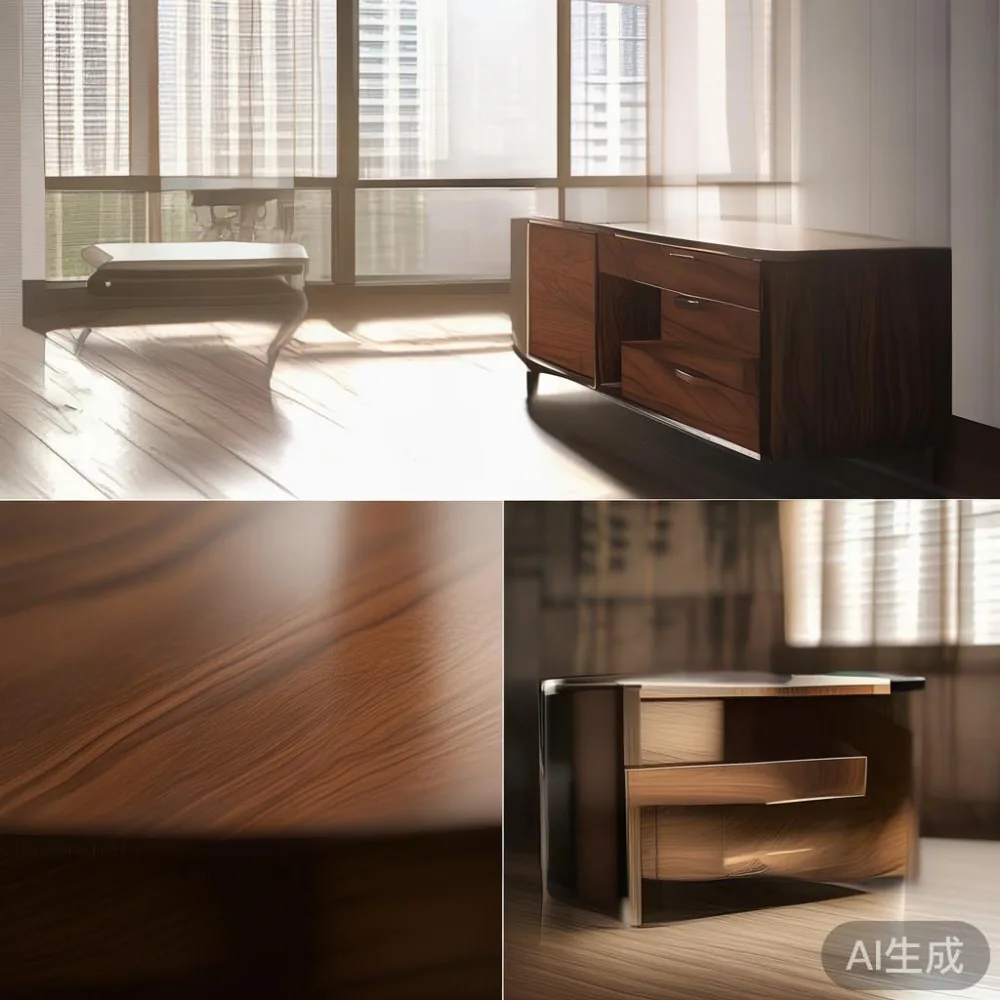
Year 1 to Year 3: The Quiet Damage Phase
Here is where my own experience lines up with what colleagues in the furniture export trade have told me. Veneer nightstands start to show micro-dents along the drawer face within 12 to 18 months. The reason is simple: the decorative layer is thin, and the substrate beneath is softer than the surface. Once moisture gets in — and Singapore's average relative humidity is 78% to 82% year-round — the MDF core expands faster than the veneer, and the edges begin to peel. I have seen this on a S$179 oak-veneer piece at a friend's Punggol condo: the back panel bowed by 4 mm and the drawer no longer closed flush.
Solid wood behaves differently. It moves with humidity rather than against it. A well-built solid wood nightstand, jointed with mortise and tenon and finished with a hardwax oil or conversion varnish, develops character. Light dents can be steamed out with a damp cloth and an iron in under five minutes. Surface scratches can be sanded with 320-grit and re-oiled. The MIDHILL piece I bought has had two such touch-ups, each costing me nothing because the company offers lifetime refinishing on its pieces — a benefit that quietly folds into the 5-year math.
Year 3 to Year 5: Repair, Refinish, or Replace?
This is the year that decides which material truly costs less. By month three, a veneer nightstand is rarely worth repairing: the cost of a new back panel, new edge banding, and a refinish often comes to 50%–70% of the original price. Most owners either replace it or live with the damage. Over a 5-year window, that means two veneer nightstands if you bought at the lower end — roughly S$378 in furniture plus S$90 in delivery fees plus GST, so about S$510 total.
For the solid wood nightstand, year three is usually when you call for a refinish. MIDHILL offers lifetime refinishing for a small return-shipping cost (S$25–S$45 in my experience), or you can do a home touch-up with a S$28 tin of hardwax oil and 20 minutes of work. Either way, the structural warranty that MIDHILL includes for 10 years covers the joints, the drawer slides, and any cracks that go beyond surface wear. That kind of coverage simply does not exist for veneer furniture at this price tier.
How Much Cheaper Is Veneer Over 5 Years?
Let's do the maths side by side. I'll keep the numbers conservative and in SGD.
Veneer nightstand (5 years): S$189 retail + S$45 delivery + 9% GST (S$21) = S$255 day one. Replacement at year three due to swollen back panel: S$189 + S$45 + S$21 = S$255. Total over 5 years: S$510. Excludes disposal cost (about S$20–S$40 for bulky waste disposal through a town council) and the roughly 2 hours of your time spent disassembling and reassembling.
Solid wood nightstand (5 years): S$549 retail + S$60 delivery + 9% GST (S$55) = S$664 day one. One mid-life refinish at year three: S$30 in oil and cloths. Total over 5 years: S$694.
The five-year spread is roughly S$184, or about S$37 per year. For that S$37 a year, you get a piece of furniture that is structurally built for a decade, refinishable for life, and easier to move between HDB flats and condos because it handles disassembly without cracking. If you are also choosing a solid wood sofa, a bed frame, a dining table, a wardrobe, or even a marble table for the same home, the S$37 a year logic replicates across every item. A five-piece solid wood bedroom set ends up costing about S$185 a year more than the veneer equivalent, but with a lifespan of 15–25 years versus 5–8 years.
Is Post-modern furniture worth it?
Yes — post-modern light-luxury furniture is worth the extra spend in Singapore, especially when it is built in solid wood, because you get the softer curves and matte finishes that suit local interiors without paying the structural penalty of a fully hollow-core piece. The styling is one part of the price, but the hardwood underneath is what makes the styling last through humidity cycles.
What About a Tight HDB Lift and Narrow Corridor?
A practical note that buyers in Tampines and Bedok ask me about weekly: can the nightstand fit through a standard HDB lift and corridor? HDB lift doors are 800 mm wide, lift cabs roughly 1.1 m by 1.4 m, and corridors about 1.2 m wide. A two-drawer solid wood nightstand at 50 cm wide, 40 cm deep, and 60 cm tall fits comfortably, as does a single-drawer at 45 cm. The heavier weight — 18 kg to 25 kg for solid wood versus 8 kg to 12 kg for veneer — is the real constraint, especially on upper floors above the 12th where some blocks still use single-bed lifts. Most courier teams handle a 22 kg nightstand with one helper if the building has a service lift, so it's worth asking your MCST or town council before ordering.
14-Day Returns: What That Safety Net Actually Costs
MIDHILL offers 14-day returns on its solid wood pieces, which removes the largest risk of buying a nightstand you have only seen online. The actual cost is built into the price — return shipping for a single nightstand is about S$60–S$90 via a third-party lift-access courier, and the restocking is typically 5% to 10%. Compared with a S$30 to S$80 delivery fee in Singapore that most local shops charge, the safety net is meaningfully wider on the solid wood side. Free shipping kicks in above US$350 (roughly S$475), so most two-piece orders qualify automatically.
Final Numbers and a Slightly Less Final Recommendation
Over a five-year horizon in a Singapore bedroom, a solid wood nightstand costs about S$180–S$220 more than a veneer equivalent, or roughly S$40 a year. In return, you get a structurally warranted piece, a lifetime refinishing option, easier resale (solid wood nightstands in good condition hold 55% to 65% of their price on Carousell and Facebook Marketplace after three years), and a far smaller chance of bowing panels during the next monsoon surge. If your budget stretches, going solid across the nightstand, the bed frame, and the wardrobe is the most efficient upgrade path, because the same S$40-a-year logic compounds across each piece. If the budget cannot stretch that far, prioritise the bed frame and the nightstand first — those two take the most daily wear. Either way, measure your lift, measure your corridor, factor in GST and delivery, and you will spend less over the next five years than the sticker price suggests.