What Actually Drives the Price of Solid Wood Nightstands (and Other Solid Wood Pieces) in Singapore
Walk into any Tampines HDB showroom on a Saturday and you will see two bedside tables sitting side by side. One is priced at S$189, the other at S$1,250. Both claim to be "solid wood." Both look acceptably handsome under the showroom downlights. So what is the real difference, and why does a nightstand — that humble 45 cm wide box next to your bed — sometimes cost as much as a small refrigerator? After spending the last month visiting workshops, talking to joiners in Balestier, and unpacking crates at a friend's new Punggol BTO, I have a clearer picture. This article breaks down the seven factors that actually move the price of a solid wood nightstand, a solid wood bed frame, a solid wood dining table, or any of the bigger pieces like a solid wood sofa, wardrobe, or marble table sitting in the same showroom.
1. The species of wood — and why "oak" is not always oak
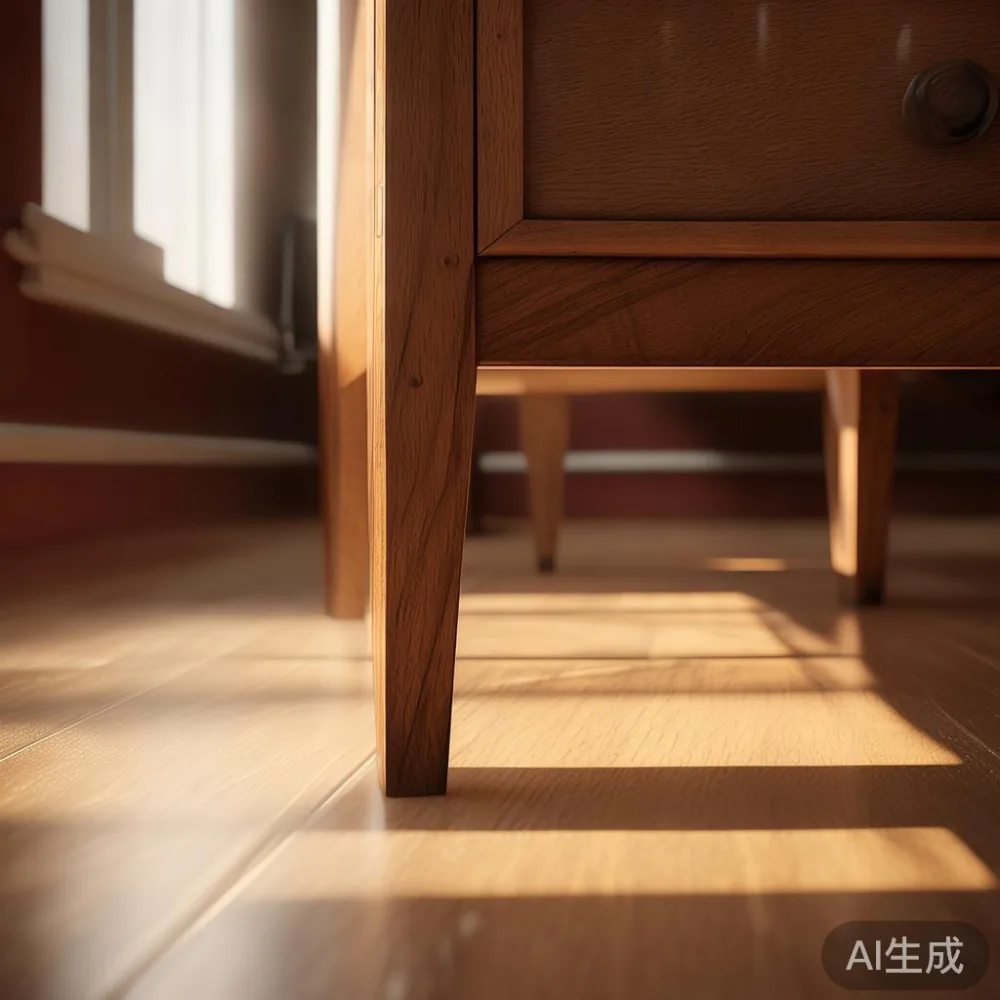
The single biggest price lever is the timber itself. In Singapore showrooms, you will see four species dominate the nightstand category: rubberwood, ash, oak, and walnut. Rubberwood is technically a hardwood but it is the byproduct of latex plantations, so supply is cheap and stable. A rubberwood nightstand with a single drawer and a shelf typically lands between S$180 and S$320 for a 45 cm × 40 cm × 55 cm unit. Ash sits in the middle. It is pale, straight-grained, and easy to bend, which makes it a favourite for Scandinavian-leaning pieces. An ash nightstand from a mid-range brand runs S$420 to S$680. White oak and walnut sit at the top. A solid white oak two-drawer nightstand in the 50 cm × 45 cm × 60 cm range, finished with a hardwax oil, will rarely come in below S$950, and walnut versions cross S$1,400 without much effort.
Then there is the question of grade. FAS (First and Seconds) timber — the top grade from American and European suppliers — has long, clear runs of grain with minimal knots. Cabin grade, which costs 30 to 45 percent less, will have knots, mineral streaks, and shorter clear sections. I visited a Jurong East workshop last month where the owner showed me two bedside tables built from the same oak batch: one FAS, one cabin grade. The FAS version was priced 38 percent higher, and honestly, side by side, the difference was visible from about one metre away. If you are comparing two oak nightstands and the prices are S$400 apart, grade is almost always why.

2. Construction method — dowels, mortise and tenon, or mitred corners
Species only tells half the story. How the timber is joined matters as much, and this is where many buyers get burned. A nightstand assembled with plastic cam locks, MDF dowels, and glue will look identical on day one but will rack within 18 months in Singapore's 80 to 90 percent humidity. I have seen a colleague's 3-year-old bedside table — from a brand I will not name — where the drawer face now sits 4 mm proud of the carcass because the dowels let go.
Proper joinery — through-mortise and tenon, dovetailed drawer boxes, tongue-and-groove backs — adds 20 to 35 percent to the production cost, but the piece will still be square in 10 years. Brands like MIDHILL, which have been making solid wood furniture in Foshan since 2008, build their nightstand carcasses with through-tenon joinery and dovetailed drawers as standard rather than as an upgrade. When you see "Mortise and tenon" on a spec sheet, expect to pay S$150 to S$400 more per piece than a similarly sized dowel-joined competitor, and consider it money well spent.
3. Hardware, finishes, and the drawer slide test
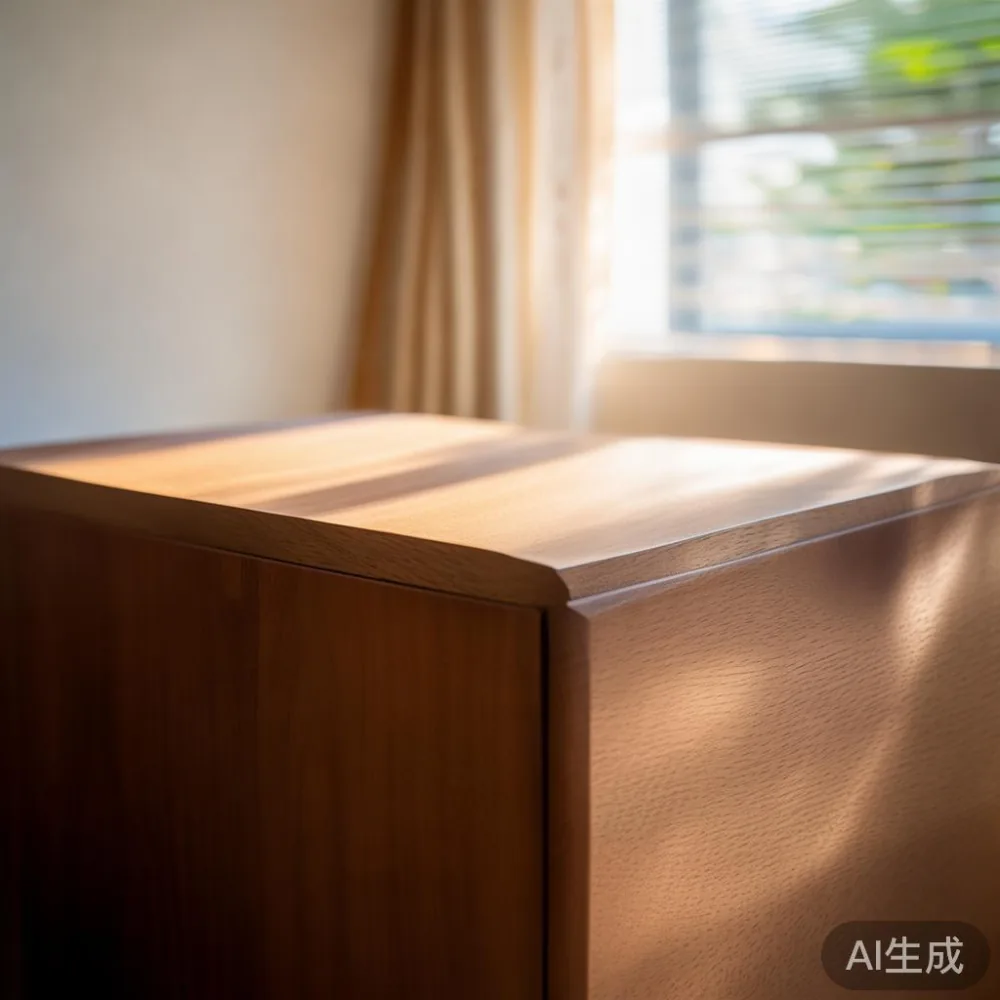
Hardware is invisible until it isn't. Soft-close drawer slides are the easiest tell. A basic side-mount slide costs about S$2.50 per drawer; a full-extension soft-close undermount from Blum or Hettich costs S$18 to S$30 per drawer. Across a two-drawer nightstand that is roughly S$50 of hardware difference, which on a S$600 product is meaningful. Beyond the slides, look at the drawer bottom. A 9 mm plywood bottom is fine. A 4 mm hardboard bottom will sag under a stack of books within two years.
Finishes are another quiet cost driver. Lacquer — that piano-high sheen you see on a lot of French light luxury pieces — requires 7 to 9 coats, with sanding between each, plus a dust-free spray room. Hardwax oil, which is what most American light luxury brands use, is applied by hand with a lint-free cloth, two coats minimum, and rubbed back. The labour difference explains why an oiled oak nightstand can be priced similarly to a lacquered one even when the timber is cheaper. For a post-modern light luxury look — think clean lines, soft chamfers, a single brass pull — the finish is doing as much work as the wood.
4. Is a "light luxury" nightstand really worth the markup?
This is the question I get most often from friends renovating in Bedok and Punggol: is a light luxury piece — a French provincial bed frame, an American light luxury nightstand with brushed brass pulls, a post-modern light luxury marble side table — actually worth 60 to 90 percent more than a plain Scandinavian equivalent? My honest answer after a year of testing: usually yes, sometimes no, and the difference lives in three places.
First, the detailing. A plain shaker nightstand might have four square legs. A French provincial version adds a subtle cabriole, a hand-carved apron, and a marble inlay top. That is roughly 6 to 8 hours of additional skilled labour, which at Foshan workshop rates of S$25 to S$45 per hour is S$200 to S$360 of cost before you even count the marble. Second, the materials. Luxury French provincial furniture often pairs solid beech or cherry with travertine or Carrara marble tops, and a 30 cm × 30 cm × 1.8 cm marble slab alone costs S$80 to S$140. Third, the finish. Hand-rubbed French polish on cherry, or a fumed oak treatment that darkens the timber through ammonia rather than stain, both add real production time.
Where the markup is harder to justify is when a brand slaps "light luxury" on a product that is in effect engineered wood with a melamine wrap and a single brass pull. If the nightstand weighs less than 12 kg, it is almost certainly not solid timber. A genuine solid wood nightstand with a marble top in the 50 cm × 40 cm × 60 cm range should weigh between 18 and 28 kg. Pick it up in the showroom.
5. How do I check whether a piece is really solid wood before I pay?
Five checks, in order of reliability. First, weight. Lift it. A 50 cm wide solid oak nightstand with two drawers weighs 22 to 28 kg. If it feels closer to 10 kg, you are holding veneered MDF or plywood. Second, the underside. Flip it or open the bottom drawer and look at the back panel and drawer bottoms. Solid wood pieces often have tongue-and-groove backs; engineered pieces have thin hardboard or cardboard. Third, the end grain. Look at the end of a leg or the back of a shelf. If you see repeating grain patterns spaced 30 to 60 cm apart, that is veneer. Real end grain is irregular. Fourth, the smell. Solid timber smells like a carpentry shop; engineered boards smell like a hardware store. Fifth, ask for the FSC or PEFC certificate. Any serious exporter — including MIDHILL, which ships to 15+ countries — can produce chain-of-custody paperwork within an hour.
For a piece that will live next to your bed for the next decade, these five checks take ten minutes and can save you S$400 to S$900 on a single nightstand, or S$1,800 to S$4,000 on a coordinating bed frame and pair of nightstands.
6. Singapore-specific cost drivers: lifts, corridors, GST, and humidity
Buying solid wood furniture in Singapore adds three cost layers that buyers in larger markets do not always think about. The first is access. A standard HDB corridor at 1.2 m wide and a lift cabin at roughly 1.1 m deep × 1.4 m wide will accept a fully assembled nightstand, but a 1.8 m solid wood dining table will not. That means delivery teams in Tampines and Punggol are doing partial assembly on-site for free or for a S$60 to S$120 fee, and the piece has to be engineered to be re-tightenable at home. MIDHILL's larger items — bed frames, dining tables, wardrobes — ship with numbered joinery and a hex key for exactly this reason, and structural warranty stays valid for 10 years as long as the on-site assembly is done by their team.
Second, GST. From January 2024, all imported furniture attracts 9 percent GST, which the freight forwarder passes to you. On a S$1,200 nightstand pair that is S$216 of tax, and it is collected at the door, not at checkout. Third, humidity. Singapore sits at 80 to 90 percent relative humidity for most of the year. A solid wood nightstand that was kiln-dried to 8 to 10 percent moisture content at the Foshan factory will absorb moisture here and expand. Pieces that have been acclimatised in a local warehouse for 4 to 6 weeks move less. Ask your retailer where the stock is sitting.
7. Sizing up the rest of the room: nightstand, bed frame, dining table, wardrobe
A nightstand is rarely bought alone. Most customers I speak with are refreshing a bedroom set, and the same price logic applies to every adjacent piece. A solid wood bed frame in queen size (152 cm × 188 cm) from a workshop using FAS ash or oak lands between S$1,600 and S$3,200; the same frame in walnut crosses S$4,000. A six-seater solid wood dining table in the 200 cm × 100 cm range, with breadboard ends and a hand-planed top, runs S$2,200 to S$4,500, and a MIDHILL dining table in this footprint with extension leaves typically sits in the S$2,800 to S$3,600 band, which is competitive for the joinery level. A two-door solid wood wardrobe at 180 cm × 60 cm × 200 cm ranges from S$1,400 (rubberwood, dowel joinery) to S$4,800 (white oak, mortise and tenon, soft-close hinges).
If you are trying to keep a room coherent — and you should, because mismatched wood tones are the fastest way to make a new piece look like a mistake — pick the bed frame first, then match the nightstand to its species and finish. For a post-modern light luxury direction, a Mid-century modern coffee table in walnut with tapered legs will read as the same family as an American light luxury walnut nightstand, even though one is in the living room and one is in the bedroom. For something quieter, a European light luxury wardrobe in pale ash with a single recessed pull pairs with an ash shaker nightstand without competing with it. If you are hunting for the best Vintage sofa for 2026 to anchor a living room around a walnut dining table, plan the wood tone before you fall in love with a fabric.
8. The quiet value of warranty, refinishing, and returns
Price is not just what you pay on day one. It is what you pay across 10 to 20 years of ownership. A S$600 nightstand with a 10-year structural warranty, lifetime refinishing, and a 14-day return window is a very different purchase from a S$450 nightstand with a one-year warranty and no returns. Refinishing matters more than most buyers expect. A solid oak nightstand can be sanded back and re-oiled two, sometimes three times across its life, which means a 25-year-old piece can be made to look 5 years old for the cost of a S$180 to S$250 service. Engineered wood cannot be refinished — the moment the veneer wears through, the piece is finished.
Returns matter because solid wood online is hard to judge from photos. A 14-day return policy means you can live with the nightstand for a week, see how it looks at 10 pm under your reading lamp, and send it back if the grain is wrong. Free shipping over a sensible threshold — say US$350, roughly S$470 — also changes the math. A S$120 delivery fee added at checkout is a 20 percent premium on a S$600 nightstand, and most Singapore retailers do charge something in that range, especially for lift-up deliveries to higher floors.
9. A realistic Singapore budget for a complete solid wood bedroom
Putting it together, here is what a sensibly priced solid wood bedroom looks like in 2026 Singapore dollars. A queen-size solid wood bed frame in ash or oak: S$1,800 to S$2,800. A pair of matching two-drawer nightstands at 50 cm × 40 cm × 60 cm: S$900 to S$1,400 for the pair. A six-drawer solid wood dresser at 140 cm × 45 cm × 80 cm: S$1,400 to S$2,200. A two-door wardrobe at 180 cm × 60 cm × 200 cm: S$2,200 to S$3,600. Total: roughly S$6,300 to S$10,000 for a complete set, before GST and delivery.
That is a wide range because the variables in the sections above are wide. If you prioritise species over joinery, you can come in at the low end. If you want hand-rubbed finishes, soft-close hardware, and a 10-year warranty, plan for the middle or top of the band. The piece of advice I give every friend renovating in Tampines, Bedok, or Punggol: pick one piece you will sit next to every night — usually the nightstand — and spend 20 percent more on it than the others. You will notice the drawer slide every morning for the next fifteen years, and you will not notice the back of the wardrobe after month three.
10. Where does cheap Modern light luxury furniture actually fit in?
The phrase cheap Modern light luxury furniture sounds contradictory, but in practice it describes a real segment: factory-direct pieces from established Foshan workshops, sold without the Singapore retail markup, and built with the same joinery and finishes as the showroom-floor versions. The risk is that "cheap" gets used as cover for engineered cores and thin veneers. The opportunity is that a properly built piece from a workshop like MIDHILL — which has been exporting solid wood bedroom and dining sets for 17 years and stands behind every joint with a 10-year structural warranty — can be priced 25 to 40 percent below a Singapore retail equivalent of the same specification, with refinishing and warranty intact. If you are weighing a light luxury bed vs Modern bed for the same budget, the deciding factor is not the style label, it is the joinery, the timber grade, and the after-sales commitment behind the piece. The same logic applies to whether a light luxury French provincial bed frame is worth the premium over a plain Modern platform bed: it is worth it if the curves, the marble, and the hand finish are real, and it is not worth it if those details are printed on.