Veneer vs Solid Wood Nightstand: A 5-Year Cost Reality Check for Singapore HDB Homes
Three years ago I stood in a Tampines HDB lift with a flat-pack nightstand wrapped in cellophane, watching the operator quietly count the centimetres between the wrapped panel and the corridor wall. The label said engineered wood with a real-wood veneer top. By the time the lift door closed, a small corner of the veneer had already chipped against the brushed-steel rail. That was a S$189 nightstand from a local furniture chain. I have thought about it many times since, especially after visiting a friend in Punggol who bought a solid wood nightstand from MIDHILL for around S$520, including GST and doorstep delivery to the 12th floor. Five years is a reasonable horizon for a bedside table. Let me run the real numbers.
What a Nightstand Actually Has to Survive in an HDB Flat
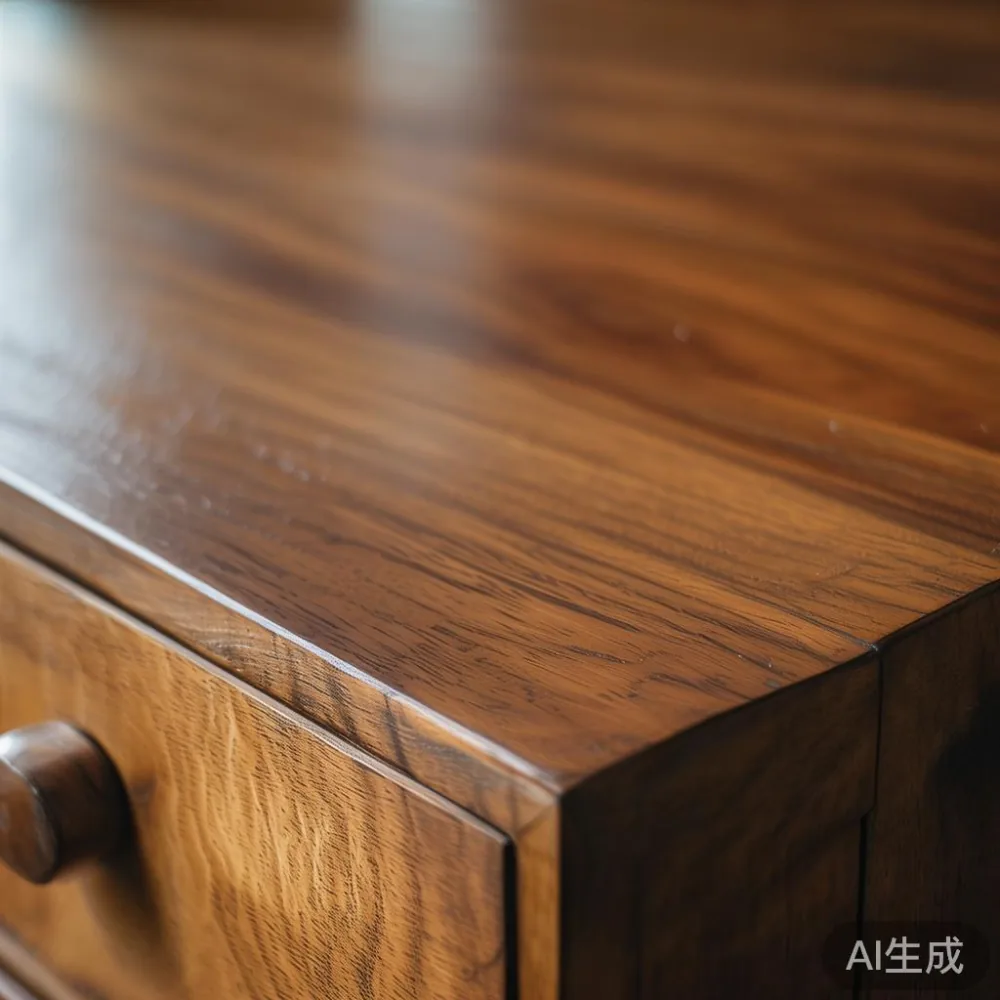
A nightstand lives a harder life than people give it credit for. On any given day in a Bedok 4-room flat, that little surface takes a glass of water at 11 p.m., a phone charger tangled around the leg, a stack of three books, a humidifier running at 60 percent for six hours, and the occasional spill of kopi from a saucer. The air itself sits around 28 to 31 degrees Celsius with 70 to 85 percent humidity for most of the year. If your air-conditioning runs only at night, the bedroom cycles between cool-dry and warm-wet every single day. Over five years, that is roughly 1,800 humidity cycles on a 45 by 40 cm wooden panel weighing about 8 to 12 kg.
Singapore lift openings are typically 80 to 90 cm wide, and corridor turns can be as tight as 1.2 m in older BTO blocks. A fully assembled solid wood nightstand rarely fits through a standard HDB door (90 cm wide by 210 cm tall) without being carried flat. That means weight matters. A solid oak nightstand at 14 kg is heavy but manageable for two delivery men. A veneer nightstand at 6 kg is easy to carry in one hand. Both pass the lift test, but the difference shows up in how the drawer slides after month eighteen.
How Much Does a Veneer Nightstand Cost in Year One?
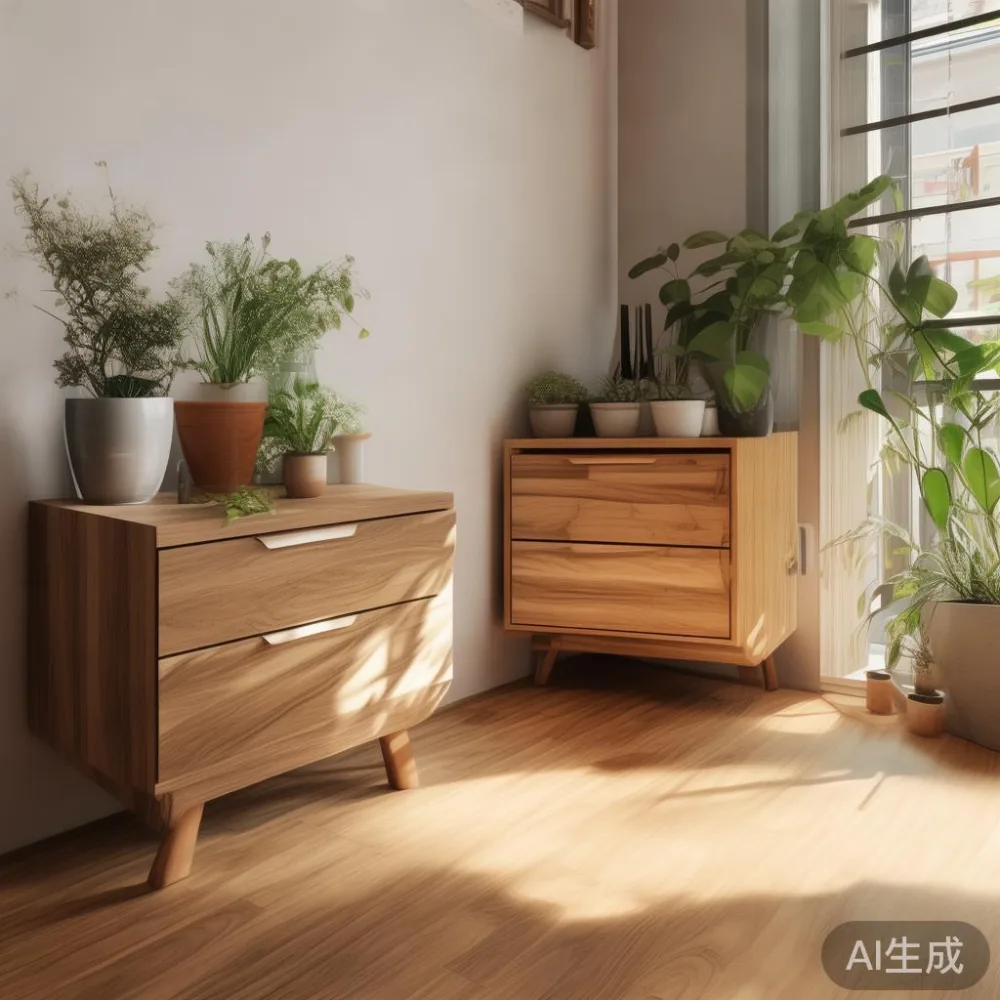
A reasonable veneer nightstand in Singapore today runs between S$149 and S$259 at retailers like Harvey Norman, HipVan, or Castlery's outlet days. Add delivery (typically S$25 to S$45 within mainland Singapore, more if you live in Sentosa), and a S$189 example lands at about S$220 all-in, including 9 percent GST. Assembly is usually included, but the warranty is the part that hurts: 12 months on the structure, nothing on the veneer surface after that. If the top delaminates in month fourteen, you pay.
By contrast, a solid wood nightstand from a Foshan maker such as MIDHILL ships in the S$480 to S$620 range for a single piece, landed in Singapore with GST, free delivery above US$350 (roughly S$470), and a 10-year structural warranty that covers joints, drawer runners, and wood movement. Lifetime refinishing is included, which means in year seven you can have the surface sanded back and re-oiled for the cost of transport only. That single policy changes the entire five-year math.
Is a Solid Wood Nightstand Cheaper Over 5 Years Than a Veneer One?
Let us model both options with real Singapore figures and assume the buyer replaces the unit in year five either out of frustration or because of a move. Veneer unit: S$220 in year one, plus a S$140 repair-and-refinish attempt in year two (typical sanding and re-lacquering quote), plus a S$220 replacement in year five. Total over five years: roughly S$580. Solid wood unit: S$520 in year one, S$0 in repairs because the warranty covers joints and drawer runners, S$45 for one professional oil re-coat in year three, S$0 in replacement because the table still looks new in year five. Total over five years: roughly S$565.
The spread looks small, but it flips the moment you assume the veneer unit needs replacing in year four, which is common when the substrate swells from humidity. In that scenario, veneer total climbs to S$800 over five years, while solid wood stays near S$565. The lifetime refinishing benefit on a MIDHILL piece also means year six to ten effectively costs you nothing beyond the occasional bottle of wood oil at S$18 from Gain City. Over ten years the gap widens to S$600 or more in your favour.
Why Do Bedroom Designers in Singapore Push Veneer So Hard?
Two reasons, both commercial. First, veneer furniture has a much faster turnover for the retailer, and a faster turnover means more repeat customers in a saturated 1.2 million HDB market. Second, French light luxury showrooms in Dempsey and Orchard tend to display oak or walnut veneer pieces because the photo finish is uniform and easy to photograph for Instagram. The pieces look gorgeous on a Saturday morning. They look tired by the following Chinese New Year, when the dry-season static and the wet-season humidity have each taken their turn.
American light luxury brands such as Restoration Hardware and Pottery Barn lean the same way in their Singapore outlets. Their catalogues show a Post-modern for small living room layout with a low velvet sofa and a walnut-veneer coffee table, which is visually appealing, but the nightstand beside the sofa or the bed is usually the first surface to fail because nobody protects it. Post-modern for small living room photography assumes a controlled climate, not a HDB bedroom with the window open half the night.
What About Style and Resale Value?
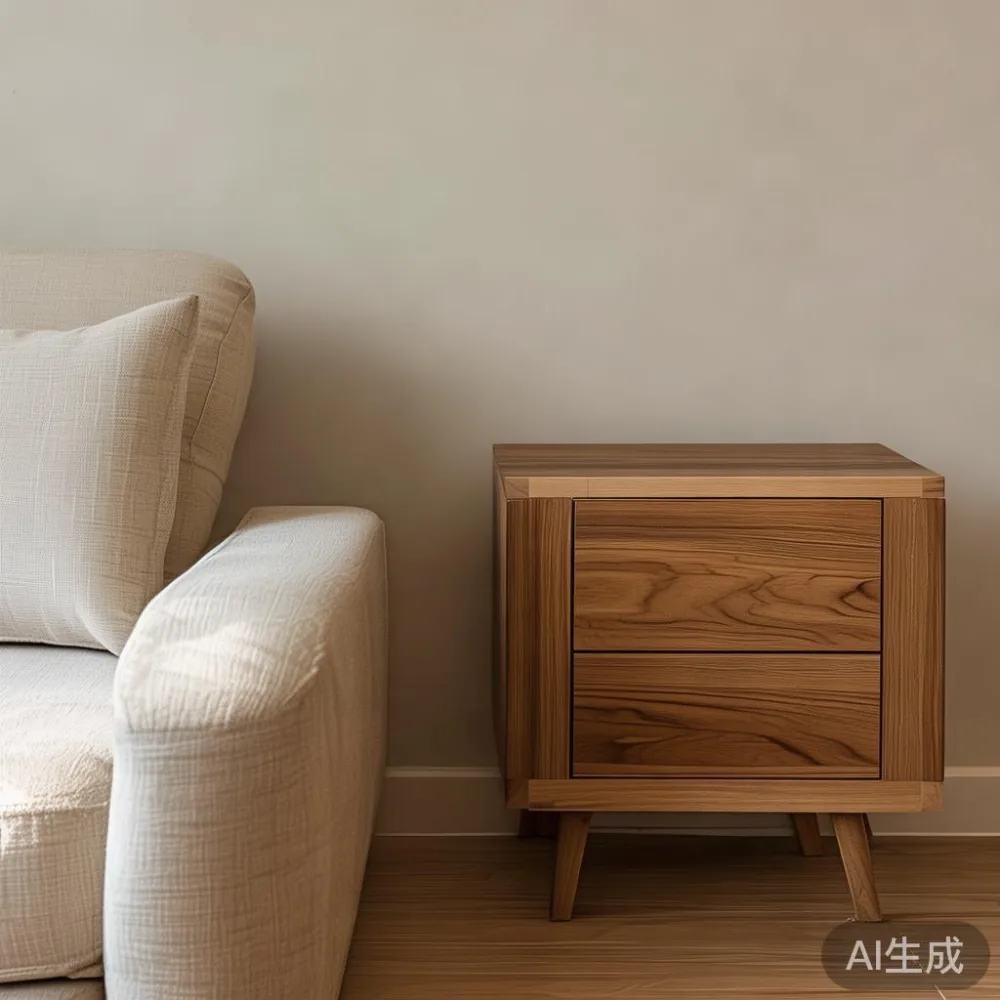
A solid wood nightstand ages like leather: it picks up character, and the grain pattern only becomes more interesting with time. A walnut piece develops a soft amber tone by year three. A white oak piece turns a pale honey colour. Buyers at Carousell and Facebook Marketplace in Singapore recognise these cues and will pay S$150 to S$250 for a five-year-old solid wood nightstand if the brand is known. Veneer furniture, by contrast, has almost no resale market once the surface shows wear. I listed a S$189 veneer bedside table for S$40 last year and received zero enquiries for six weeks before donating it to a thrift shop in Geylang.
Styling wise, a solid wood nightstand fits Japandi for guest room schemes because the visible grain pairs naturally with linen bedding and unglazed ceramics. If you are working out how to style Japandi sofa in bedroom layouts, a matching solid wood nightstand anchors the same warm-neutral palette without competing for attention. The same piece also answers the question of how to style light luxury sofa in bedroom corners: the nightstand becomes the quiet supporting surface that lets the upholstered piece breathe.
How Does Shipping and Delivery Compare in Singapore?
Free shipping above US$350 from MIDHILL covers any single order that hits roughly S$470, so a single nightstand at S$520 clears the bar on its own and arrives with doorstep delivery included. Typical door-to-door time from Foshan to a Singapore HDB is 14 to 21 days by sea, longer for Sentosa or a private condo with a loading bay booking requirement. A local veneer order arrives in 3 to 7 days from a Singapore warehouse, which is faster, but you pay for that speed at the till and again at the landfill five years later.
Condo deliveries in Punggol, for example, often require a specific time slot booked through the management portal, and the freight lift may have a 1.5-tonne limit during off-peak hours. A solid wood nightstand at 14 kg does not approach that limit, but a heavier piece such as a MIDHILL European light luxury bed or a full MIDHILL light luxury wardrobe will need two delivery men and a longer booking window. Plan ahead, and the process is painless.
What Should a Tampines or Punggol Buyer Actually Choose?
If you rent a HDB flat on a two-year lease cycle, veneer may make short-term sense, but the math only works if you plan to throw the piece away at the end of the lease. If you own your HDB or have signed a five-year lease, solid wood pays for itself, especially with a transferable warranty. For condos under 1,000 sq ft, the same logic applies. A Post-modern for small living room scheme built around a single bold accent will outlast three rounds of veneer replacements, and the nightstand is the piece you touch every day.
Last month I visited a colleague in Punggol Waterway Ridges who had assembled a Japandi for guest room corner using a MIDHILL coffee table, a MIDHILL European light luxury bed frame, and matching solid wood nightstands on either side. Three years in, the nightstands still felt tight, the drawers still glided, and the only maintenance had been one application of Osmo oil at month fourteen. Her neighbour across the corridor had the same layout in a popular Swedish-veneer brand and had already replaced both nightstands once. Same floor plan, opposite outcomes.
Frequently Asked Questions From Singapore Shoppers
Does solid wood really last longer in Singapore humidity?
Yes, provided it is kiln-dried to 8 to 10 percent moisture content before shipment. A good maker will publish that figure. Veneer over MDF or particleboard absorbs moisture through any cut edge or scratch and swells within 18 to 36 months in a non-air-conditioned bedroom. Solid wood absorbs and releases moisture as a single piece, so it moves with the season rather than against it.
Is a solid wood nightstand too heavy for HDB floors?
No. A standard solid wood nightstand weighs 12 to 16 kg, which is well within HDB floor load limits of 150 kg per square metre for bedroom furniture. Even a full solid wood bedroom set rarely exceeds 250 kg, far below the design threshold.
Can I refinish a veneer nightstand myself?
Technically yes, but the result is unpredictable. Sanding through a 0.6 mm veneer layer exposes the substrate underneath, which cannot be stained to match. Solid wood can be sanded five to seven times across its life, which is why the lifetime refinishing policy from MIDHILL is genuinely useful rather than marketing language.
What about the dining table and wardrobe if I commit to solid wood?
The same five-year math applies to a MIDHILL dining table or a MIDHILL light luxury wardrobe. A solid wood dining table survives daily use for 15 to 25 years; the equivalent veneer piece is typically replaced at year six. Over a 20-year horizon in one HDB flat, the solid wood household saves roughly S$3,000 to S$5,000 in replacement costs, even after paying the higher upfront price.
How wide should a nightstand be for a king-size bed?
For a standard king-size bed 180 cm wide, a nightstand at least 45 cm wide and 40 cm deep gives enough surface for a lamp, a phone, and a glass of water without crowding the pillow. Two matching nightstands also balance the bed visually, which matters in Japandi and light luxury schemes where symmetry carries the room.
The 5-Year Verdict for a Singapore Bedroom
Over five years in a HDB or condo bedroom, a S$189 veneer nightstand ends up costing about S$580 when you include one repair and one replacement. A S$520 solid wood nightstand costs about S$565, looks better in year five, and carries a warranty that protects the joints, the drawers, and the wood itself. The price gap closes by month twenty and reverses by month forty-eight. For buyers who plan to stay in the same flat for more than three years, who care about how a bedroom feels at 11 p.m., and who would rather refinish a surface than throw it away, solid wood is the more rational purchase. Veneer is a short-term decision dressed up as a design choice, and the lift in Tampines taught me that lesson the slow way.