Veneer vs Solid Wood Nightstand: A 5-Year Cost Comparison for Singapore Homes
Two bedside tables sit side by side at a Tampines HDB showflat. One is a sleek oak-veneer nightstand priced at S$189. The other is a solid wood nightstand from a Foshan maker, priced at S$549. To most flat-hunters walking through on a Saturday morning, the choice looks like a simple S$360 difference. Five years later, the difference tells a very different story — once you count humidity damage, a hinge that snapped in year three, a chipped corner from a luggage trolley in the lift, and the cost of replacing the unit outright. I sat down with a homeowner in Punggol last month who had gone through exactly this cycle, and her receipts told a story worth sharing before you buy your next bedside companion.
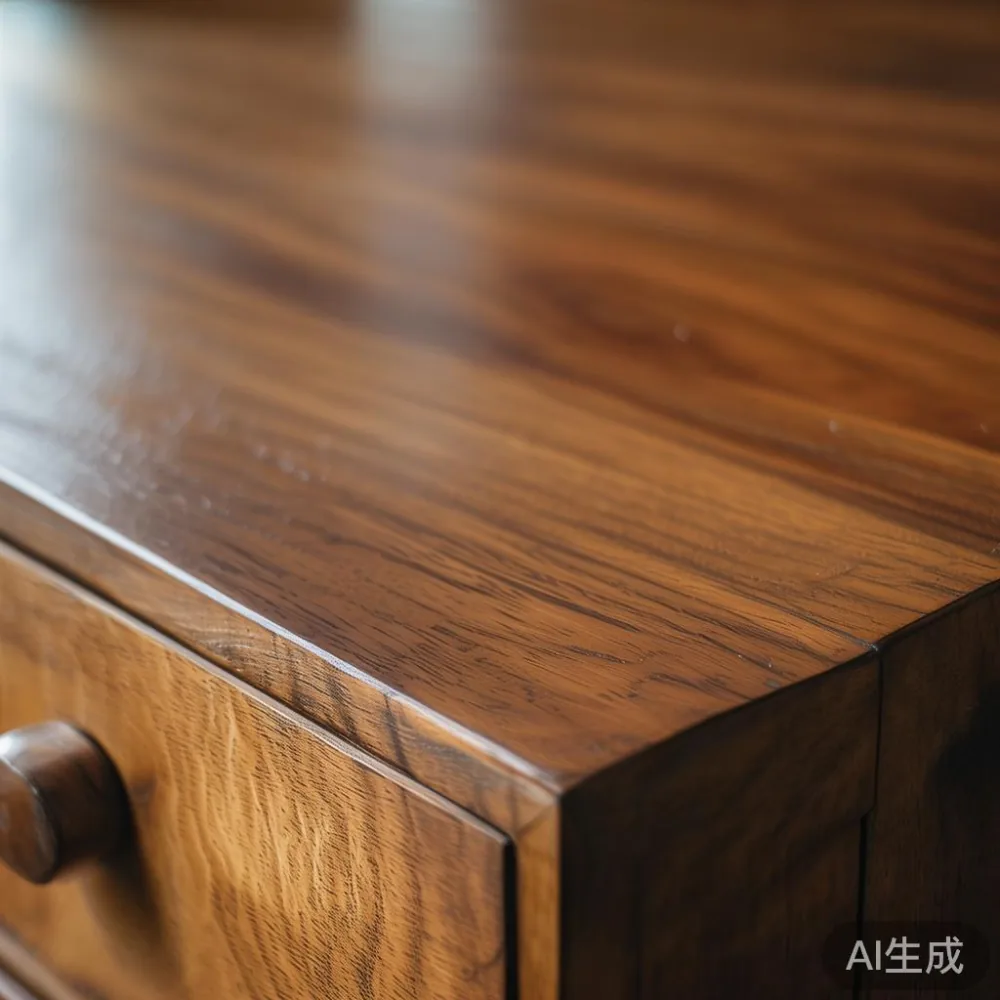
This piece works through a five-year cost comparison between veneer and solid wood nightstands, with Singapore-specific numbers, lift widths, HDB corridor realities, and the post-renovation math that actually shows up on your credit card. I will also touch on how a piece from MIDHILL, the Foshan solid wood maker exporting to 15+ countries with a ten-year structural warranty and lifetime refinishing, fits into the picture.
What is the best sideboard for a small apartment?
The best sideboard for a small apartment is a slim solid wood sideboard between 30 and 35 cm deep, finished in light oak or walnut, with a depth that fits a 1.2 m HDB corridor gap when the delivery trolley is tilted. If you are running a Scandinavian-inspired dining table and a French light luxury bed frame in the master bedroom, a matching light-toned sideboard keeps the visual weight low and avoids the bulky buffet look that overwhelms a compact condo. Budget roughly S$650 to S$1,200 for a solid piece that will outlast two tenancy cycles.

The real five-year cost of a veneer nightstand
Veneer nightstands are made by gluing a 0.6 mm to 2 mm layer of real wood onto a particleboard or MDF core. The unit feels light — usually 8 to 12 kg for a two-drawer bedside — which makes it attractive if you are moving between a Bedok resale and a Punggol BTO every few years. The sticker price in Singapore retail is typically S$149 to S$299 for a 45 cm wide unit.
Now the five-year breakdown for a typical S$189 veneer nightstand in a Singapore HDB:
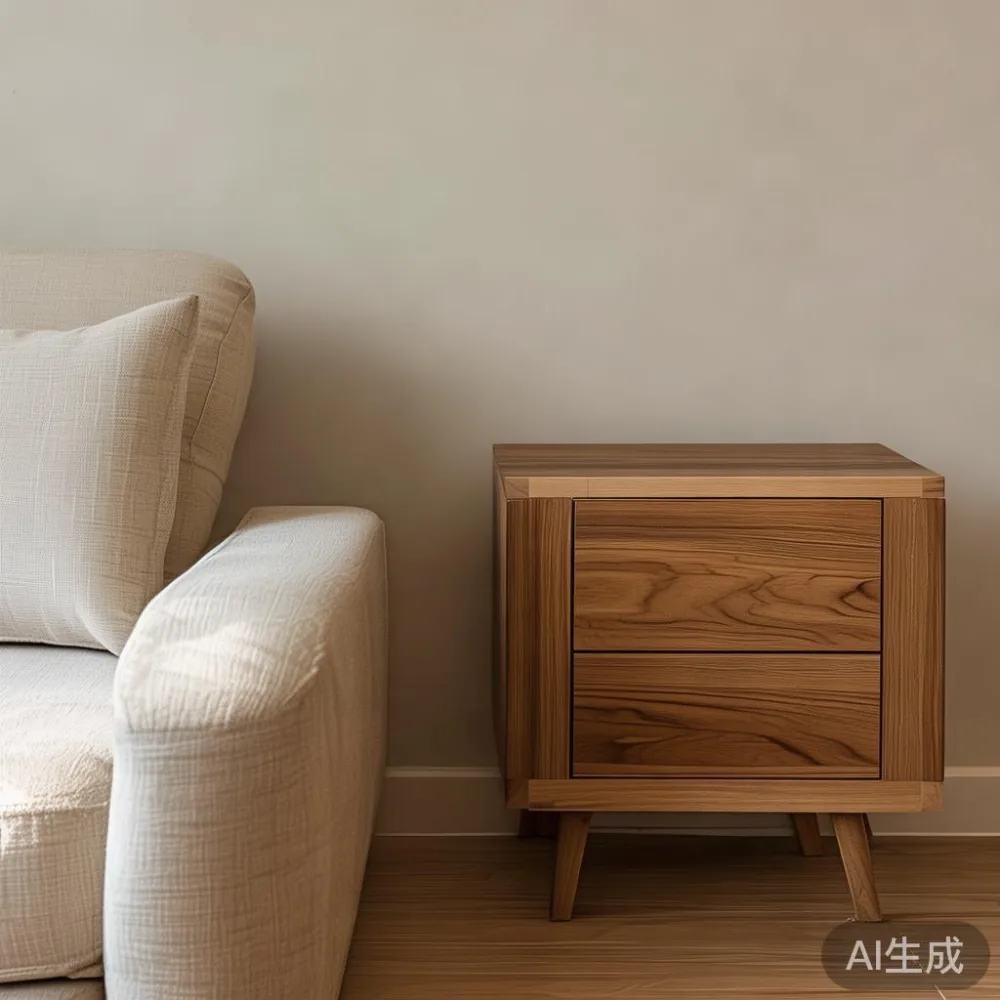
Year 1 — Looks new out of the box. Delivery up the lift is easy. Total spent: S$189.
Year 2 — The drawer slides start to roughen as humidity cycles hit. Singapore's average relative humidity of 78 to 85 percent works the MDF core. You might pay S$45 for a hinge or runner replacement. Total spent: S$234.
Year 3 — A corner chips when the cleaning crew bangs a vacuum against it, or the laminate peels near the bathroom-door steam zone. Touch-up kits cost S$15 but rarely match the original finish. Total spent: S$249.
Year 4 — The MDF starts to sag where your phone charger and a 1.2 kg water carafe sit every night. A second drawer sticks. You pay S$60 for a handyman visit. Total spent: S$309.
Year 5 — You replace the unit. You list it on Carousell for S$30, or it goes to the bin. Total spent: S$309, plus another S$189 to S$249 for the replacement, bringing you closer to S$500 to S$560 across five years for two veneer cycles.
Note that none of this includes the GST (now 9 percent in Singapore) or the S$25 to S$40 delivery fee that most local furniture shops add if your unit is on the 12th storey and the lift is the smaller 0.9 m by 1.4 m type common in older HDB blocks.
The real five-year cost of a solid wood nightstand
A solid wood nightstand from a Foshan workshop — the kind MIDHILL produces — uses kiln-dried ash, oak, or walnut throughout. A typical two-drawer unit weighs 22 to 28 kg, sits 50 cm tall, and is 45 to 55 cm wide. Singapore retail for a piece like this runs S$499 to S$799 depending on the wood species.
Using a S$599 solid wood nightstand as the working example:
Year 1 — Delivered flat-packed or fully assembled. Lift access in a Punggol Waterway Ridge block with a 1.0 m by 1.4 m lift requires tilting the unit at 35 degrees; the 25 kg weight needs two porters. Many Foshan makers include free shipping above a minimum order. Total spent: S$599.
Year 2 — Minor seasonal movement. A wipe with beeswax oil costs you S$12. Total spent: S$611.
Year 3 — A water ring from a forgotten glass appears. You sand it back with 400-grit paper and re-oil. Total spent: S$616.
Year 4 — The drawer runners, if they are soft-close metal, may need a drop of lubricant. Cost: S$0. Total spent: S$616.
Year 5 — The piece looks slightly patinated, perhaps with small dents that add character. A refinishing service from the maker restores it to like-new for around S$80 to S$120, or it is included for life with certain brands. Total spent: S$616 to S$736.
Spread that over five years and the annualised cost of solid wood is around S$123 to S$147 — lower than the veneer cycle once you factor in replacement purchases.
How do Singapore HDB corridors and lift sizes actually affect this decision?
I visited a friend in Bedok Reservoir last month who had just received a 28 kg solid wood nightstand from a Foshan supplier. The lift in her 1970s-era block measured 0.9 m wide by 1.6 m deep — workable, but the trolley had to be tilted. The corridor between her door and the lift measured 1.2 m. The unit came in a 1.18 m long carton, which meant a 90-degree pivot at the door frame. The two-man delivery team spent 18 minutes getting it inside. With a 12 kg veneer unit, the same job takes six minutes.
If you are in a newer Punggol or Tampines North BTO with the larger 1.1 m by 1.4 m lift and a 1.5 m corridor, a fully assembled solid wood nightstand slides in without drama. Always measure your lift door (standard HDB is 0.9 m wide) and your corridor turn radius before ordering a fully built piece. The lighter MDF alternative exists precisely because it can be flat-packed into a 12 cm-thick carton that fits any lift.
Is a solid wood wardrobe, bed frame, or nightstand worth the premium in a Singapore condo?
Yes — if you plan to stay more than three years and you care about resale feel. A solid wood bed frame in American light luxury styling, paired with a matching two-drawer nightstand and a six-door wardrobe, sets a different tone than the particleboard sets that come with most BTO packages. For a 4-room HDB, a coordinated set from a Foshan maker with a ten-year structural warranty sits in the S$4,800 to S$7,200 range all-in, delivered. Veneer equivalents look 70 percent similar on day one but read as hollow by year three.
If your budget allows only one upgrade, spend it on the piece your hand touches daily. That is the nightstand drawer pull, the wardrobe handle, the dining table edge you lean on. Solid wood rewards that contact. A dining table in solid oak at 1.6 m by 0.9 m runs around S$1,499 to S$2,200, while a marble dining table in the same size sits at S$2,400 to S$3,800 — a separate category if you want the post-modern light luxury look.
Does a Nordic marble budget under 1000 dollars actually work for Singapore buyers?
It does, with caveats. A Nordic marble budget under 1000 dollars gives you a small round coffee table or a compact 35 cm square side table in white or grey sintered stone, paired with light ash legs, and shipped from Foshan for around S$650 to S$980 delivered. Skip the Italian Calacatta-look marble top if you want the budget to hold; sintered stone gives you 90 percent of the visual at 40 percent of the weight, which matters when your lift is the smaller HDB type. A matching sideboard in the same family runs around S$1,100 to S$1,400, sitting just above the threshold but pulling the living room together visually.
What about warranty, refinishing, and the real lifespan of each material?
Solid wood nightstands from established Foshan workshops ship with a ten-year structural warranty and lifetime refinishing options. Veneer pieces from local Singapore retailers typically carry a six-month to one-year warranty that excludes humidity damage — which is precisely what kills them fastest in our climate. After five years, a solid wood unit has roughly 75 to 85 percent of its original retail value on the second-hand market, while a five-year-old veneer nightstand has zero resale value and may cost S$40 to dispose.
A solid wood sofa frame, a solid wood dining table, or a four-poster bed frame will all outlast their veneer counterparts by a similar margin. The nightstand is simply the most concentrated test case — small footprint, heavy daily use, exposed to bedside lamp heat and water glass rings every single night.
So which should you buy?
Pick the veneer nightstand if you are renting a room for 12 to 18 months, you move every two years, or your budget cannot stretch past S$200 after delivery. Pick the solid wood nightstand if you own your HDB flat or have a multi-year lease, you want a piece that gains character with age, and you would rather refinish than replace. For most Singapore homeowners in Tampines, Bedok, and Punggol who plan to stay through at least one MOP, the solid wood math wins by year three and the aesthetic difference keeps paying back long after the warranty papers are filed away in a drawer.