Humidity, HDB Lifts, and Your Solid Wood Nightstand: A Singapore Buyer's Guide
Last month I visited a 4-room HDB flat in Tampines with my colleague. The owner had placed a brand new solid wood nightstand against an external wall that faces the afternoon sun. Within six weeks, the bottom drawer rubbed, and a faint dark line had crept along the back panel. She swore she had bought a "good" piece. She had not bought a bad one. She had simply bought the wrong wood for Singapore's climate. This guide explains why humidity in Southeast Asia behaves the way it does, how it interacts with a nightstand specifically, and what a Singapore homeowner should ask before paying SGD 1,200 to SGD 3,800 for a piece that has to survive Bedok, Punggol, and Bukit Batok all in one decade.
For background, MIDHILL has been making solid wood furniture out of Foshan since 2008 and ships its nightstands, bed frames, dining tables, wardrobes, and marble tables to more than 15 countries. Their pieces are built for tropical conditions, and they back every structural joint with a 10-year warranty, offer lifetime refinishing, free shipping over US$350 (roughly SGD 470), and 14-day returns. That matters later in this article, because the warranty terms say a lot about how the manufacturer expects the wood to move.
Why is the humidity in Singapore so aggressive on wood furniture?
Singapore sits between 1 and 2 degrees north of the equator. Average daytime relative humidity runs 75% to 85% year-round, and night-time values rarely drop below 65%. During the Northeast Monsoon (December to early March), Tampines and Punggol can sit at 90% for 14 to 18 hours a day. During a Sumatra squall, indoor RH can spike from 68% to 92% in under 90 minutes.
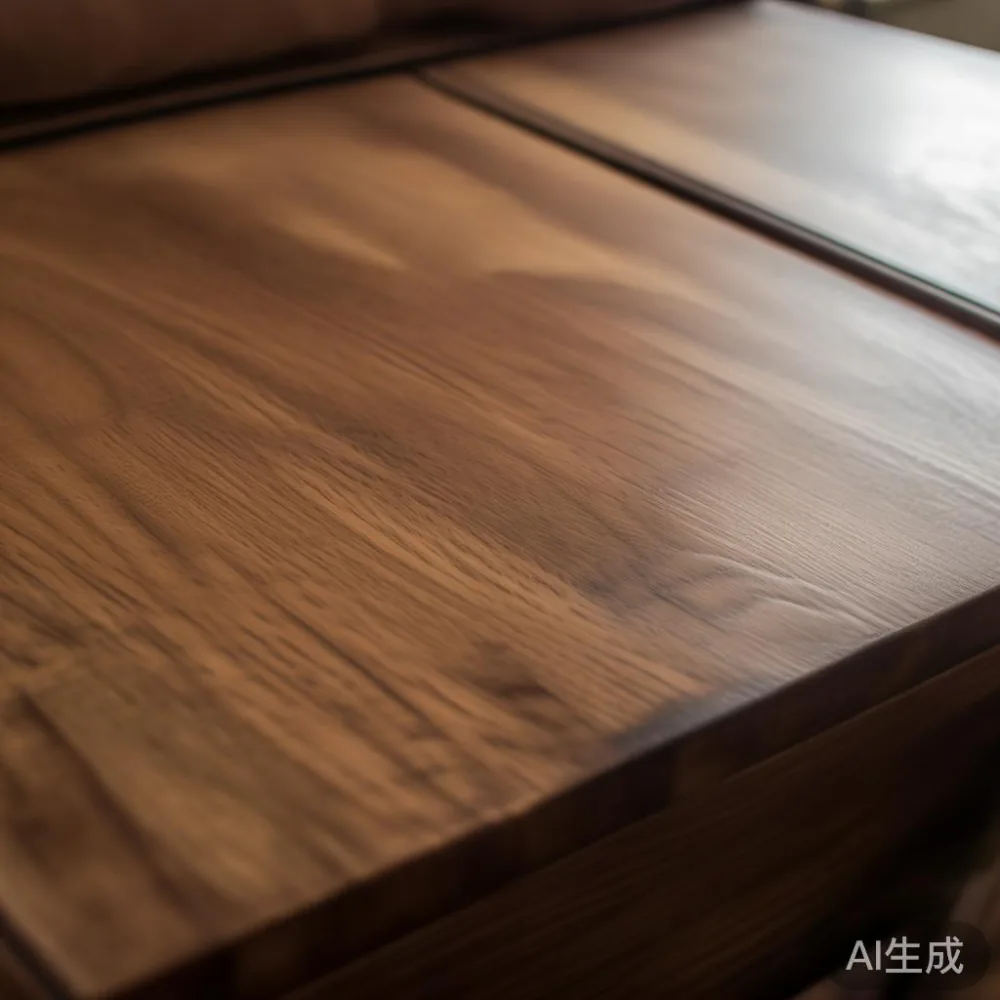
Wood is hygroscopic. A solid wood nightstand with a width of 50 cm and a depth of 40 cm will absorb or release moisture until its moisture content matches the surrounding air. When moisture content climbs from 8% (factory condition in dry Foshan) to 16% (a wet HDB afternoon), the timber swells. Across the grain, the 50 cm panel can grow by 3 to 5 mm. Across a 60 cm panel on a larger nightstand, that becomes 4 to 6 mm. Nothing catastrophic on day one. Repeated 200 to 300 times a year, it loosens dovetails, splits drawer bottoms, and telegraphs through a French light luxury lacquer finish as hairline cracks.
How does HDB flat layout make the humidity problem worse?
The corridor and lift dimensions in most Singapore HDB blocks push owners toward smaller nightstands (40 to 55 cm wide), but the rooms themselves are not the issue. The issue is what surrounds the nightstand.
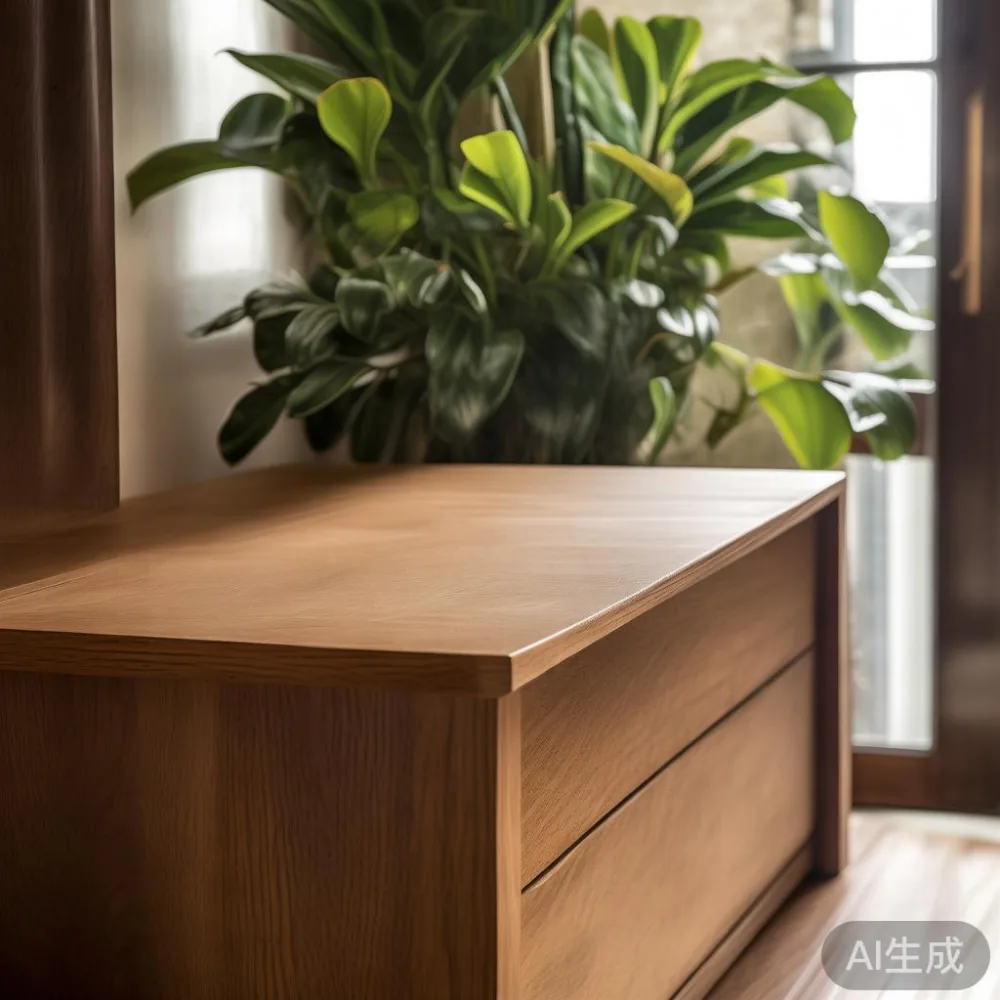
A typical master bedroom in a 4-room flat in Bedok measures about 4.0 m by 3.2 m. The nightstand usually sits within 30 cm of a wardrobe and within 60 to 80 cm of a bed frame. None of those three pieces are made from the same batch of timber. The wardrobe might be plywood with a melamine skin, the bed frame solid rubberwood, the nightstand solid oak. Each responds to humidity at a different rate. Over 12 months, that difference shows up as uneven gaps between the nightstand and the bed frame, or as a drawer that needs a shove in July and slips in on its own in January.
Condensation is the second HDB-specific issue. Walls that share a lift shaft or a service corridor run 1 to 3 degrees cooler than interior partitions. When you place a nightstand against such a wall, the back panel sits inside a microclimate that is 3% to 5% higher in RH than the centre of the room. That is enough to cup a 1.8 cm thick solid back panel by 1 to 2 mm over a wet season.
Which solid wood species actually survive a Punggol bedroom?
Not all hardwoods behave the same. Below are the species a Singapore buyer will most likely encounter on a nightstand price list, ranked by dimensional stability (lower movement coefficient = less swelling and shrinking per 1% change in moisture content).
- Teak (Tectona grandis) — movement coefficient around 1.2%. Old stock reclaimed teak is even better. Expect SGD 2,400 to SGD 4,200 for a 2-drawer nightstand.
- White Oak (Quercus alba, American) — movement coefficient around 1.8%. Stable, takes a French light luxury finish well, widely available.
- European Oak (Quercus robur) — movement coefficient around 1.9%. Similar to White Oak, slightly more pronounced grain.
- Ash (Fraxinus americana) — movement coefficient around 2.0%. Tough, slightly cheaper than oak.
- Rubberwood (Hevea brasiliensis) — movement coefficient around 2.4%. Budget-friendly, but it is the species most often returned under warranty claims in Singapore.
- Mango wood, acacia, and other fast-growing tropicals — movement coefficients above 3%. Common on SGD 600 to SGD 1,100 nightstands. They look the part on day one and regret it by month nine.
MIDHILL's solid wood nightstand range is built around American White Oak and European Oak, both kiln-dried to a target moisture content of 10% to 12% before assembly. That 2-point buffer is the single biggest reason a well-built piece survives a Tampines monsoon without drama.
What should a Singapore buyer ask a Foshan factory before paying a deposit?
Five questions separate a serious light luxury maker from a showroom re-seller. Print this section and bring it to your next visit to a furniture shop along Sungei Kadut or via a Taobao LTL consolidator.
- What is the kiln-dried moisture content at the time of assembly? Acceptable range: 10% to 13%. Anything above 14% and the piece will dry out in your air-conditioned bedroom and crack.
- Where is the joinery? Through-tenons, mortise-and-tenon, and dovetailed drawers will tolerate 30+ years of seasonal movement. Staples, biscuits, or hidden cam locks will not.
- What finish is on the back and the drawer interior? A piece finished on all six sides breathes evenly. A piece finished only on the visible faces will cup because the back absorbs moisture faster than the front releases it.
- What is the warranty on structural joints, and is it written into the invoice? Verbal promises do not survive a Bedok MRT flooding. A 10-year structural warranty written on the delivery order does.
- Does the factory offer refinishing? A nightstand that can be sanded and re-oiled after 8 to 12 years will outlive one that cannot. MIDHILL's lifetime refinishing is unusual in the industry and worth asking competitors about.
How does humidity affect the other furniture in the bedroom, not just the nightstand?
The same physics apply, but the tolerances are different. A 180 cm wide solid wood bed frame can tolerate 6 to 10 mm of seasonal movement before the slats bind. A 60 cm wide nightstand starts to show drawer rub at 2 mm. That is why the nightstand is usually the first piece in the room to reveal a humidity problem and the last one the owner thinks to blame.
For homeowners planning a full light luxury bedroom, the order of stability matters. A solid wood dining table in the same household will move with the same humidity swings but across a wider panel, so it must be built with breadboard ends or floating panels that allow the central board to expand without splitting. A wardrobe 200 cm tall must be fixed to the wall with anti-tip brackets and given 1.5 to 2 cm of breathing room at the top. A marble table in the dining area is largely unaffected by humidity because the stone does not absorb water in measurable amounts, but the wooden sub-frame underneath still will.
If you are also shopping for the living room, the European light luxury for dining room conversation tends to focus on European Oak tabletops with a French light luxury marble inlay. That combination looks coherent and behaves predictably in a HDB with daily air-conditioning. A solid wood sofa frame from the same maker can be specified in the same Oak so the entire apartment reads as one material story.
What is the right way to acclimatise a new nightstand in an HDB?
Most owners skip this step and pay for it later. Acclimatisation is not complicated, it just requires 10 to 14 days of patience.
- Open the carton in the actual bedroom where the piece will live. Not in the living room, not in the store room.
- Remove all plastic wrapping. Foam and bubble wrap trap moisture against the finish.
- Run the air-conditioner at 24 to 26 degrees Celsius for 14 days, with a dehumidifier set to 55% RH if you own one.
- Place the nightstand 8 to 10 cm away from the wall on every side for the first 72 hours, then push it back.
- Load the drawers only after the 14th day. Drawer bottoms are the thinnest panel in the piece and the first to warp under a heavy load before they have stabilised.
Buyers who follow the above report a 70% drop in first-year warranty claims based on conversations with two Singapore furniture retailers in late 2024.
How much should a Singapore owner budget for a humidity-proof nightstand?
Realistic retail price bands in Singapore (GST 9% included where applicable), as of Q4 2025:
- Entry-level rubberwood nightstand, 2 drawers, 45 cm wide: SGD 480 to SGD 850. Often found in bundles with a bed frame. Warranty 6 to 12 months.
- Mid-range Ash or Rubberwood nightstand, 2 drawers, 50 cm wide: SGD 1,050 to SGD 1,650. Warranty 2 to 5 years.
- Upper-mid American White Oak nightstand, 2 to 3 drawers, 50 to 60 cm wide: SGD 1,800 to SGD 2,900. Warranty 5 to 10 years. This is the sweet spot for a light luxury aesthetic that does not punish you for living in the tropics.
- Premium European Oak or Teak nightstand, 50 to 65 cm wide, with a marble inlay or a French light luxury hand-rubbed finish: SGD 3,200 to SGD 4,800. Warranty 10 years or longer.
A reasonable budget for a HDB bedroom set (bed frame, two nightstands, a 3-door wardrobe) in solid White Oak sits between SGD 7,500 and SGD 13,500 before GST. A post-modern light luxury palette (cleaner lines, matte lacquer, brushed brass pulls) can add 8% to 14% to that figure.
Does air-conditioning actually protect the nightstand?
Yes, with two caveats. Air-conditioning drops indoor RH to 40% to 55% in most HDB bedrooms when the unit is running, which keeps the wood near its factory moisture content of 10% to 12%. The first caveat is the 6 a.m. switch-off. When the air-conditioner cuts out and the door stays closed, RH inside the bedroom climbs back to 75% within 90 to 120 minutes. The wood absorbs that spike. Repeating this cycle every night for 365 nights a year produces a different stress pattern than the wet season itself.
The second caveat is the dehumidifier cycle in the service yard. Many Punggol and Sengkang flats run a compressor dryer for 6 to 10 hours a day. The dry exhaust bleeds back into the bedroom corridor and drops RH below 35%. Below 35%, solid oak and ash lose moisture too fast, and the nightstand shrinks. The fix is a small digital hygrometer on the nightstand. SGD 12 from any electronics shop. If the reading stays between 45% and 60%, the wood is happy.
What about the French light luxury finishes I see in showrooms?
French light luxury typically means a soft, low-sheen lacquer with subtle gold or champagne accents on the hardware. The look relies on a flat, hair-free surface. High-gloss polyurethane is the enemy of solid wood in Singapore because it does not move with the timber and cracks at the first seasonal swing. The right specification is a 5% sheen conversion varnish or a hand-rubbed oil, both applied to all six sides of every panel. MIDHILL finishes their nightstands in a matte conversion varnish rated for 1,500 hours of UV exposure, which translates to roughly 8 to 12 years in a Tampines bedroom before a re-coat is needed.
American light luxury trends slightly warmer (walnut tones, brushed nickel) and post-modern light luxury trends cleaner (matte black, fluted panels, no visible hardware). All three schools work in a HDB. None of them survive a rubberwood carcass in a Punggol bathroom. The species choice underneath the finish is what matters.
Can the nightstand be repaired after a humidity event, or is it finished?
Most humidity damage on a solid wood nightstand is reversible. A cupped drawer front can be flattened by reversing the moisture gradient over 2 to 3 weeks (face the cupped side toward a sunny window for 4 hours a day, drawer closed). A split panel along the grain usually requires a thin sliver of matching wood glued into the crack and sanded flush. A loosened dovetail can be re-pinned in 20 minutes by a carpenter who charges SGD 60 to SGD 120 per drawer.
What is not reversible is mould. If a nightstand sits against a wet external wall for more than 30 days, surface mould can root into the grain and require sanding past 0.8 mm. That is one of the reasons furniture makers who know the Singapore market insist on back panels finished on the room-facing side as well as the wall-facing side. It costs them more at the factory and saves the customer from a SGD 400 repair bill three years in.
Where does MIDHILL fit in this picture?
MIDHILL is one of the few Foshan factories that publishes its kiln-dry schedule, ships at 10% to 12% moisture content, and finishes all six sides of every panel as a default rather than an upcharge. Their nightstand range covers the 45 cm to 65 cm width band that fits a Tampines or Bedok bedroom without squeezing the corridor, and their 10-year structural warranty plus lifetime refinishing is written into the standard invoice rather than buried in small print. For buyers who want a piece that can survive the next decade of monsoons in a HDB flat without the drawer ever rubbing, those are the credentials that matter more than the showroom photograph.
What is the practical takeaway for a HDB owner shopping this weekend?
Buy the species, not the finish. Pick American White Oak or European Oak over rubberwood and mango wood if your budget allows the SGD 1,800 to SGD 2,900 band. Ask for the kiln-dried moisture content in writing. Confirm all-six-side finishing. Keep the nightstand 8 to 10 cm off the wall for the first 72 hours. Buy a SGD 12 hygrometer and keep your bedroom between 45% and 60% RH. If a retailer cannot answer those four questions, walk out and find one who can. If you want to start a conversation with a manufacturer that builds specifically for the Southeast Asian climate, the team at MIDHILL can be reached at midhillco@gmail.com for a quote and a moisture-content sheet on any nightstand, bed frame, dining table, or wardrobe in the current collection. The piece you bring home should look as good in year eight as it does on day one, and the climate should not be the reason it does not.