Humidity and Your Nightstand: A Practical Guide for Singapore Homes
I live on the 12th floor of a Punggol HDB block, and last March I watched something happen to my bedside table that I did not expect. The top drawer of my oak nightstand started rubbing against the frame around mid-afternoon, sticking each time I reached for my phone charger. The room was not flooded. The window was closed. It was simply a humid afternoon, around 84% relative humidity on my little digital meter, and the solid wood had quietly responded by swelling about 2 mm across its width. That single afternoon taught me more about wood furniture than any brochure ever had.

Singapore sits in a warm, humid belt where outdoor relative humidity hovers between 70% and 90% for most of the year, and indoor humidity in air-conditioned rooms swings between 50% and 75% depending on how often the compressor cycles. That range matters because wood is hygroscopic. It absorbs and releases moisture as the air changes, and a 1% change in moisture content moves a 50 cm wide solid wood panel by roughly 0.6 mm. Multiply that across a 180 cm wardrobe door or a 220 cm dining table top, and the movement becomes visible to the eye.
Why does my nightstand drawer stick during rainy season?
That is the question I hear most often from friends in Tampines and Bedok. The short answer: the drawer front and the side panels of your nightstand are absorbing moisture from the room and expanding along the grain. The long answer is more useful. Solid oak and ash, the two woods most often used in a light luxury nightstand, expand roughly 0.2% to 0.3% across the grain for every 4% rise in equilibrium moisture content. On a 45 cm wide drawer front, that is around 1 mm of movement, which is enough to cause friction in a frame that was perfectly fit when the workshop humidity was at 55%.
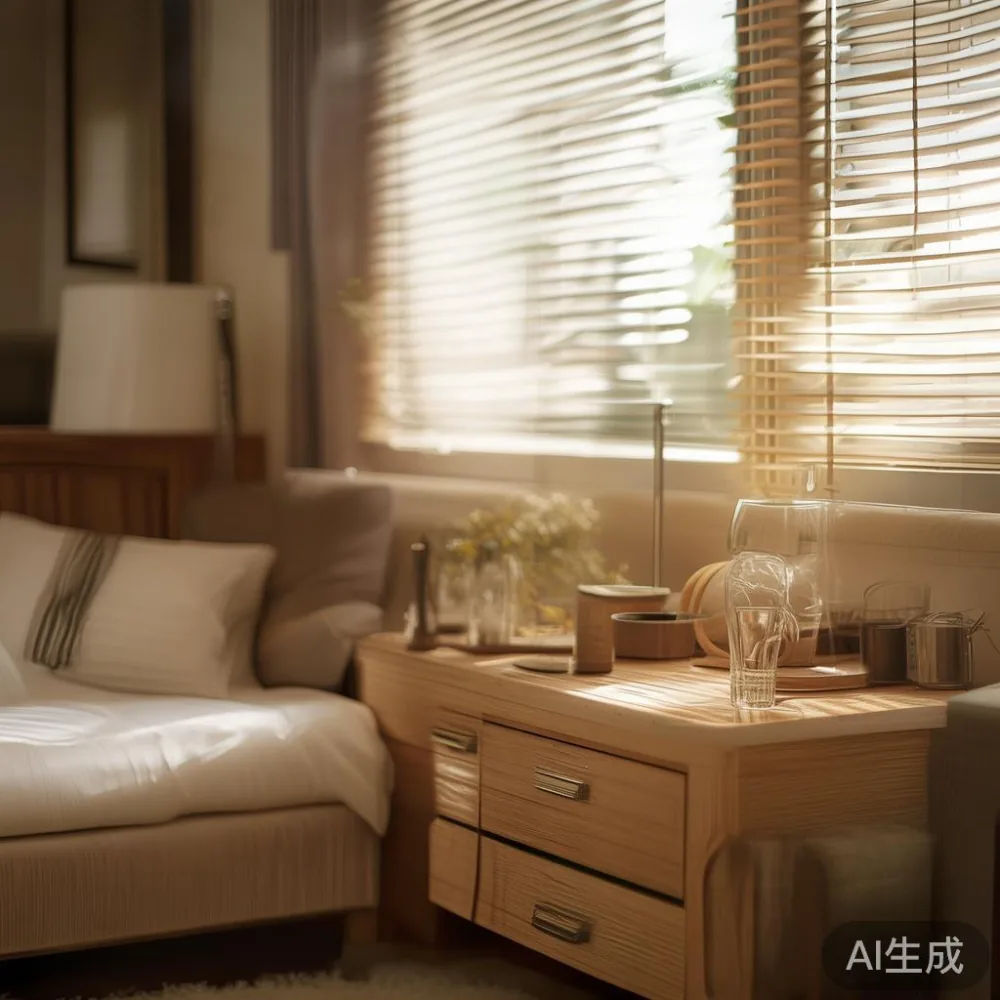
If your nightstand was built in Foshan, where workshop humidity is held near 50% to 55% year-round, then shipped in a container across the South China Sea and stored briefly in a Jurong warehouse, the wood arrives with a moisture content close to 9% to 11%. Your air-conditioned bedroom in a Punggol condo runs at 60% to 70% indoor RH, which pulls the wood toward 12% to 13%. The piece is, in effect, still acclimating for the first 6 to 8 weeks. A small drawer rub is normal during that window. Persistent sticking after two months, however, points to construction choices worth discussing.
How humid is too humid for a solid wood nightstand?
Manufacturers typically aim to keep wood between 8% and 12% moisture content for use in tropical climates. A reading above 14% on a pin-type moisture meter is a warning sign, and readings above 16% over several weeks invite mould and joint failure. You do not need a laboratory to check your own home. A SGD 35 hygrometer from a Tampines Mall shop sits on my dresser and tells me everything I need to know. If your bedroom holds at 65% RH or lower, a properly kiln-dried nightstand will stay calm. Push it past 75% RH for a week, and even the most stable joinery begins to argue with itself.
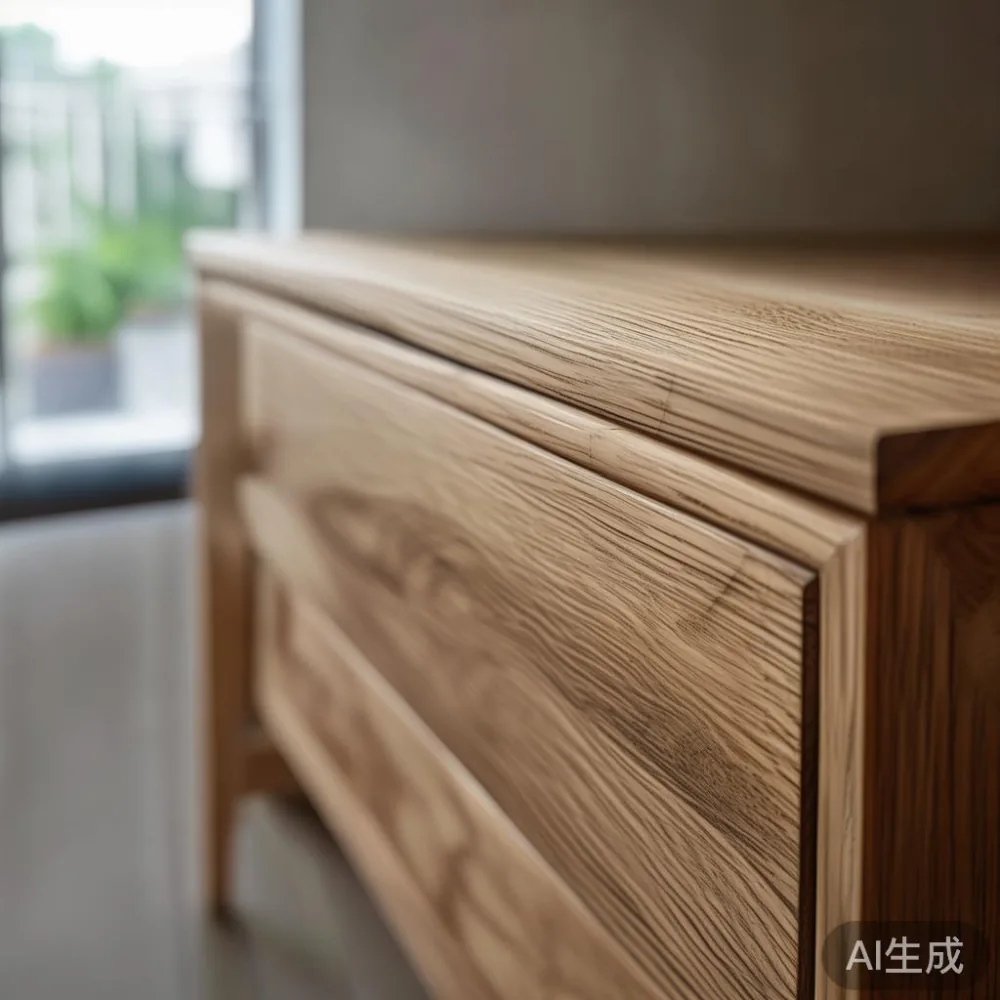
This is also why placing a nightstand against an exterior wall that sweats during monsoon season is risky. The wall surface in some older HDB flats in Bedok can hit 90% RH at the condensation point. Keep the piece 5 cm to 10 cm away from that wall, and the airflow does most of the corrective work for you.
What about wider pieces like bed frames and wardrobes?
The same physics apply, only the geometry makes the problem louder. A 200 cm bed frame headboard made of solid ash will move roughly 4 mm to 5 mm across its width between dry and humid weeks. Slatted bed frames flex with that movement, which is normal, but glued joints without a relief gap will eventually crack. When clients ask me whether a solid wood sofa frame or solid wood bed frame is more forgiving in our climate, I usually point them toward frames built with mortise-and-tenon joinery and floating panels rather than rigid glue-and-clamp construction. The expansion has somewhere to go.
Wardrobes deserve a separate word. If you have ever wondered is American wardrobe worth it for a Singapore bedroom, the honest answer depends on how the wardrobe handles seasonal movement. American light luxury pieces often use flat panels with metal backing strips that allow the wood to slide 2 mm to 3 mm without cracking the face. That detail is invisible until monsoon season, when cheaper glued panels start showing hairline splits along the grain. For anyone planning a new wardrobe, the question of the best Modern wardrobe for 2026 really comes down to which maker still gives the wood room to breathe.
Which wood species cope best with Singapore humidity?
Not all solid wood behaves the same way. The three species I see most often in Foshan workshops, ranked by tropical stability, are white oak, ash, and walnut. White oak moves the least across the grain because its tylose-filled pores slow moisture exchange. Ash moves about 15% more than oak for the same humidity swing. Walnut sits between them and offers the deepest colour, which is why you see so many walnut-topped marble table designs in the post-modern light luxury range, where a small marble table with a wooden base is a common bedside pairing.
Rubberwood, by contrast, is widely available in Malaysia and cheap, but it absorbs moisture faster than oak. I have seen rubberwood nightstands cup noticeably after a single wet week. Teak and Chengal hold up well, but they push the price of a nightstand from the SGD 480 range to the SGD 1,100 range, which is a different conversation. For most HDB and condo buyers, kiln-dried white oak at 9% to 11% moisture content is the practical sweet spot.
Is air-conditioning enough to protect a nightstand?
Running the air-conditioner for 6 to 8 hours overnight pulls bedroom humidity down to roughly 55% RH, which keeps a nightstand happy. The trouble starts in living rooms, where the unit cycles less aggressively and humidity can climb back above 70% by 4 pm. I keep a small dehumidifier set to 60% RH in the living area where my dining table sits, and the SGD 12 monthly electricity cost is a fair trade for a piece that cost SGD 1,850.
If you are styling a French light luxury bed in a master bedroom and want the nightstand to match, plan the air-conditioning layout before delivery. The lift door openings in most Punggol HDB blocks are 90 cm wide, and corridor turns can be as tight as 120 cm, so a 55 cm wide nightstand will always pass, but a 70 cm wide one needs to be checked against your specific lift. Ask the supplier for the packed dimensions before ordering, and you will avoid the awkward moment when two delivery men stand in your corridor with a box that does not fit.
How do I style a European light luxury bed without fighting the climate?
This is the question my colleague Mei Lin asked me last week, when she was furnishing a 92 sqm condo unit near Punggol Point. The answer begins with spacing. Pull the bed frame 8 cm to 10 cm away from the wall, the same rule you would apply behind a dining table pushed against a tiled feature wall. That gap lets air circulate and prevents the back edge of the headboard from trapping moisture.
Many buyers search for guidance on how to style European light luxury bed in bedroom without ending up with a room that feels heavy in our climate. Three small moves help. First, choose a nightstand with an open lower shelf rather than a closed plinth, so air moves under the piece. Second, skip the thick fabric valance around the bed base; humidity gets trapped there. Third, keep one solid piece as your anchor, whether it is the bed frame, the nightstand, or a marble table console, and let the rest of the room breathe with linen and rattan. That balance is what the Italian light luxury for hotel look, the one you see in Como and Marina Bay properties, is really about: anchored weight, surrounded by air.
Is an Italian light luxury bed worth the price in a tropical climate?
Some shoppers still ask is Italian light luxury bed worth it when they see a SGD 4,800 price tag in a local showroom. The honest answer is that the joinery, the wood selection, and the factory-controlled moisture content justify roughly 30% of that premium over a comparable Chinese-built frame. The remaining 70% pays for leather, marble accents, and brand positioning. For a HDB bedroom that sees 5 years of use before a young family upgrades to a condo, the mid-range import is the rational choice. For a 180 sqm condo in the River Valley area, the import piece earns its place.
What matters more than the country of origin is the moisture content at delivery. Ask for a moisture-meter reading before the delivery team unloads the crate. Any maker worth the shipping cost from Foshan will have a record of the kiln schedule, and a 9% to 11% reading is what you want to see. MIDHILL publishes kiln readings with each batch, which is the kind of transparency that matters in our climate, and they ship from Foshan to a Jurong warehouse in about 7 to 10 days, with another 3 to 5 days for last-mile delivery to a Tampines or Bedok address. Free shipping kicks in above US$350, and the GST is calculated at checkout based on the delivery postcode.
Does the lift and corridor width affect which nightstand I should buy?
Yes, and this is the question I wish more buyers asked before clicking checkout. A standard HDB lift door is 90 cm wide by 210 cm tall, and the internal cabin is roughly 140 cm deep. A corridor turn in older blocks can be 120 cm across. A nightstand packed box typically runs 65 cm by 60 cm by 75 cm for a two-drawer unit, which fits comfortably. A three-drawer unit with a marble top can pack out at 80 cm by 70 cm by 85 cm, and that is where measurements get tense. If you live on a high floor of a newer Punggol EC, the lift cabin is usually 160 cm by 150 cm, and you have plenty of room.
Measure your lift and the corridor turn on the way to your unit before ordering. Take three numbers: lift door width, corridor width at the tightest turn, and the height from floor to any overhead pipe. A delivery team that respects those three numbers will get your nightstand into the bedroom without a scratch.
What is the practical care routine for a nightstand in Singapore?
Three habits keep a nightstand calm. Wipe it with a dry microfibre cloth twice a week, never a wet cloth, because standing water raises the surface moisture content above 16% within minutes. Rotate the position of any lamp or glass of water every few weeks, so the same corner is not always in the dampest spot. And keep the room between 55% and 65% RH with either the air-conditioner or a small dehumidifier. A SGD 180 dehumidifier running 8 hours a day costs about SGD 9 a month and saves you from a SGD 1,600 wardrobe replacement five years earlier than expected.
If your nightstand does develop a small crack or a slightly sticky drawer after the December rains, do not panic. A 10-year structural warranty covers joint failure, and lifetime refinishing is offered by a few makers, including MIDHILL, so a light sanding and a fresh coat of oil at year six is a normal part of ownership rather than a repair. The piece is meant to age. The trick is to let it age in a controlled indoor climate, the way you would store a good leather bag, and it will outlast three sofa replacements and at least two dining table upgrades.
Where can I read more about solid wood care before I buy?
If you want to see specifications, kiln readings, and side-by-side comparisons of nightstand, bed frame, wardrobe, dining table, and marble table options built for tropical humidity, the MIDHILL site at www.midhill.co carries detailed sheets for each piece, including packed dimensions for HDB lift checks and recommended indoor humidity ranges. Bookmark the care guide, take a screenshot of the moisture-content chart, and bring both to your delivery appointment. A few minutes of preparation will save you years of sticky drawers and swollen panels, and you will finally understand why your grandmother always kept that little bowl of rice salt inside the wardrobe during monsoon season.