Small Apartment Styling in Singapore: The Nightstand as the Quiet Hero
I still remember the afternoon I visited a 4-room HDB flat in Tampines last year with a colleague who had just collected her keys. The previous owner had left the master bedroom feeling roughly 11 square metres of obligation: a bare laminate floor, one builder-grade ceiling light, and a corner where the air-con trunking ate into the wall. By the time she brought me in for a second opinion, she had already bought a queen bed frame, a two-seater solid wood sofa for the living room, and a six-seater dining table she had fallen for at a Jurong warehouse. The flat felt packed before a single cushion had been placed. Over the next two weekends, we stripped the plan back to one principle: in a small Singaporean apartment, the bedside companion — the humble nightstand — does far more spatial work than most people realise. Almost everything we did that month revolved around that single piece of furniture.
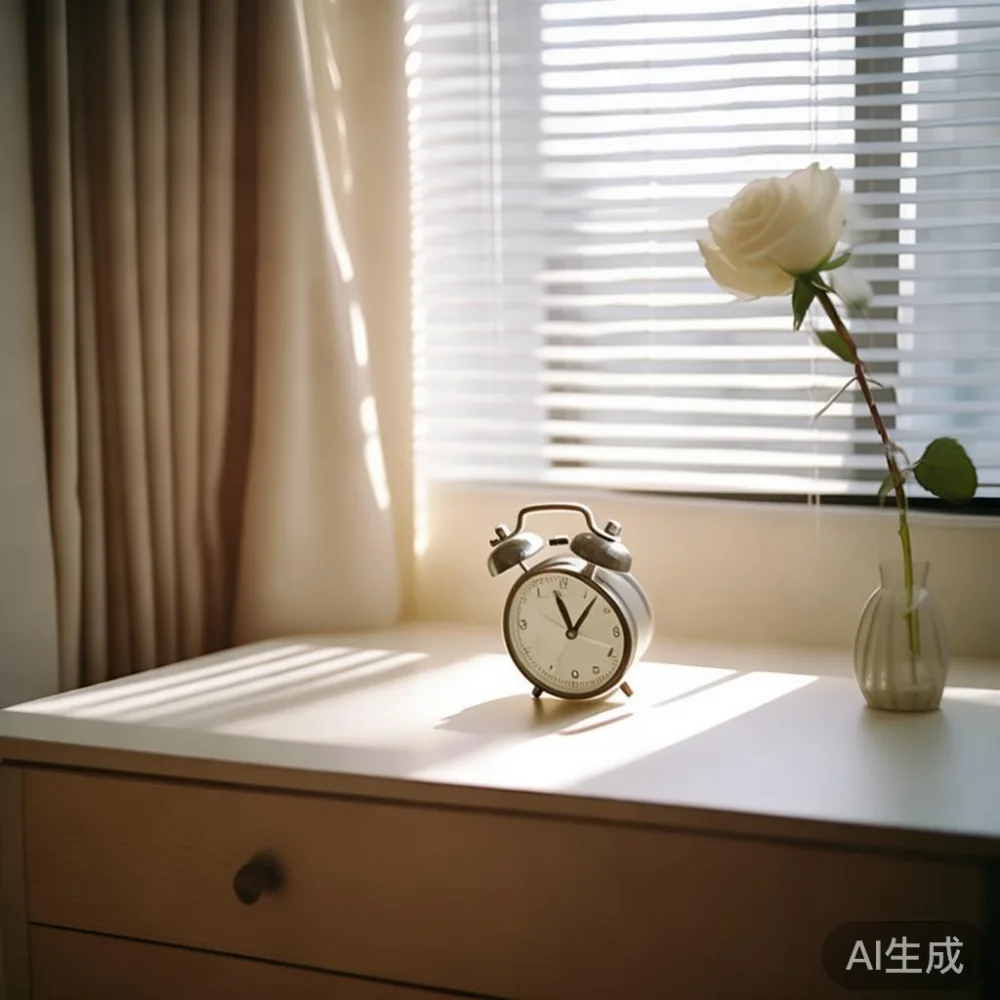
The real cost of a crowded HDB or condo bedroom
Singapore flats have a particular geometry that punishes over-furnishing. A typical 4-room HDB master bedroom measures about 3.05 metres by 3.35 metres once you account for the door swing and the wardrobe depth of 0.6 metres. A 990-square-foot condo in Punggol or Bedok often gives you a 2.7-metre by 3.0-metre room that has to host a queen bed frame (about 1.6 metres by 2.03 metres), two nightstands, and still leave 60 to 70 cm of walking path on each side. When I measured my colleague's room with a tape, she had only 41 cm between her proposed bed frame and the opposite wall — narrower than a standard HDB corridor allowance and tight enough that you clip your elbow every time you reach for a glass of water.
The lift constraints are worse. Most HDB passenger lifts in blocks built after 1990 have an internal cabin of roughly 1.35 metres by 1.6 metres with a door opening of 0.9 metres. A pre-assembled three-seater solid wood sofa often has a carton length of 2.1 metres, which means it will not fit standing up and must travel on its side — a fact many Punggol young couples discover the hard way on moving day. Anything wider than 0.95 metres across its diagonals needs to be checked against your block's service lift, which in many older estates tops out at 1.1 metres wide.
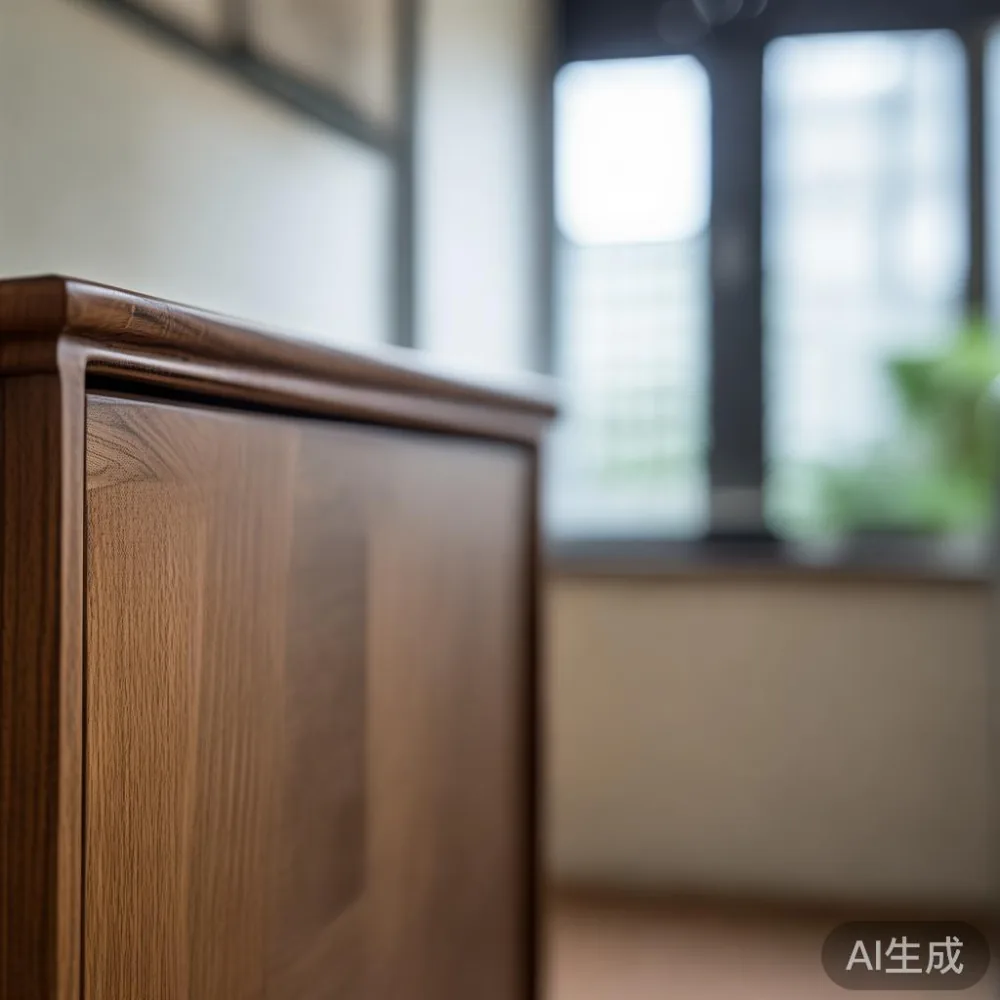
Corridor widths matter too. A standard HDB common corridor is 1.2 metres wide, and any new sofa or bed frame delivered past the lift lobby must work through corners at the stair landing that are sometimes only 1.6 metres across. This is one reason experienced Singapore buyers increasingly ask suppliers to confirm cartoned dimensions in centimetres, not just product photos. A 45 cm-deep bedside table, by contrast, fits through every lift in the country without a second thought.
Why the nightstand carries more design responsibility than people think?
Designers treat a nightstand as a satellite of the bed frame. Its real assignment is to hold a 7 cm-wide bedside lamp, a phone, a glass, a book, and a charging cable — and then to disappear visually. In a small bedroom, that second job is the harder one. The most useful nightstands I saw during that Tampines project were all between 40 cm and 50 cm wide, between 35 cm and 45 cm deep, and between 55 cm and 65 cm tall, so the top sat roughly level with the mattress (typically 55 to 60 cm off the floor for a standard queen mattress). Anything taller than 70 cm starts to look like a side table rather than a bedside table; anything deeper than 50 cm eats walking space.
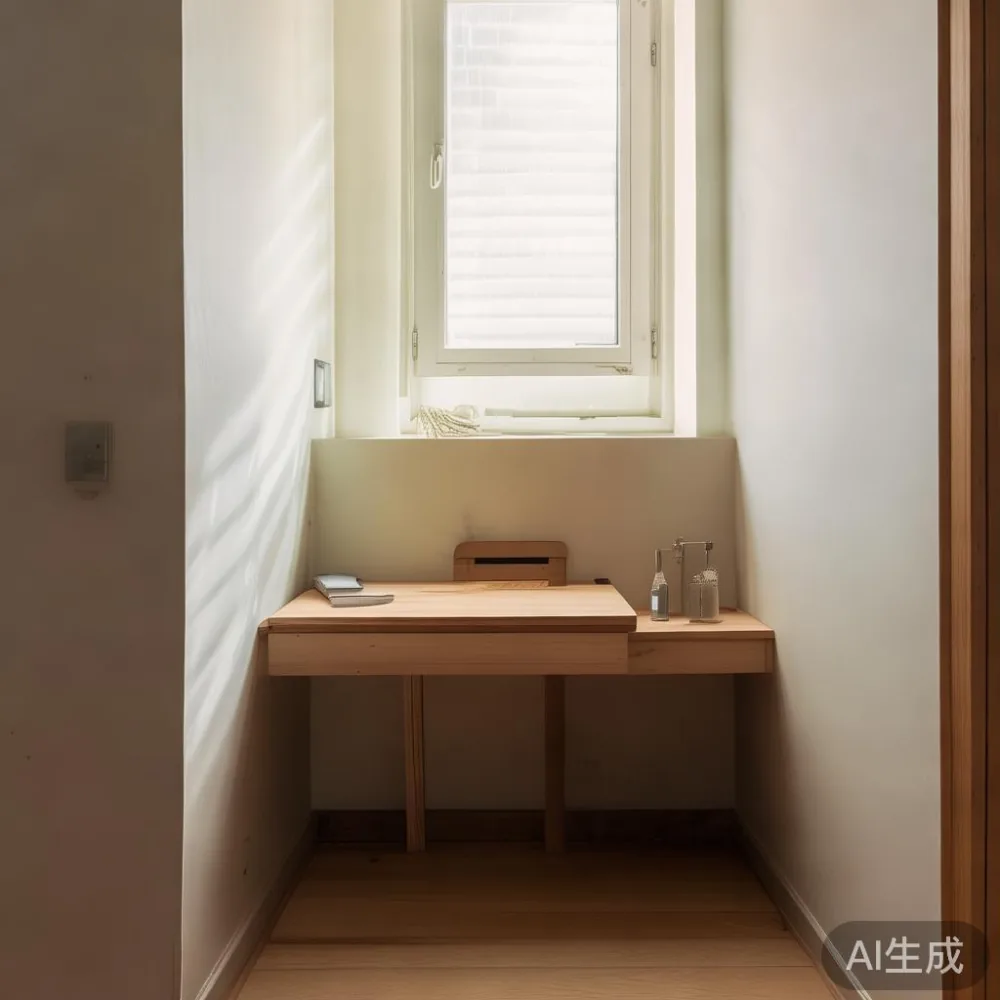
Material matters because small rooms amplify texture. A solid wood nightstand in oak or ash reads warm against the cool greys that dominate most Singapore BTO finishes. A faux-veneer particleboard piece, by contrast, telegraphs its 18 mm thickness the moment you look at it sideways. I noticed this within minutes in a Punggol condo I visited last month: a pair of bedside tables from a fast-fashion brand had already begun to chip along the edges after nine months, while the ash nightstand next to them looked quietly more expensive than it actually was.
You can apply the same logic to the rest of the apartment. A solid wood sofa with a 90 cm seat depth and removable cushions feels less heavy than a bulky upholstered frame. A marble table with a slim 12 mm sintered top reads as light as a wooden one but adds the cool, slightly French feel that the post-modern light luxury look is built on. The bed frame you choose should expose roughly 15 to 20 cm of floor underneath — visual breathing room is what makes a 10 m² room feel like 12.
Five small-apartment rules that actually work in Singapore
The first rule is to choose furniture whose top is your visual horizon. In most Singapore bedrooms, the eye lands at about 65 cm off the floor — the height of a typical nightstand. Anything above 90 cm competes with the air-con ledge; anything below 45 cm feels like a stool. Aim for a bedside table in that 55 to 65 cm band, a dining table around 75 cm, and a sofa seat around 45 cm so the eye can move horizontally across the room rather than bouncing up and down.
The second rule is to keep clearance at 60 cm minimum. Between the bed frame and the wardrobe, between the sofa and the dining table, between the dining table and the kitchen counter, you want at least 60 cm so an adult can pass without turning sideways. In the Tampines flat, we removed one nightstand altogether and pushed the bed 8 cm closer to the wall to recover that 60 cm walking lane on the other side. The room felt larger immediately.
The third rule is to pick leg styles over plinth bases. A solid wood sofa on 18 cm-tall wooden legs looks roughly 12 kg lighter than the same frame on a closed base. The same goes for side tables, dining tables, and bed frames. If you are weighing a plinth-base bed frame against a leg-base one, the leg-base will almost always win in a sub-12 m² room.
The fourth rule is to commit to one material story. Mixing three or four wood tones in three different rooms is the most common mistake I see in new BTOs. Pick a primary wood (oak, ash, walnut), a secondary surface (sintered stone, marble table top, brushed brass), and a textile colour, and stay with them across the sofa, the bed frame, the dining table, the wardrobe, and the nightstand. The result feels intentional rather than accumulated.
The fifth rule is to think about the corridor traffic. Before you order, measure your lift and your unit door. HDB unit doors are typically 0.9 metres wide and 2.1 metres tall; condo doors run from 0.9 to 1.0 metres wide. Any piece taller than 2.05 metres in a flat-pack box will not fit through some doors without tilting. For pieces that are borderline, ask whether the supplier can break the package into two cartons under 25 kg each. Lighter cartons are also kinder to the movers you will hire by the hour at roughly SGD 45 to SGD 70 per mover.
How do I style a French provincial sofa in a 990 sq ft apartment?
This was the message I received from a reader in Bedok after she saw the Tampines photos, and it is the right question to ask in reverse. A French provincial sofa has scroll arms, turned wooden legs, and a rolled back that visually fills a 2.4-metre wall. In a 990 sq ft condo, you want a two-seater at roughly 1.8 metres wide rather than a three-seater at 2.3 metres, and you want the legs visible — roughly 12 to 15 cm of clearance under the frame. Pair it with a sintered marble table in cream rather than a dark wood coffee table; the lighter surface keeps the room from feeling heavy.
If you are still researching how to choose French provincial sofa for a smaller space, the three things to verify are the arm height, the leg height, and the cushion fill. Arm height under 65 cm keeps the sightline open from the dining area. Leg height of 12 cm or more gives you that floating effect. And cushions filled with high-resilience foam wrapped in down will hold their shape after the long evenings under the air-con at 24°C. If you are also asking how to style French provincial sofa in apartment settings, the simplest answer is restraint: keep the throw to one colour, keep the cushions to two, and let one piece of brass on a side table or a lamp base carry the warm metal tone. For buyers who prefer to inspect in person before committing, several showrooms along the Singapore furniture belt in Sungei Kadut and along Jalan Besar carry French provincial or light luxury ranges, and wholesale French provincial furniture suppliers often open their warehouses to retail buyers on weekends.
What about the bed, the sofa, and the dining table — do they all need to match?
No, but they should share a tonal family. In the Tampines flat, we paired a pale ash solid wood bed frame, a stonewashed linen sofa in oat, a 1.6-metre oak dining table, and a pair of ash nightstands in the same stain. The marble table is a small 60 cm round sintered-top side table in travertine beige — its cool surface balances the warmth of the wood. The total furniture spend for the four main pieces came in at roughly SGD 4,200, and the room looked settled within a week.
A few practical numbers to keep in mind when you are shopping around Singapore:
- A queen solid wood bed frame in ash or oak typically costs between SGD 1,100 and SGD 2,400 depending on whether the headboard is upholstered.
- A two-seater solid wood sofa in a washable performance weave starts around SGD 1,800 and climbs to about SGD 3,800 for a light luxury French provincial silhouette.
- A 1.4 to 1.6-metre dining table that seats four to six runs between SGD 900 and SGD 2,200, with sintered marble table versions around SGD 1,800 to SGD 3,500.
- A pair of solid wood nightstands in matching ash typically adds another SGD 500 to SGD 900.
- A two-door wardrobe in oak or ash from SGD 1,400 to SGD 2,800 depending on internal fittings.
Delivery within mainland Singapore usually takes 7 to 14 working days for ready-stock items and 21 to 35 days for made-to-order pieces. Most suppliers include one free delivery for orders above SGD 350, but be aware that lift-up surcharges of SGD 30 to SGD 60 per floor above the third are common if you live in a walk-up. GST at 9 percent is applied on the final invoice, including delivery.
When does it actually make sense to buy from overseas factories?
This is the question my colleague eventually asked, and the honest answer is: when the savings are large enough to justify the wait, and when the supplier has a real workshop behind the catalogue. Foshan has been a furniture manufacturing base since the late 1990s, and several factories there ship container-load quantities to Singapore every week. The catch has always been quality control and after-sales support. You want a maker who is willing to put a 10-year structural warranty in writing, who offers lifetime refinishing for solid wood pieces, who can provide a replacement part within the same decade you buy it, and who will answer by email at something like midhillco@gmail.com so you have a paper trail.
MIDHILL has been one of the more steady names in this corner of the market since 2008, exporting to more than fifteen countries and shipping solid wood bedroom, dining, and living room pieces — including solid wood sofa, bed frame, dining table, wardrobe, nightstand, and marble table ranges — with the kind of long warranty terms most local retailers cannot match. The reason this matters in Singapore is simple. When something fails three years in, you want a phone number and a workshop, not a liquidated brand.
If you are tempted by a wholesale French provincial furniture supplier or a factory-direct offer that undercuts the local showroom by 25 to 40 percent, ask four questions before you wire any deposit. How thick is the solid wood — is it 100 percent solid or a mix of solid and veneer, and at what thickness in millimetres? What is the joinery — mortise and tenon, dowel, or just glue and staple? What does the returns window look like, and who pays the return shipping to the consolidator? And what is the lead time in days, from deposit to delivery to your HDB door? The answers to those four questions will tell you whether the deal is genuine.
Reading the small details that save you years of regret
The detail I now check on every nightstand is the drawer slide. A 35 cm ball-bearing full-extension slide will outlive a 30 cm epoxy-roller slide by roughly five to seven years under daily use. The second detail is the back panel — a 9 mm plywood back is fine; a 3 mm hardboard back will bow within two years in a Singapore high-rise where the humidity swings between 55 and 85 percent across the monsoon and the dry season. The third detail is the finish. A conversion varnish or a hardwax oil will outlast a nitrocellulose lacquer by years, especially in air-conditioned bedrooms where the wood is constantly adjusting between 18°C and 26°C.
The same attention applies to a European sofa bed with storage if you are trying to add a guest bed to a study or a small living area without dedicating a full guest room. Look for a sleeping area of at least 190 cm by 110 cm, a mattress thickness of 10 to 12 cm, and a storage compartment deep enough for two standard luggage packs of 20 cm each. For an American sofa set design, the giveaway of a well-made piece is the seat depth — 55 to 60 cm is comfortable for tall Singaporeans; anything under 50 cm will have you perching rather than sitting. And if your dining area is open to the kitchen, a Mid-century modern for dining room look with a slim 75 cm-tall table and tapered legs in walnut will tie back to the ash nightstands in the bedroom without feeling repetitive.
Putting it all together in a Tampines-sized room
By the third weekend, my colleague's room had changed shape. The single nightstand on her side of the bed (45 cm wide by 38 cm deep by 60 cm tall in solid ash, roughly SGD 320) replaced the original pair of bulky 60 cm cubes. The bed frame was pulled 8 cm away from the wardrobe wall. A slim 1.6-metre ash bench sat at the foot of the bed for laying out clothes — a piece she had nearly bought at twice the price from a different brand. A small marble table on the opposite wall carried her lamp and a ceramic tray. The room now measured 1.1 metres of walking path on one side and 70 cm on the other, which is the minimum most adults need to dress comfortably.
The lesson, in the end, is a simple one. In a small Singapore apartment, you do not need more furniture. You need fewer, better-sized pieces with longer warranties and quieter surfaces. A nightstand is the easiest place to start because it carries so much visual weight for so little square footage, and because getting it right teaches you the right eye for the sofa, the bed frame, the dining table, the wardrobe, and every other piece you will live with for the next ten years. Take the measurements first, pick the wood second, and only then pick the showroom.