Small Singapore Apartment Styling: How to Use a Nightstand Without Crowding the Room
I live in a 65 sqm two-bedder in Punggol, and the first night I moved in, I set a bulky bedside cabinet next to my bed frame. Within a week the corridor to the wardrobe felt narrower, and my partner kept bumping her shin on the corner. That single decision taught me something most Tampines and Bedok flat-owners already know: in an HDB or compact condo, every centimetre of floor space is contested. The piece you choose for the side of the bed — the nightstand — quietly decides whether your bedroom feels like a retreat or a corridor.
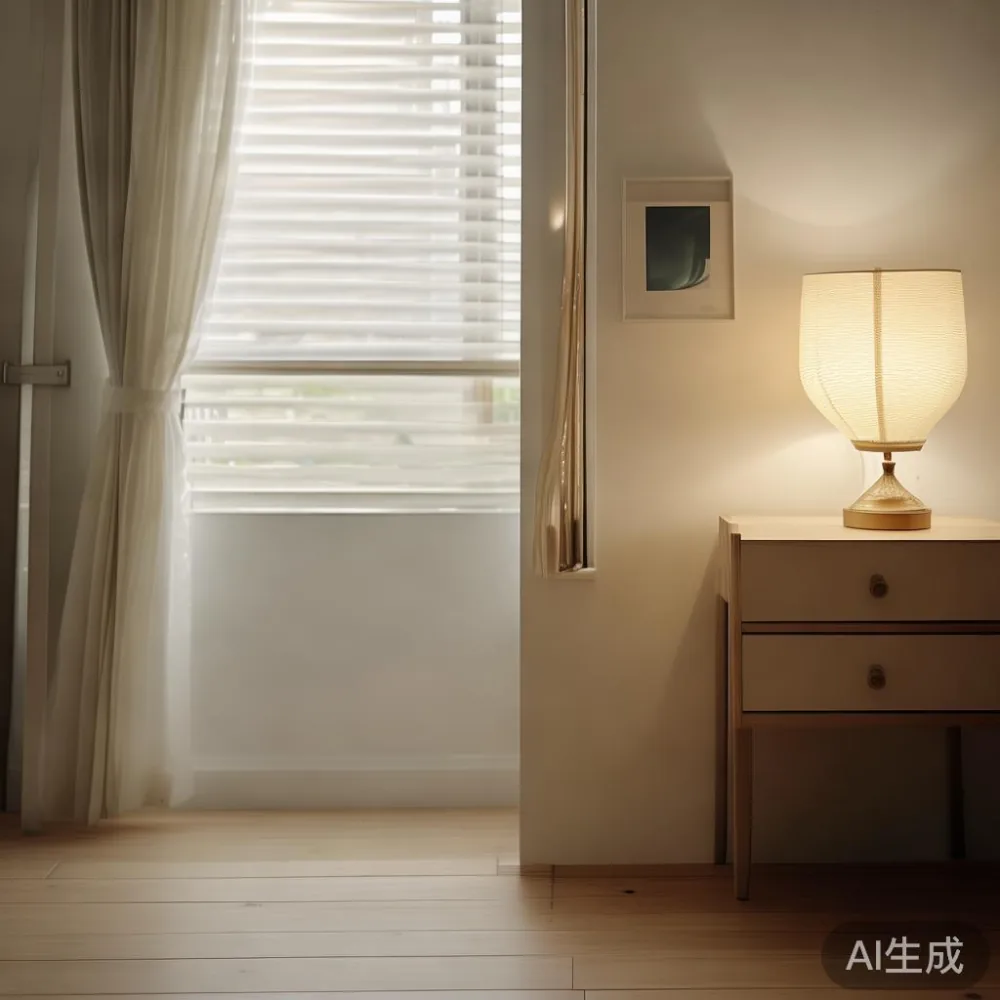
This guide is written from the floor up, using Singapore measurements, lift dimensions and SGD pricing, so the advice translates directly into your home. Whether you rent a 45 sqm studio in Tiong Bahru or own a 90 sqm condominium unit in Punggol, the same logic applies: pick fewer pieces, pick them slimmer, and pick them in solid wood so they earn their footprint for the next fifteen years.
Why does a small Singapore flat feel crowded in the first place?
A typical HDB three-room flat measures about 65 sqm, and the master bedroom rarely exceeds 12 sqm. Once you place a 1.5 m bed frame, a 60 cm wardrobe, and a 45 cm nightstand on each side, the remaining walking strip shrinks to roughly 55 cm — narrower than the 80 cm clearance most interior designers in Singapore recommend for comfortable movement. Add a dressing table or a marble table for your morning coffee, and the room reads as "full" before you even open the wardrobe door.
Corridor widths compound the problem. Newer HDB blocks in Punggol and Sengkang have internal corridors of about 1.2 m, which sounds generous until you are carrying a 2.1 m solid wood sofa up three flights because the lift interior is only 1.1 m deep and the door is 900 mm wide. I learned this the hard way when my colleague bought a four-seater sofa online without checking: it would not fit through the lift, and the delivery team had to hoist it up the service staircase for an extra SGD 180. So the first rule of small-space styling is to measure twice: the room, the corridor, the lift, and the front door (usually 900 mm x 2.1 m in most HDB units).
Where can I buy a master bed in Singapore?
You can buy a master bed in Singapore directly from solid wood specialists such as MIDHILL in Foshan, who export container-load quantities to Jurong and Tuas warehouses, as well as from local showrooms in Tai Seng, Tan Boon Liat and the furniture rows along Balestier. For most Singapore shoppers, the realistic path is a brand that shows you the actual timber, the joinery, and the warranty in writing — then ships from a regional warehouse in 18 to 28 days so you are not waiting four months for a container. A solid wood master bed frame in oak or ash, sized at 1.8 m x 2 m, should weigh between 55 kg and 75 kg; if the listing says "lightweight" and "under 30 kg", it is almost certainly veneer over MDF.
How do I pick a nightstand that does not crowd the bedroom?
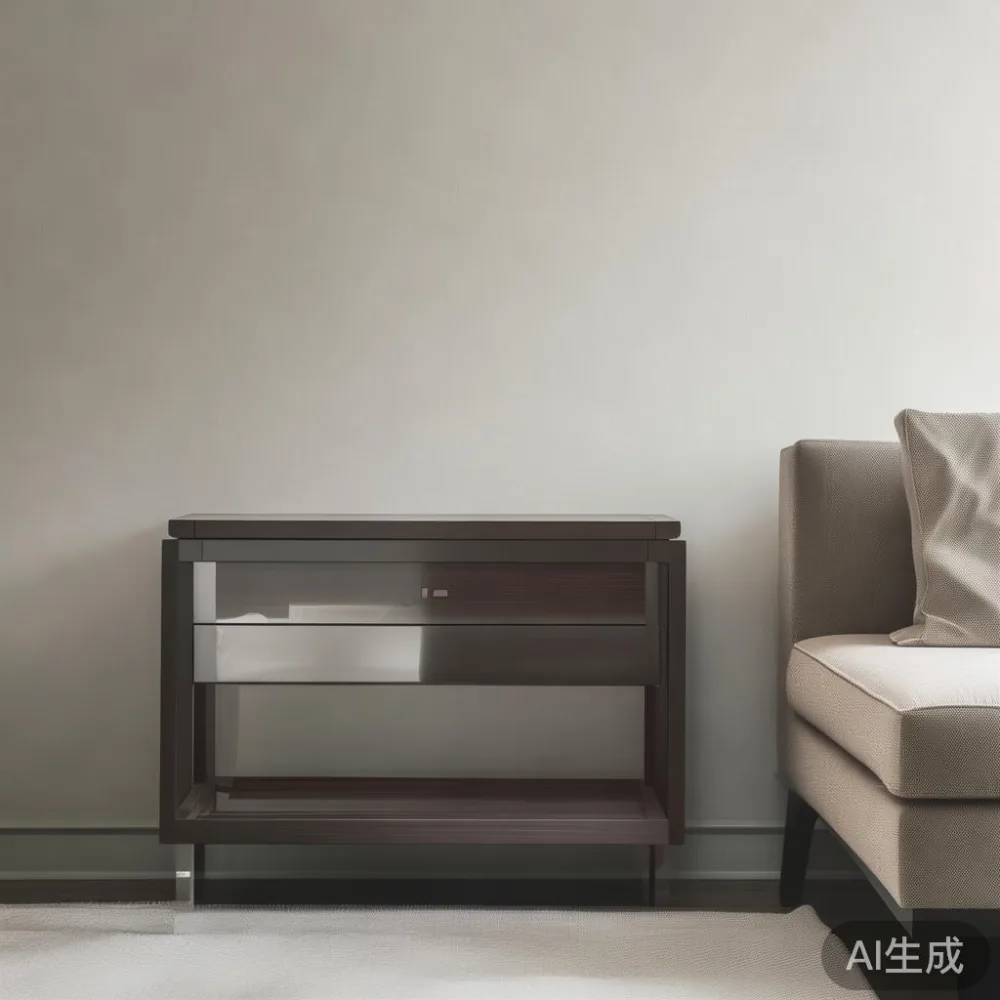
Pick a nightstand that is narrower than your bed frame is tall. A standard 1.5 m or 1.8 m bed frame usually stands 90 cm to 105 cm off the floor, measured from the floor to the top of the mattress. Your nightstand should sit 3 cm to 6 cm below mattress height so a book or a glass of water does not have to travel uphill in the dark. In a small Singapore bedroom, that usually means a cabinet top at 60 cm to 68 cm. Anything taller starts to block the natural sightline from the door to the window, which is what makes a room feel cramped.
Depth matters more than width. Most Singapore HDB bedrooms can absorb a 40 cm wide nightstand, but a 35 cm deep one will leave you a usable 70 cm walking strip — far more comfortable than the 55 cm you get with a 40 cm deep unit. I keep my own at 38 cm deep because my partner needs room for a 25 cm diameter table lamp, and 38 cm still gives us a clean line. If you sleep alone and only need a phone and a book, a 30 cm deep shelf-style nightstand can feel almost invisible while still holding a wireless charger and a 200 ml water carafe.
What dimensions should I write down before I order?
Five measurements, in millimetres, on a single sheet of paper before you tap "checkout":
1. Room footprint. Length and width of the bedroom, plus ceiling height (usually 2.6 m in older HDB blocks, 2.8 m to 3.0 m in newer Punggol and Punggol East BTOs).
2. Bed frame size. Width, length and the height of the top of the mattress once your 20 cm to 25 cm mattress is on the slats.
3. Corridor and lift. Measure the lift door (typically 800 mm to 900 mm wide) and the lift interior depth. Most new HDB lifts are 1.1 m deep, but some older ones in Bedok Reservoir and Tampines East are only 950 mm — a 40 cm deep nightstand will not clear the turn, even if it clears the door.
4. Doorway into the bedroom. Standard HDB internal doors are 800 mm x 2.05 m. A nightstand any wider than 75 cm will not go through without disassembly.
5. Skirting and socket positions. Most Singapore bedrooms have a 100 mm skirting and one double 13-amp socket per wall. Your nightstand must not cover the socket you use for the phone charger, or you will be crawling behind the cabinet at midnight.
Which light-luxury style suits a compact Singapore bedroom?
French light luxury, American light luxury and post-modern light luxury each translate differently into a small HDB room, and the difference shows up in the joinery and the finish, not in the silhouette.
French light luxury leans on curved cabriole legs, brushed brass pulls, and stone tops in warm cream. A nightstand in that language usually carries a marble table top 8 mm to 12 mm thick and a slightly tapered solid wood frame. In a 10 sqm bedroom, the trick is to keep the curves soft and the colour quiet — think pale travertine rather than bold veining — so the piece reads as a focal point without fighting the wall.
American light luxury is broader and quieter: wide drawer fronts, low-sheen hardware, and a thicker top edge of about 30 mm. It works extremely well in Singapore because the visual weight sits on the horizontal, which makes the ceiling feel higher than it is. If your bedroom is on the 12th floor of a Punggol condo with a 2.8 m ceiling, this proportion is forgiving.
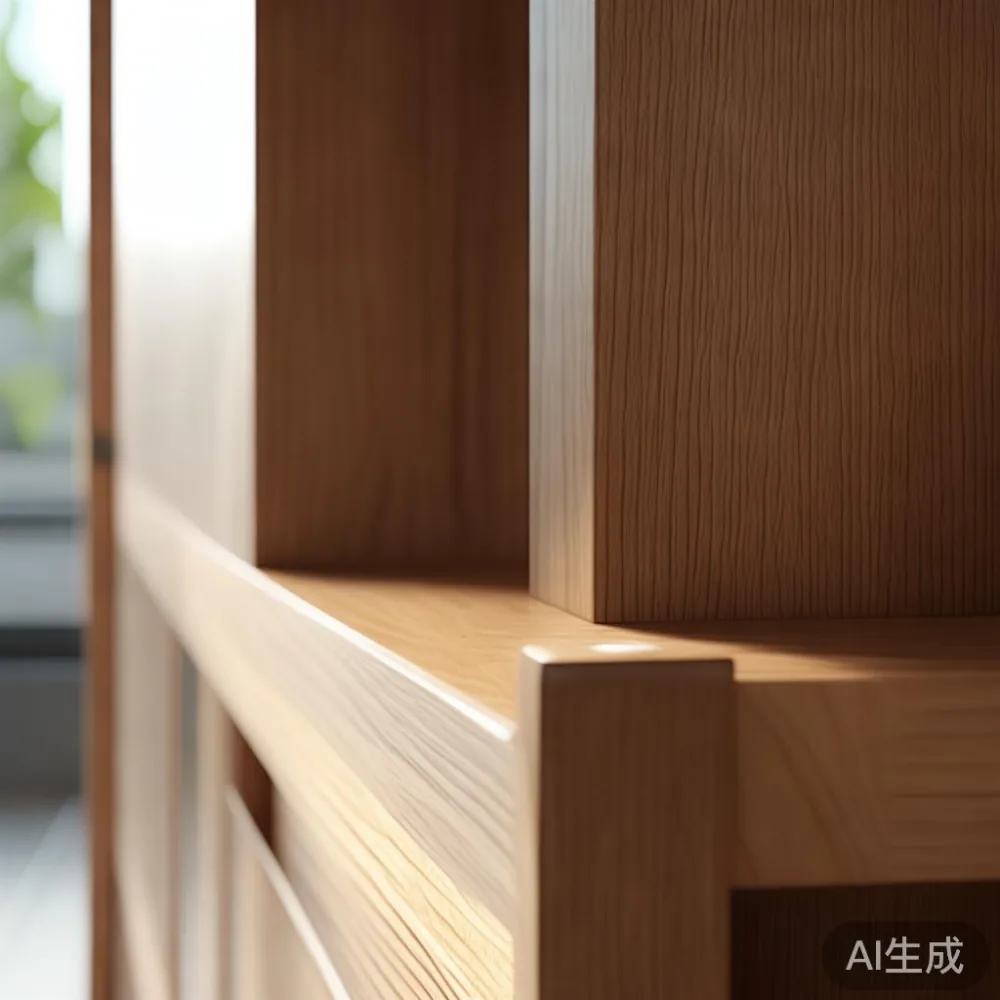
Post-modern light luxury is the easiest to live with in a small flat. It uses geometric drawer fronts — fluted reeded faces, stepped panels, asymmetric pulls — and keeps the silhouette close to a simple box. A 38 cm deep nightstand in reeded ash at SGD 480 to SGD 620 usually lands within the post-modern language and stays useful for fifteen years.
What about the rest of the room — sofa, dining table, wardrobe?
Once the nightstand is chosen, scale the other pieces down so they do not steal its thunder. A solid wood sofa at 1.8 m to 2 m long fits a small living room better than the 2.4 m version most showrooms push. The seat depth should be 55 cm to 60 cm, not the 65 cm common in American catalogues; that 5 cm is the difference between a usable walkway and a cramped one. For the dining table, a 120 cm x 70 cm solid wood top seats four comfortably and leaves 70 cm behind each chair, which is the minimum recommended clearance in HDB dining nooks. A six-seater at 180 cm x 90 cm will physically fit into many 12 sqm dining areas, but the room will feel pinched every time someone stands up.
The wardrobe should be the tallest piece in the room, not the widest. A 180 cm high x 120 cm wide x 55 cm deep wardrobe in ash or oak holds roughly 1.8 m of hanging rail, which is enough for two adults, and keeps the floor clear. Sliding doors save 55 cm of swing space compared to hinged doors, which in a small bedroom is the same as gaining a small chair.
If you work from home, resist the temptation to add a bulky desk. A grey ash wood standing desk in a 120 cm x 60 cm footprint gives you a sit-stand option in under 0.8 sqm, and the ash tone pairs naturally with the nightstand and bed frame if you stick to one species. Two pieces in the same timber read as a pair; three pieces in the same timber read as a set, and the room feels pulled together rather than crowded.
How do I keep the room calm once the pieces are in?
Three habits keep a small Singapore bedroom from drifting back into chaos over the first six months:
1. The top of the nightstand rule. Only three objects live on the surface: a lamp, a phone, and one book. Everything else goes in the drawer. A cluttered top makes the cabinet look 30% larger than it is.
2. One material, one metal. If your bed frame and nightstand are ash, keep the wardrobe handles in brushed nickel and the lamp base in brushed nickel. Mixing brass, black and copper in a 10 sqm room adds visual noise. One metal finish reads as calm.
3. Buy once. A solid wood nightstand from a maker such as MIDHILL, finished in hardwax oil, can be re-oiled and re-stained every eight to ten years. I have refinished mine twice now — once in 2017 to a darker walnut, once last month back to natural ash — and the structural frame is the same piece I bought new. That lifetime refinishing path is the financial counter-argument to a SGD 180 flat-pack that lasts four years and ends up in a skip.
What does a realistic SGD budget look like for the bedroom set?
For a master bedroom in a Singapore HDB or compact condo, a sensible 2025 budget in SGD, including 9% GST and delivery:
— Solid wood bed frame (1.5 m, ash or oak): SGD 1,150 to SGD 1,650
— Matching nightstand pair (38 cm deep, two drawers): SGD 720 to SGD 980
— Six-drawer wardrobe (180 cm x 120 cm, sliding doors): SGD 1,850 to SGD 2,400
— Dressing table with marble table top (100 cm x 45 cm): SGD 780 to SGD 1,050
— Bedside table lamp pair: SGD 240 to SGD 360
That brings the room to roughly SGD 4,740 at the lower end, SGD 6,440 at the upper end, with a 10-year structural warranty on the timber pieces and free delivery above the supplier's threshold (MIDHILL, for example, ships free above US$350, which translates to about SGD 470 and is well under the total above). Delivery from a regional warehouse to a Singapore address usually takes 18 to 28 days, with a 14-day return window if a piece arrives with a visible defect.
The same room in flat-pack MDF would cost roughly SGD 2,200 to SGD 2,800, but the expected lifespan is four to seven years in Singapore humidity (80% to 90% relative humidity for most of the year). Over a fifteen-year horizon, the solid wood set costs about SGD 315 per year, the flat-pack set about SGD 200 per year on average — a SGD 115 annual difference for pieces that still look like furniture in 2040.
What should I check on the day of delivery?
Stand at the door of your HDB unit with a tape measure and a phone camera. Confirm each piece fits through the lift before the delivery team brings it up. Confirm the nightstand drawer clears the socket on the wall it will sit against. Confirm the bed frame slats are seated in their brackets — this is the single most common assembly mistake and the cause of most squeaks after month three. Photograph any dents or scratches before the team leaves, so you have evidence if you need to use the warranty. A 30-minute inspection on delivery day saves three years of small frustrations.
Last month I visited a friend's new flat in Tampines North to help her style the bedroom. She had ordered a nightstand at 45 cm deep and a wardrobe at 60 cm deep, and the room was genuinely uncomfortable to move around. We returned the deeper nightstand for a 35 cm version, slid the wardrobe 10 cm further into the corner, and the room gained roughly 1.5 sqm of usable visual space without changing a single wall. The total cost of the swap was SGD 80 in redelivery and a Saturday morning of measuring. That is the real lesson: in a Singapore flat, depth is the dimension you fight, not width, and the right nightstand is the piece that makes the whole room breathe.