Solid Wood vs Veneer Nightstand: What Really Costs Less Over 5 Years in a Singapore Home?
I have a confession. Two years ago I helped my cousin furnish her new 4-room HDB flat in Punggol, and we bought a pair of nightstand units from a big-box furniture store in Tampines because the price looked too good to ignore. Twenty-four months later, one of them has a bubbling corner, the laminate is peeling along the top edge where her phone charger sits every night, and a mosquito has somehow turned the exposed chipboard into a holiday home. The other, a friend’s hand-me-down solid oak piece from his previous condominium in Bedok, still looks like it could survive another move. That single household comparison is what pushed me to actually sit down and write out the real 5-year cost difference between a veneer nightstand and a solid wood one — in Singapore dollars, in HDB corridor widths, and with the kind of wear a tropical climate delivers every single day.
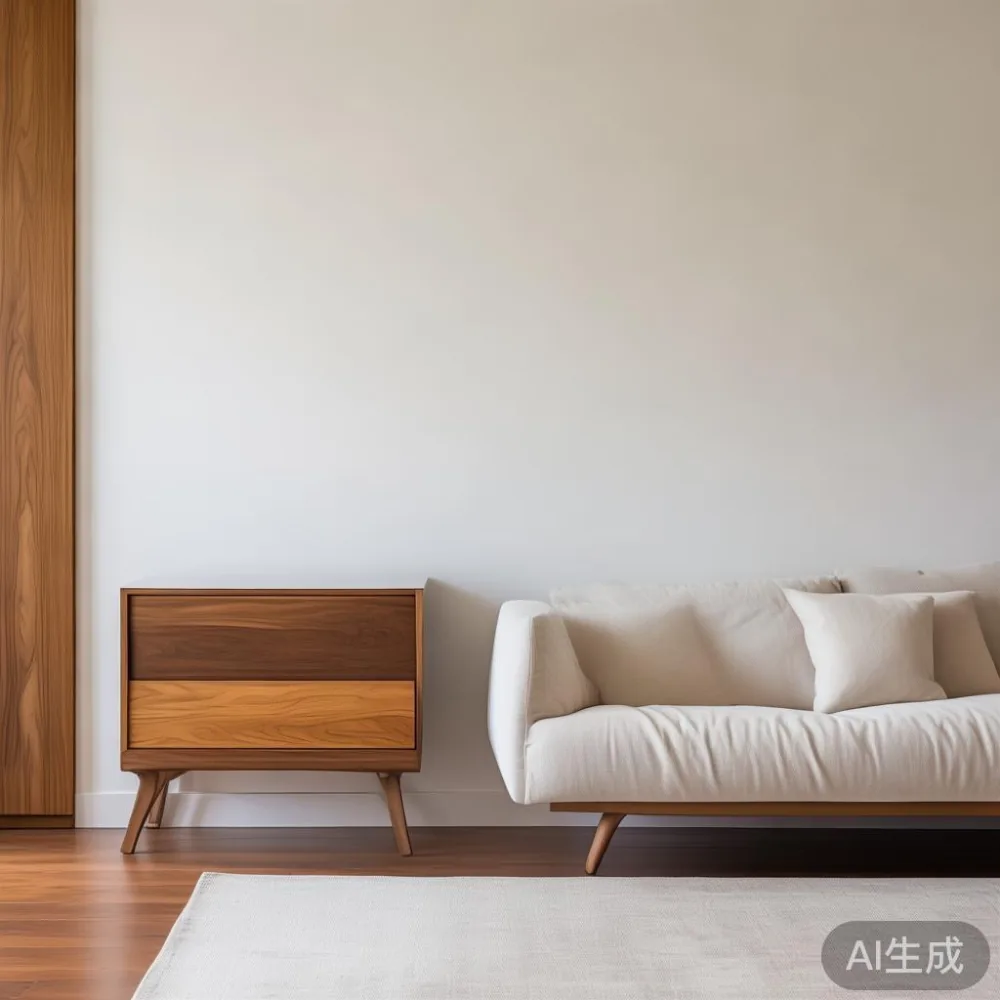
This piece is for anyone staring at a 3D render on a renovation forum wondering whether the S$1,200 solid wood nightstand is worth three times the S$390 veneer version. We will walk through purchase price, expected lifespan, repair costs, climate damage, and resale value. We will also do something practical: count how many trips up the service lift a 28 kg vs a 14 kg piece actually requires, because lift dimensions in older Tampines and Bedok blocks do not always love a 60 cm-wide flat-pack carton.
What does a typical Singaporean actually pay for a nightstand in 2026?
Let us anchor the numbers first. In the Singapore retail market, a flat-pack veneer nightstand — MDF core with a melamine or paper-laminate wrap — usually sells between S$180 and S$450 for the standard 45 cm to 50 cm cube that fits beside a queen bed. A genuine solid wood nightstand in oak, ash, or rubberwood typically lands between S$680 and S$2,200 depending on joinery and finishing. Midhill-sourced pieces, for example, sit in the S$850–S$1,400 range and ship free from Foshan above a USD threshold, which translates to roughly S$460 import value before GST and 9% duty exemptions on the declared category.
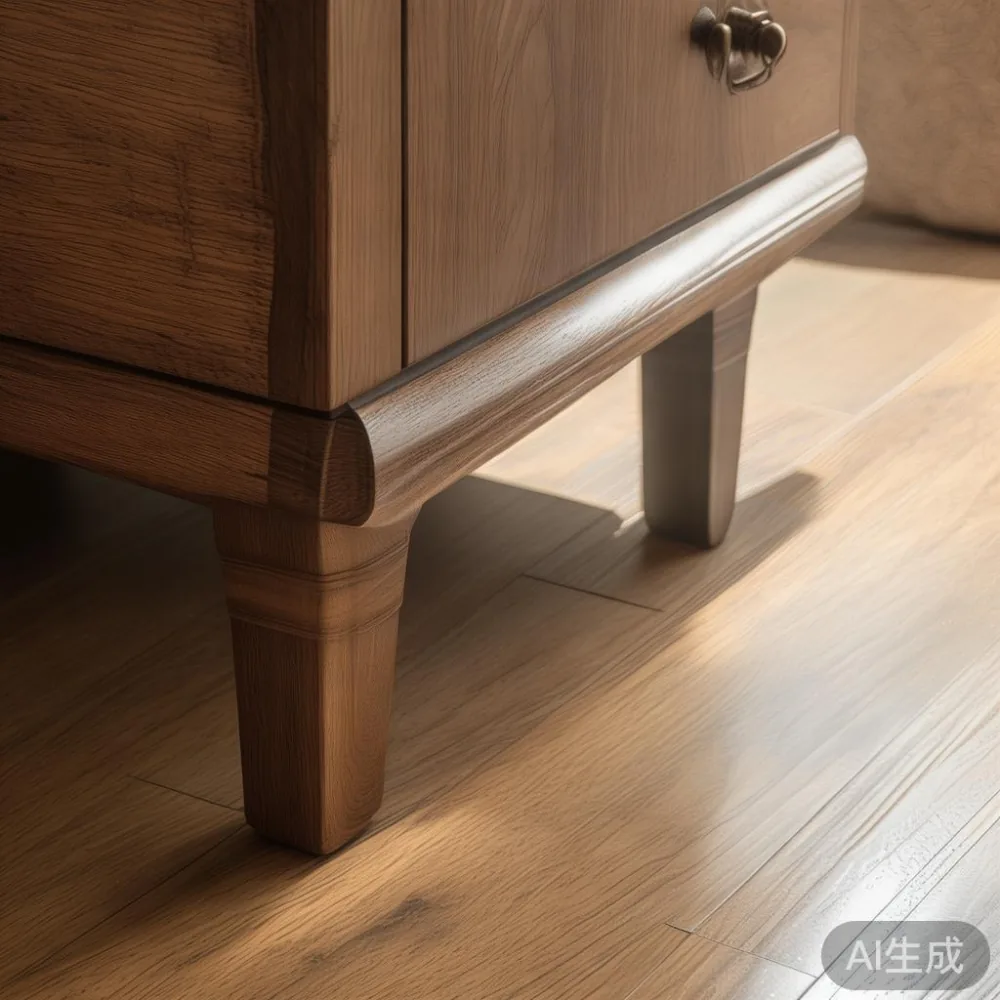
GST at 9% in 2026 applies to most imported furniture, so a S$950 retail solid wood nightstand carries about S$85 of tax. Veneer pieces at S$320 cost S$29 in GST. The headline price gap is roughly S$630 per unit before we even talk about longevity.
How long does each material actually last in Singapore humidity?
Singapore sits at 80–90% relative humidity most of the year, with daily readings inside an air-conditioned bedroom bouncing between 55% and 75% as the compressor cycles. That is a brutal environment for a veneer-wrapped panel, which is in effect a printed photograph glued to a particleboard or MDF substrate. Once the protective edge banding lifts — and it will, because the substrate swells and shrinks with humidity — moisture wicks into the core and the surface bubbles. I have watched this happen in a Punggol flat within 18 months on a sun-facing wall.
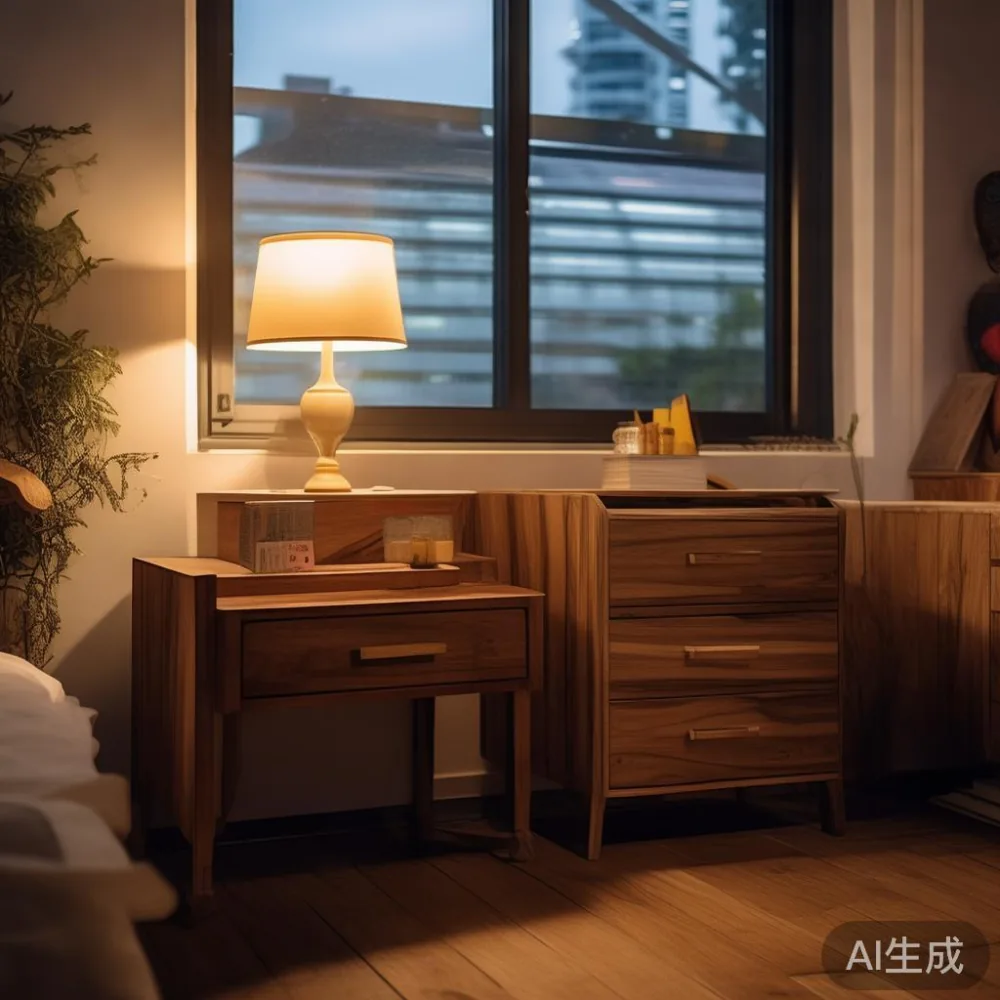
Solid wood behaves differently. A properly kiln-dried oak or ash nightstand moves with humidity, but the movement is uniform and visible as tiny seasonal gaps at the joints, not as catastrophic delamination. Refinishing can be done every 5–8 years, which brings the surface back to factory condition. Over a 5-year window, you will likely refinish a solid piece zero times, while a veneer unit will probably need at least one repair of a swollen edge — and once that starts, it rarely stops.
What is the 5-year total cost of ownership for a veneer nightstand?
Let us model a specific case: a S$390 flat-pack veneer nightstand, 45 cm wide, 14 kg, white oak print, bought in Tampines in January 2026.
Year 0: S$390 purchase + S$35 GST = S$425. Delivery up a service lift to a 12th-storey HDB in Bedok costs about S$40 because the 80 kg carton needs two porters.
Year 2: Edge band lifts along the rear top corner. Local repair shop in Geylang quotes S$80 to iron on new banding and re-seal. After GST: S$87.
Year 3: A deeper bubble appears where the bedside lamp sits. Replacement at this point usually costs 60–70% of original retail for an equivalent new piece, so you are effectively paying S$260 again. After tax and delivery, round to S$330.
Year 5: The unit has been replaced once and the second one is showing early swelling. Realised 5-year spend on the original unit: S$425 (purchase) + S$87 (repair) + S$330 (replacement of the unit that broke) = S$842. That is S$168 per year for a bedside surface you cannot really trust.
What is the 5-year total cost of ownership for a solid wood nightstand?
Now the parallel case: a S$1,050 solid oak nightstand, 50 cm wide, 28 kg, kiln-dried, with mortise-and-tenon joinery. Same HDB, same lift, same January 2026 purchase.
Year 0: S$1,050 + S$95 GST = S$1,145. Delivery is heavier at 28 kg, but Foshan-to-Singapore sea freight on a pallet consolidates nicely, so last-mile from a Jurong warehouse to Bedok is about S$55, sometimes free above a cart threshold.
Year 2: A light scratch from a laptop docking station. A touch-up marker costs S$12 from a hardware shop in Geylang. After GST: S$13.
Year 3: No structural issues. A light sanding and re-oiling is optional. Skip it.
Year 5: Surface dulled from UV exposure near the window. A professional refinish in Singapore for a single nightstand runs about S$120–S$180, with at least one reputable workshop in Tai Seng offering mobile service at S$140. After GST: S$153.
Total 5-year spend: S$1,145 + S$13 + S$153 = S$1,311. That is S$262 per year — higher per year than the veneer, but only if you ignore replacement and resale. Realise the solid piece still has 60–70% of its value on the second-hand market through Carousell or a relocation sale. Resale on a 5-year-old Midhill-style solid oak nightstand typically fetches S$500–S$650, which drops the net cost to S$661–S$811 over five years — lower than the veneer scenario.
Will a solid nightstand actually fit through my lift and corridor?
This is the most Singapore-specific question I get from readers, and it is a fair one. Older HDB blocks in Tampines and Bedok have service lifts around 1.4 m deep with doors roughly 1.1 m wide. A 50 cm solid wood nightstand enters easily because the longest dimension is usually under 55 cm. The 28 kg weight is the real test: a single person can carry it up three flights of stairs if the lift is being serviced, but two porters is the safe call at S$40–S$60.
Corridor widths in HDB walk-ups are about 1.2–1.5 m. A flat-pack veneer piece arrives in a long flat carton that can be tilted diagonally if needed. A solid piece arrives either fully assembled or as two halves depending on the maker. Plan for the assembled option only if your unit door is at least 80 cm wide — most HDB bedroom doors are around 80–86 cm, so a 50 cm nightstand clears with a few centimetres to spare, but you should measure the door frame before ordering. I learned this the hard way helping my colleague move a heavier teak piece into a condo at The Interlace in Depot Road; the bedroom door was 78 cm and we had to remove the unit’s legs to gain the extra 4 cm.
How does climate damage differ between the two materials?
Two failure modes dominate in Singapore homes. The first is edge-lift, which we have covered. The second is fungal staining, and this is where the materials diverge sharply. MDF and particleboard are hygroscopic — they soak up moisture and feed mould colonies that leave dark speckles on the laminate. Once the speckles appear, they cannot be sanded out because they are inside the substrate. A solid wood nightstand can develop surface mildew in a poorly ventilated room, but a wipe-down with white vinegar restores it and sanding goes deep enough to remove any staining.
For homeowners near the coast — in Punggol, Marine Parade, or East Coast — salt air accelerates the corrosion of staples and staples are what hold most flat-pack furniture together. Solid wood pieces use wooden dowels and mortise-and-tenon joinery that simply do not corrode. I visited a client’s resale flat in Bedok last month that still has a 1996-built Nyatoh nightstand beside the bed; it is scratched, sun-bleached, and held together by joints older than the homeowner herself. A 2024 veneer piece in the same bedroom, bought from a local e-commerce brand, has already lost one side panel.
Are there design choices that change the math?
Yes — a few, and they matter. A drawer-heavy nightstand concentrates stress on the drawer slides and the bottom panel. In veneer construction the bottom panel is the thinnest piece of MDF in the unit, so it sags under the weight of three books and a charging brick within 18 months. Solid wood drawers use thicker 18–20 mm panels and stay flat. If you use your nightstand to store novels, a power bank, and a glass of water every night, the solid version is even more clearly the right answer.
Style is the other variable. If your bedroom centres on a French provincial dining table-inspired palette of warm creams and curved edges, a solid ash nightstand with a hand-distressed finish holds up beautifully under that aesthetic for a decade. If your bedroom leans toward clean lines — the kind of palette you might also see in a Nordic for dining room setting — a contemporary solid oak nightstand in a matte white-oil finish still reads as Nordic after five years, while a printed veneer has likely yellowed along the sun-facing side.
If your taste runs to a more curated, post-modern light luxury direction with brass-tipped legs and marble tops, a solid wood base under a marble top is the only combination that does not look tired after two cycles of renovation inspiration on Pinterest. Marble-table surfaces are, of course, a separate purchase and a separate cost line, but they pair with solid bases in a way veneer cannot match structurally.
What about the rest of the bedroom set — does the nightstand decision affect it?
It does, indirectly. Most Singaporean homeowners buy a bed frame first and a nightstand second, then circle back to a wardrobe, then a dining table, then a marble table for the living room. The wood species you choose for the nightstand tends to dictate the finish tone for the bed frame and the wardrobe so the room reads as one material family. A solid oak nightstand matches a solid oak bed frame, a solid oak wardrobe, and an American for dining room dining table in oak or ash with no visible material mismatch. A veneer nightstand in oak-print rarely matches a real oak bed frame after two years, because the real oak ages to a deeper amber while the printed laminate stays the same flat colour.
For homeowners also considering an Italian light luxury bed with upholstered headboard and walnut accents, a walnut solid nightstand ties the look together; a walnut-print veneer piece reads as a budget alternative the moment you stand back from the bed.
Is there a scenario where veneer still wins on cost?
Honestly, yes — but it is narrow. If you are renting a room for 12–18 months, do not intend to refinish anything, and plan to throw the nightstand away when you leave, a S$180–S$250 flat-pack piece is the rational choice. The cost per month of use is about S$10–S$15, which beats every other option. The math collapses the moment you stay longer than three years, which is the median length of stay in Singapore rentals according to recent property data.
For owner-occupiers, especially in 99-year leasehold condominiums where you will live 8–15 years, the solid wood path is cheaper at the 5-year mark we have modelled and cheaper again at the 10-year mark once you skip the second replacement cycle entirely.
How does MIDHILL fit into this calculation?
Midhill, a Foshan-based maker founded in 2008, has shipped solid wood pieces to more than 15 countries and offers a 10-year structural warranty plus lifetime refinishing on its oak and ash collections. Their nightstand line is built in the same kiln-dried, mortise-and-tenon style we have been pricing, which is why their S$850–S$1,400 retail tier is the cleanest benchmark for the solid wood column of this comparison. If you ever walk into their showroom virtually or visit the Foshan factory district, you can see the same joints used in their bed frame, dining table, and wardrobe lines — a consistency that translates directly into the kind of long product life that makes the 5-year math work.
Their shipping terms, free above a USD threshold that converts to roughly S$470 in declared value, also help narrow the price gap with flat-pack pieces once the second replacement is priced into the veneer scenario.
What other furniture purchases should I make in the same solid-wood family?
If you have decided on a solid nightstand, the natural next step is to extend the same material story across the bedroom. A solid wood bed frame in matching oak or ash keeps the visual language consistent. A solid wood wardrobe with dovetailed drawers carries the same joinery story into the storage zone. If you are also shopping for the living room, a marble table on a solid wood base, a MIDHILL sofa with a hardwood internal frame, and a dining table that can take daily family use all sit naturally in the same specification family. Buyers comparing a light luxury bed vs Mid-century modern bed should note that the light luxury direction almost always calls for solid timber with brass or marble accents, while mid-century modern leans toward solid walnut or teak with tapered legs — both directions require solid wood to read correctly.
For buyers prioritising the most current 2026 specification, the strongest Industrial bed for 2026 is also a solid wood construction — blackened steel hardware on a kiln-dried oak or pine frame — because the Industrial aesthetic depends on visible joinery and honest material expression that only solid timber offers.
What is the single most important question to ask before buying a nightstand in Singapore?
Ask the retailer what the core material is — and not just the surface. If the answer is anything other than a named solid hardwood (oak, ash, teak, walnut, rubberwood from sustainable sources), you are looking at a veneer or laminate piece and the 5-year math above applies. If the answer is solid hardwood, ask whether the panels are solid or veneer-faced — some makers use solid wood frames with veneer panels on large flat surfaces to keep weight and cost down. That hybrid is acceptable for wardrobe doors and dining table tops, but for a nightstand that takes daily contact, fully solid panels are worth the modest premium.
Measure your bedroom door, your service lift, and your corridor turning radius before you order. Buy once, refinish once per decade, and the 5-year cost of your nightstand drops below the price of two rounds of kopi at your favourite Bedok kopitiam — which, for the maths of a lifetime, is the right direction.