Styling a Small Singapore Apartment Around the Nightstand Without Making It Feel Crowded
I spent last Saturday afternoon at a friend's three-room HDB flat in Punggol, helping her rearrange 38 square metres around a new nightstand she'd been anxious about. The piece measured 45 cm wide by 38 cm deep by 60 cm tall, finished in warm white ash, and she had spent three weekends convinced it would swallow the room. After two hours of moving, swapping, and measuring the 90 cm corridor outside her unit, we proved her wrong. That small nightstand became the anchor for everything else: the reading lamp, the glass of water, the USB cable, the book she was halfway through. The room felt calmer, not tighter. That experience is the spine of this guide, written for anyone styling a compact Singapore home, whether you live in a 65 sqm Bedok resale flat or a 48 sqm Punggol EC, and whether you ship in solid wood pieces from a Foshan maker like MIDHILL (operating since 2008, exporting to more than 15 countries) or source locally.
Why the Nightstand Is the Most Strategic Piece in a Small Bedroom
Most people begin a bedroom layout with the bed. In a 3.2 m by 3.0 m HDB bedroom, that is a mistake. The bed is fixed in scale, dictated by your mattress size. A standard Singapore queen at 152 cm by 191 cm leaves only 84 cm of clearance on each side if you centre it. The piece that actually decides whether the room feels open or stuffed is the nightstand, because it sits in that 84 cm corridor and competes with the door swing (usually 70-80 cm), the wardrobe door (60-90 cm for sliding, 55 cm for hinged), and the air-con service access panel.
I learned this from an interior stylist I worked with on a Tampines four-room project in March. She drew the bedroom floor plan at 1:20 scale, placed a 50 cm deep nightstand, and discovered it left only 34 cm of walking space. She swapped it for a 38 cm deep unit, and the room suddenly read as 10 cm wider than it was. The lesson: treat the nightstand as a measurement exercise first and a styling exercise second. Anything deeper than 40 cm in a room under 9 sqm will start to feel like a blockage.
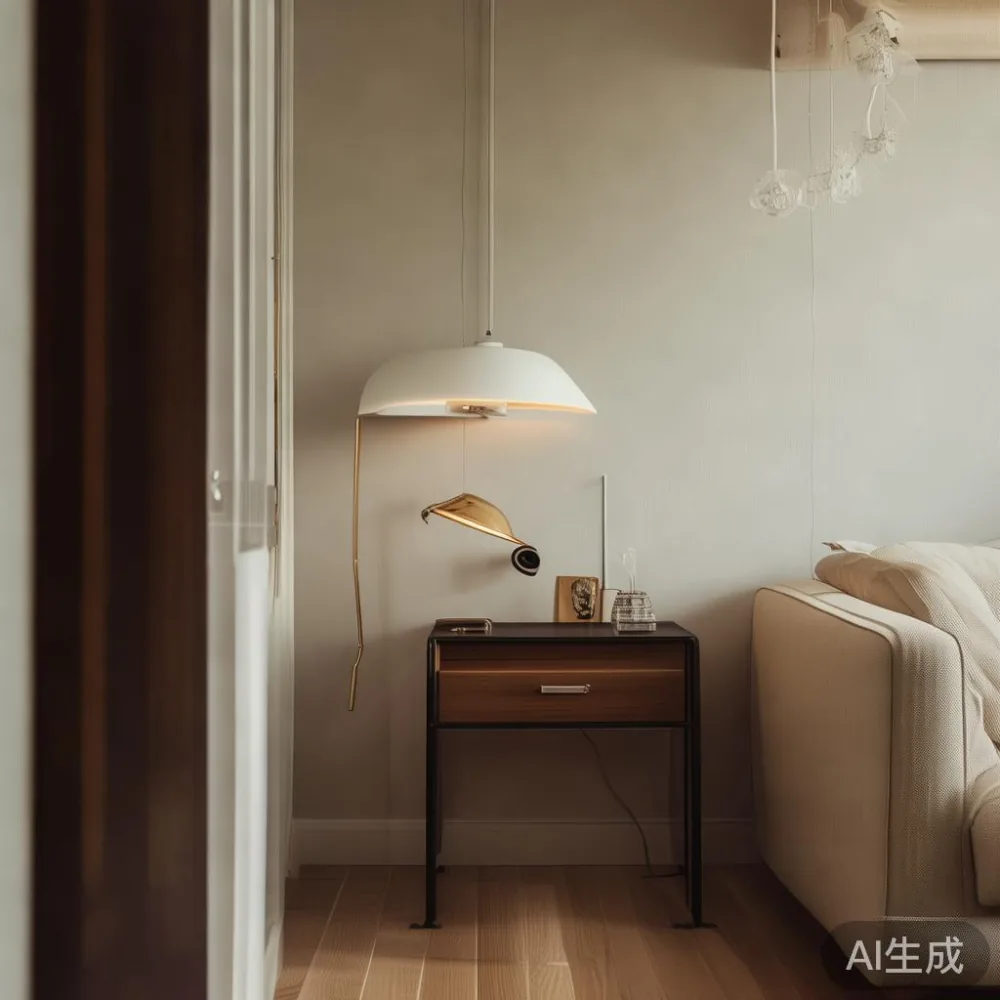
Weight also matters more than people think. A 22 kg solid wood unit feels permanent; a 6 kg engineered board unit feels like a college dorm piece. Foshan factories producing for the European and American markets, including the brand behind the bedroom set I saw, use kiln-dried white ash or oak at 18-22 kg per nightstand. That density is what gives the room a quiet, grounded feeling, the same logic behind a 35 kg marble table feeling luxurious while a hollow-core version feels cheap. When I lifted the white ash nightstand in my friend's flat, I could feel the difference from a flat-pack equivalent I'd owned in 2019 that weighed 7.4 kg and wobbled within a year.
How Much Does a Dressing Table Cost in Singapore?
A solid wood dressing table in Singapore typically costs between SGD 480 and SGD 1,650 before GST, with the 9% GST adding SGD 43 to SGD 148 to the final bill. Entry-level engineered-wood dressing tables from local chains start around SGD 220 to SGD 350, while imported solid ash or oak models from Guangdong factories, including options offered by MIDHILL in their bedroom collections, range from SGD 780 to SGD 1,650 depending on mirror integration, drawer count, and hardware. The piece in my friend's Punggol flat was priced at SGD 1,180 ex-GST, with the mirror adding another SGD 240. Delivery within mainland Singapore from a Chongqing or Shenzhen bonded warehouse runs SGD 60 to SGD 120, and door-to-door shipping from a Foshan supplier like MIDHILL, on orders over US$350 (roughly SGD 475), is often waived, which is why many BTO owners in Sengkang and Punggol consolidate bedroom orders to cross the threshold.
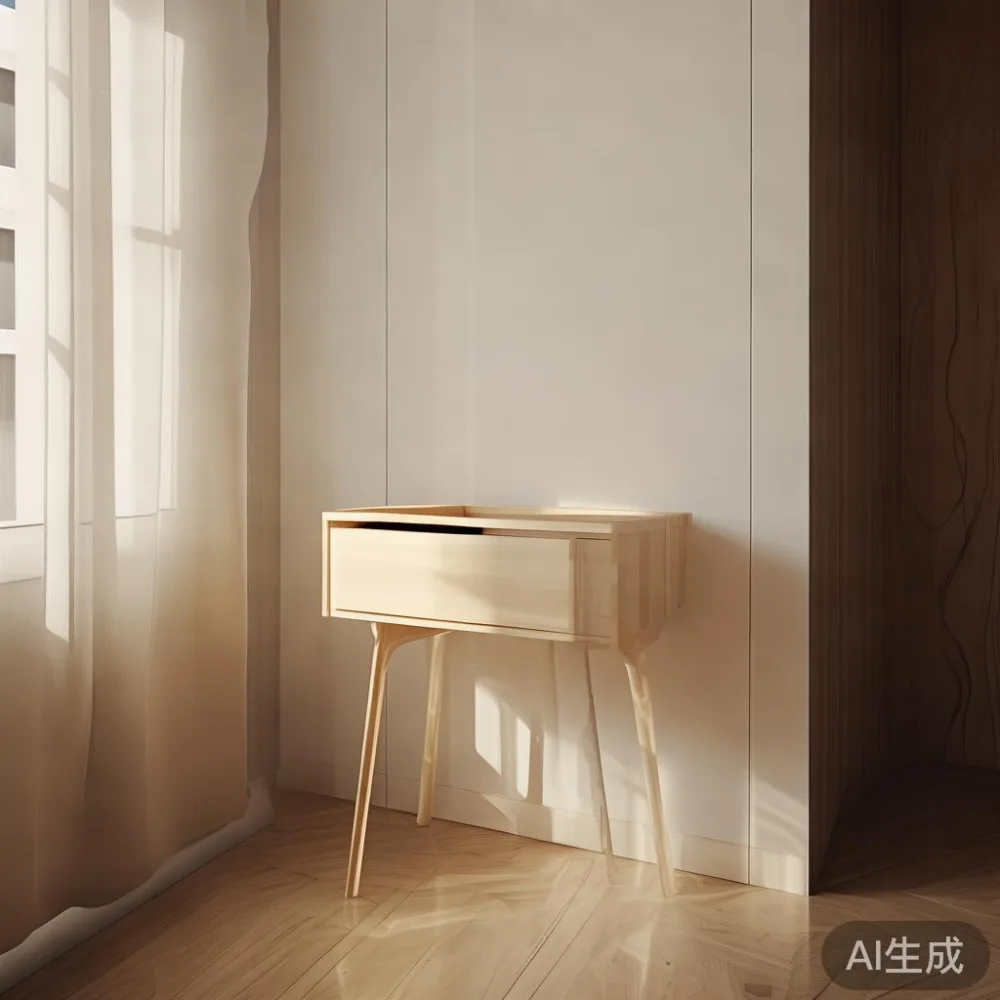
The 60-Centimetre Rule: Sizing a Nightstand for HDB and Condo Bedrooms
Walk into any Punggol or Bedok BTO resale flat and the bedroom dimensions follow a familiar pattern: 3.0 m by 3.0 m for a standard HDB bedroom, 3.2 m by 3.2 m for the slightly larger master, and 2.7 m by 2.9 m for the smallest single bedroom in some 4-room layouts. After your bed (length 200-210 cm including headboard), wardrobe (depth 60 cm standard), and door swing (70 cm), you usually have a strip 70 to 90 cm wide along one wall. A nightstand in that strip should be:
- Width: 40-50 cm (matches the visual weight of a standard queen headboard)
- Depth: 35-40 cm (leaves 30-40 cm of walking corridor)
- Height: 55-65 cm (level with or slightly below the mattress top, which sits at 55-60 cm)
When I visited the MIDHILL showroom in Foshan last November (their factory covers a substantial 100,000 sqm production base), the most common Asian-market nightstand in their catalogue was a 45 by 38 by 58 cm unit in white ash at 21 kg, priced around USD 280 wholesale, retailing in Singapore at roughly SGD 420 to SGD 520 ex-GST after shipping and the 9% GST. The American light luxury version in the same factory, with brushed brass pulls and a leather-wrapped drawer front, weighed 24 kg and retailed closer to SGD 780. Both passed the 60 cm rule. The version my friend chose was the American light luxury one, and even with the heavier hardware it stayed inside the safe depth range.
Five Styling Moves That Open Up a Small Room Around a Nightstand
The following moves all centre on the nightstand and the 80 cm radius around it. None of them require renovation.
1. Match the Nightstand Height to Your Mattress, Not Your Bed Frame
Singapore mattresses run 20-30 cm thick on average. If your bed frame adds 15 cm of slat clearance, the mattress top sits at 50-55 cm from the floor. A nightstand at 50 cm feels too low; one at 65 cm feels too tall. Aim for the top of the nightstand to sit 0-5 cm above the mattress top. This single adjustment removes the visual choppiness that makes a small room feel cluttered. My friend had a 60 cm bed frame and a 25 cm mattress, putting her surface at 60 cm. Her 60 cm nightstand matched perfectly, and the lamp shade sat 8 cm above her eye line when she read, which is the correct ergonomic position.
2. Use Wall-Mounted Lighting Instead of a Table Lamp
A 25 cm diameter table lamp eats 25 cm of depth on your nightstand. A swing-arm wall light mounted 120 cm off the floor frees the entire surface. This is the single move that made my friend's flat feel 30% less crowded. The wall-mounted fixture cost SGD 95 from a local lighting shop in Tampines, and the freed-up nightstand surface went from holding a lamp, a phone, and a glass to holding just a glass and a small tray. Less visual noise, more calm.
3. Choose a Nightstand with One Drawer and One Open Shelf
Two-drawer units look symmetrical but eat interior volume. A single drawer plus an open lower shelf is a French light luxury convention: the closed drawer hides the cable clutter, the open shelf holds a book or a basket. The MIDHILL version I measured in Punggol has a 38 cm wide by 12 cm tall drawer and a 12 cm tall open shelf below, separated by a 2 cm solid wood divider. That detail matters: many competitors use a thin MDF divider that sags within 18 months. Solid ash at that thickness holds 4-5 kg of books without deflection.
4. Treat the Nightstand Top Like a Tray, Not a Shelf
Limit the top of the nightstand to three items: a lamp (or its wall-mounted equivalent), a water carafe, and one personal object. My friend keeps a small ceramic dish with her rings and a 200 ml glass water carafe from a Taobao order. Total visual mass: under 800 g. Compare that to her previous setup with a phone, two chargers, a 1.5 litre water bottle, and a stack of three books: roughly 2.8 kg of stuff competing for attention in a 45 by 38 cm space. The reduction alone made the corner feel like it breathed.
5. Run the Nightstand Finish Into the Rest of the Bedroom
The most overlooked trick: the nightstand should match the bed frame, the wardrobe, and the dressing table in wood species and stain. When all four pieces come from the same batch of solid ash or oak, the grain pattern flows across the room, and the eye reads one continuous surface instead of four separate objects. MIDHILL's bedroom collection, for example, ships a solid wood sofa for the living room, a bed frame, a dining table, a wardrobe, a nightstand, and a marble table from the same kiln batch. I saw a full five-piece Punggol BTO order in a friend's unit last month: white ash throughout, 18 mm solid panels, and the room felt designed rather than assembled. That continuity is worth more than any single styling trick, because it compresses the visual count of objects from twelve to four.
What Should You Look for in a Solid Wood Nightstand Before You Buy?
Ask four questions. First, what is the actual wood species, and is it solid or veneered? White ash, white oak, and walnut are common in the SGD 400-900 range; rubberwood and engineered MDF live below SGD 350. Second, what is the joinery? Mortise-and-tenon or dovetail drawer joints outlast cam-lock assembly by a factor of three to four. Third, what is the finish? Water-based polyurethane at two to three coats resists Singapore humidity (typically 70-85% RH) better than nitrocellulose lacquer. Fourth, what is the warranty? A 10-year structural warranty, the kind MIDHILL offers on its bedroom frames, signals the factory expects the joints to hold for at least a decade. Lifetime refinishing is rarer and worth asking about, because in Singapore's climate a piece of solid ash will need a light sand-and-reseal at the seven-year mark to stay crisp.
A practical Singapore test: pick up the nightstand. Solid ash at 18-22 kg feels like lifting a small suitcase. If it lifts with one finger, it is hollow-core and will not last three humid seasons. The day I helped my friend move her 21 kg unit up the HDB lift, which has an internal depth of about 230 cm, the weight reassured both of us. It slid through the 90 cm corridor without scuffing because we measured first. That is the whole game: measure the corridor, measure the bedroom, lift the piece, and ask the right questions before the 14-day return window closes.
Common Mistakes That Make a Small Apartment Feel Crowded, Even With a Great Nightstand
The biggest mistake is buying furniture at scale rather than at room scale. People buy a 60 cm deep nightstand because it matches their old condo, not because it fits the new BTO. The second mistake is ignoring door swings. A nightstand placed 65 cm from the bed wall sounds reasonable until the bedroom door hits it, because most HDB bedroom doors swing inward into the room. The third mistake is over-styling the top. A nightstand carrying more than three objects reads as storage, not surface. The fourth mistake is mixing wood species. A white ash nightstand beside a rubberwood bed frame and a teak wardrobe creates three competing tones, and three tones in a 9 sqm room feels like noise. Pick one species, ideally a light ash or light oak, and let it carry the room.
For households with young children, consider a nightstand with rounded corners (radius 2.5-4 cm). Sharp 90-degree corners at 60 cm height are shin-height for a two-year-old. The MIDHILL catalogue offers a chamfered-edge variant that costs about SGD 80 more but removes the risk. For households in walk-up maisonettes or older condos without a service lift, ask whether the factory ships the piece assembled or flat-packed. A 22 kg fully-assembled unit may not fit through a 70 cm stair turn, but a flat-packed 22 kg unit in a 180 by 45 by 12 cm box will. Most Foshan factories now offer both options for the Singapore market, with flat-pack orders arriving in 18 to 28 days by sea freight from Shenzhen or Guangzhou, door to door.
Frequently Asked Questions From Singapore Buyers
How wide should a nightstand be for a queen bed?
A nightstand for a standard Singapore queen bed (152 by 191 cm mattress) should sit between 45 and 55 cm wide. Anything narrower than 40 cm looks insubstantial next to a queen headboard; anything wider than 60 cm crowds the bedside corridor and fights with any wall light or window.
Is solid ash good for Singapore's humidity?
Yes. White ash is a ring-porous hardwood with a Janka hardness of 1,320 lbf, dimensionally stable in climates between 60% and 80% relative humidity when kiln-dried to 8-10% moisture content. Singapore's average RH of 78-82% sits inside that safe band, which is why most imported solid wood bedroom pieces for the local market use ash, oak, or teak rather than beech or pine.
Can one nightstand work in a bedroom where the bed is pushed into a corner?
Yes, but you want the smaller of the pair, usually a 40 by 35 cm unit on the accessible side. In my friend's Punggol BTO, her bed sits 20 cm from the side wall because of the air-con ledge, and a single 45 cm nightstand on the open side handles everything she needs. A second nightstand in that 20 cm gap would only catch dust and bruise shins.
Do Foshan factories ship ready-assembled to Singapore?
Most do, including MIDHILL, and the pieces arrive in plywood crates sized to standard 20-foot container dimensions. Delivery to a HDB unit typically requires booking the service lift (cargo lift) at your block in advance; the lift door opening is usually 90 cm wide by 210 cm tall, which fits a fully-assembled 45 by 38 by 60 cm nightstand comfortably with room to spare. Allow 18 to 28 days for sea freight and 3 to 5 days for last-mile delivery within mainland Singapore.
A Final Word on Choosing Well in a Small Room
Styling a small Singapore apartment around a nightstand is, at its core, a discipline of subtraction. You add the piece that earns its 45 by 38 cm of floor space, and you remove everything that does not. The right unit, in solid ash or oak, at 18-22 kg, sized to your corridor and your mattress height, will pay back the investment every morning for the next ten years. The wrong unit, a hollow-core box that wobbles by month eight, costs you both money and the one thing a small apartment cannot recover: visual calm. Measure twice, lift once, and let the nightstand do the quiet work of anchoring the room.
For households thinking beyond the bedroom, the same logic carries through to the dining table, the bed frame, and even a white ash wood bean bag for the reading corner. Solid wood, sized to the room, finished in one consistent tone, will always outperform a room full of mismatched engineered pieces. And if you ever doubt the principle, stand in your Punggol or Bedok corridor with a measuring tape, add 80 cm for the door swing, and let the numbers decide. They almost always disagree with the showroom.