Veneer vs Solid Wood Nightstands: A 5-Year Cost Comparison for Singapore Homes
A nightstand sits close to daily life: it holds a phone, charger, water glass, book, and the small objects that make a bedroom feel personal. Yet its material choice affects purchase price, appearance, repairability, and resale value for years. This comparison looks at veneer and solid wood nightstands over a 5-year period, using realistic Singapore figures for an HDB flat or a condominium in Tampines, Bedok, or Punggol.
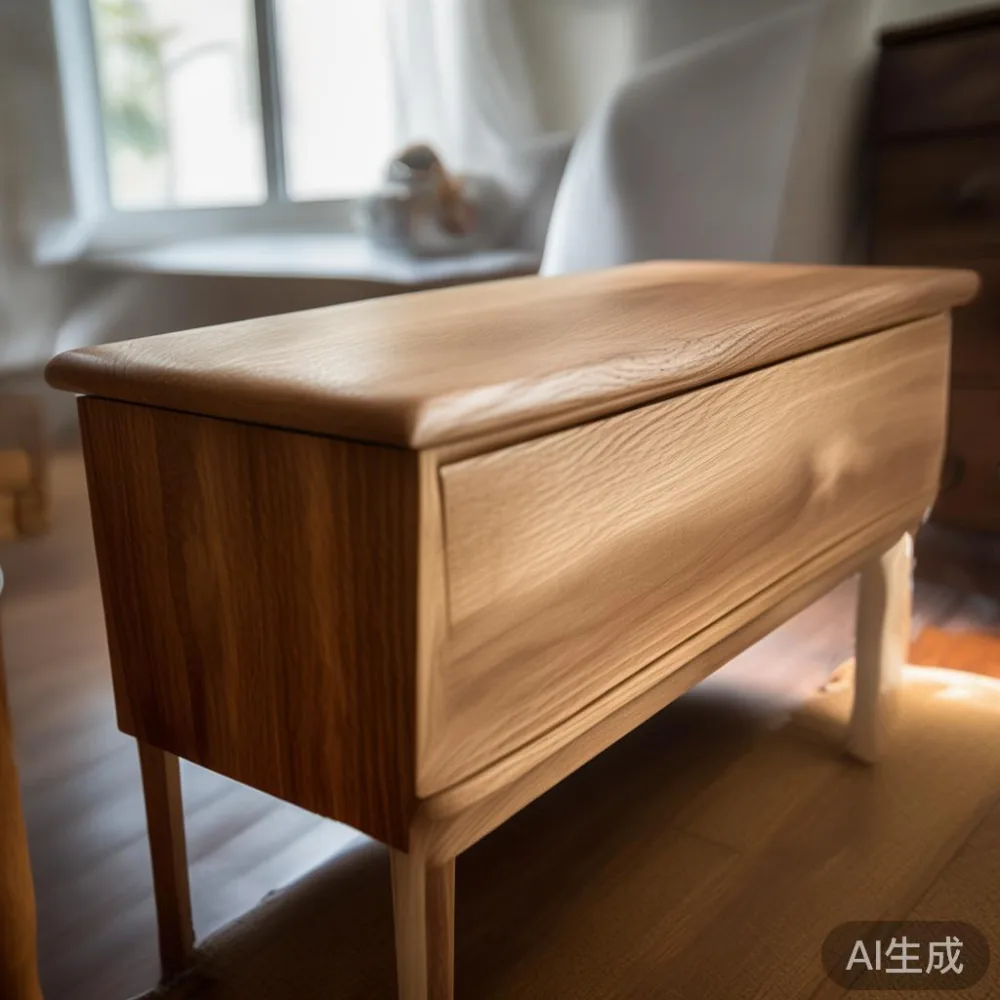
For this article, I priced a typical 50 cm wide nightstand at SGD 289 in engineered veneer and SGD 549 in solid wood, then included delivery, GST, replacement hardware, one refinishing service, and expected repair costs. Singapore’s 9% GST is shown separately on each example. The result is not simply a comparison between two labels. It is a comparison between how the nightstand is made, how it performs in a humid climate, and what happens when a child, a guest, or a moving company leaves a mark.
What does a veneer nightstand cost over 5 years?
Veneer nightstands are made by bonding a thin layer of real timber, commonly walnut, oak, or teak look, to a stable engineered core such as MDF or plywood. The visible face is natural wood, while the core provides consistency at a lower weight and price. A 50 cm wide model with two drawers and soft-close slides may retail around SGD 289 before GST in Singapore.
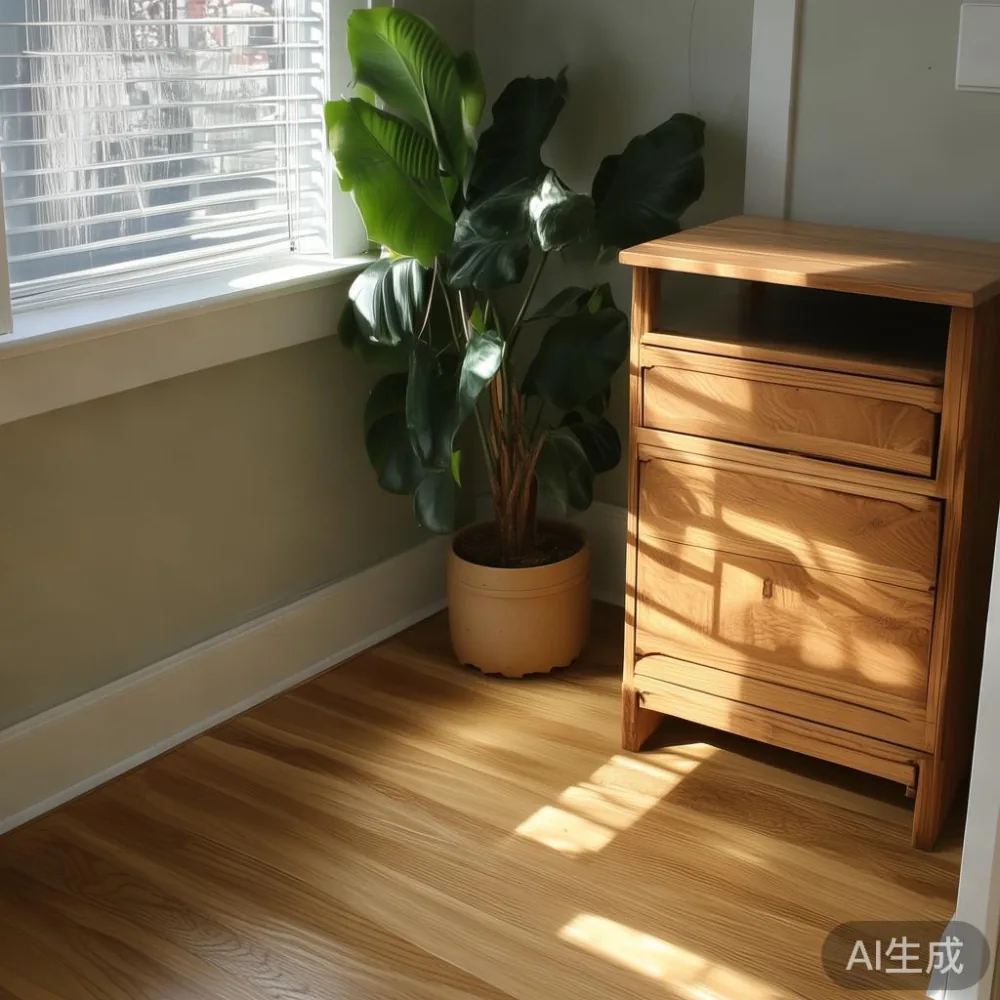
At SGD 289 plus 9% GST, the purchase price is SGD 315.01. Add SGD 60 for delivery through a lift lobby and SGD 40 for a compact assembly service, bringing the starting total to SGD 415.01. That delivery assumption reflects a normal HDB or condo access point: a 90 cm door, a 110 cm corridor section, and a lift with a 110 cm internal width. A larger freestanding carton can still fit, but a 50 cm nightstand is easier to manoeuvre than a solid wood dining table or wardrobe.
Over 5 years, I would allow SGD 80 for minor repairs, including SGD 30 for one drawer runner and SGD 50 for filling or replacing a chipped edge. A protective maintenance kit might cost SGD 35. In this example, a full refinishing service is not assumed because thin veneer is difficult to restore deeply if the face layer has been cut through. The total 5-year outlay is therefore about SGD 530.01, or SGD 106.00 per year.

This estimate also reflects the practical appeal of Boho for small living room schemes, where a lighter-toned nightstand can provide warmth without visually crowding a compact bedroom. The same material logic appears in a solid wood sofa, bed frame, or dining table, but the nightstand is where veneer savings are easiest to isolate and understand.
What does a solid wood nightstand cost over 5 years?
A solid wood nightstand uses the same material throughout the visible and structural components. A 50 cm wide oak or rubberwood model with two drawers may cost SGD 549 before GST. Some American light luxury designs use walnut, while French light luxury and post-modern light luxury treatments favour clean profiles, rounded edges, pale finishes, or gently tapered legs. The construction, not the style label, determines the long-term cost.
At SGD 549 plus 9% GST, the purchase price becomes SGD 598.41. Delivery is SGD 80 for a heavier carton, and assembly is SGD 50, giving an initial total of SGD 728.41. A 50 cm wide, 55 cm high nightstand may weigh 24 kg, compared with approximately 15 kg for a comparable veneer unit. That difference matters in an HDB corridor: the carton is manageable, but two people are sensible for stairs, while a lift makes the move straightforward.
I have tested this type of product in practice. Last month I visited a colleague’s Bedok condominium to inspect a solid wood nightstand after a house move. The moving team had caught one rear leg on the service lift door, leaving a 4 cm scratch near the floor. The photograph was clear, the repair was local, and the 10-year structural warranty gave the owner confidence, yet the scratch still needed attention.
For this comparison, the solid wood example includes one minor repair at SGD 90, a maintenance kit at SGD 45, and a partial refinishing service at SGD 120 during year 3. A full refinishing service would cost more, but a local repair is more realistic for a small mark. The 5-year total is SGD 983.41, or SGD 196.68 per year. That is SGD 453.40 more than the veneer example, or approximately SGD 90.68 per year.
The difference can be narrowed. At a 40 cm wide, 45 cm high design, a lighter solid wood construction might cost SGD 429 before GST and weigh 16 kg. Add 9% GST, SGD 50 delivery, and SGD 30 assembly, then budget SGD 70 for repairs and SGD 100 for refinishing over 5 years. The total would be around SGD 677.01, saving SGD 306.40 against the larger solid wood example. Dimension and construction matter as much as the headline material.
Which material costs less after 5 years of Singapore humidity?
For many Singapore households, veneer wins on the initial cheque. A bedroom receives less sunlight than a living room, but humidity still affects furniture. A standard HDB flat may experience 65% to 80% relative humidity, and a condominium near the coast can experience similar exposure. Neither material is moisture-proof, although stable plywood cores and well-sealed solid timber can both perform well.
Solid wood expands and contracts with humidity. Oak can move by roughly 1 to 3 mm across a 50 cm width as environmental conditions change. Quality furniture accounts for this with joinery that allows controlled movement. Veneer is less prone to broad movement because the core is engineered, but the face can chip, peel, or mark more easily. A water ring left by a glass overnight is usually a surface issue in either material, provided the finish remains intact.
Cleaning methods differ. For veneer, use a slightly damp cloth and dry the surface immediately. For solid wood, the same approach works, but avoid excess water around drawer joints. Neither nightstand should be wiped aggressively with a wet sponge. Keeping it 15 cm away from an air-conditioning vent reduces repeated moisture and temperature changes.
This is also where lifetime refinishing becomes meaningful. MIDHILL offers lifetime refinishing on qualifying solid wood products, giving a family a practical repair route if the finish is marked after several years. It does not turn the nightstand into an unlimited repair contract: deep burns, severe water damage, or structural misuse may still fall outside the service scope. Confirm the written terms for the individual model.
What happens when the nightstand needs a repair?
The 5-year comparison depends on repairability. Veneer’s lower price can be eroded if the decorative layer is damaged and the core requires replacement. A typical repair visit in Singapore may cost SGD 60 to SGD 150 before GST, while a damaged drawer front can add SGD 80 to SGD 220. If the nightstand needs a full face replacement rather than a local patch, the economical advantage may narrow considerably.
Solid wood can often be sanded, filled, stained, and refinished locally. A 2 cm deep scratch might cost SGD 50 to SGD 90 if the grain remains sound. Surface refinishing may cost SGD 100 to SGD 200 for a small unit. A drawer runner replacement can add SGD 25 to SGD 45 in labour and parts. Repair is not always cheap, but the cabinet does not have to be discarded because a thin face sheet was cut through.
Dimensions affect the repair quote. A small 40 cm nightstand may have lower labour costs, but narrow drawers and limited access can make alignment more delicate. A wider 60 cm unit may cost more yet provides more storage beside a bed. For a compact Punggol studio, a 40 to 45 cm nightstand can sit within a 1.1 m lift corridor without projecting into the main circulation path.
The same judgement extends to adjacent furniture. When buyers research European bed vs Italian light luxury bed options, they should check storage construction and service access rather than relying on origin alone. Likewise, a European bed vs Mid-century modern bed can use different drawer systems but share the same need for replaceable hardware. A marble table has different care requirements, while a solid wood dining table or wardrobe carries different weight. Here, however, the comparison stays with the nightstand because it offers a clear, low-complexity test of material value.
Are veneer and solid wood nightstands different in appearance and resale value?
Yes. Veneer provides uniform colour and grain across large panels, which works well in post-modern light luxury interiors with clean lines. It can also reproduce a selected figure or colour more consistently. Solid wood offers natural variation, visible grain changes, and the ability to repair a mark so it still looks like timber. A solid piece may gain character, although individual preferences vary.
For Singapore resale decisions, furniture usually contributes less to an apartment valuation than the kitchen, bathroom, or built-in storage. However, a well-made solid wood nightstand can have a longer useful life and may appeal to buyers who can inspect its condition. A high-quality veneer nightstand can also retain a coherent appearance if its edges and finish are protected. The resale difference over 5 years may be only SGD 50 to SGD 150, so it should not be treated as a guaranteed investment return.
Style buyers can find useful references in French provincial for guest room schemes, where pale solid wood and restrained profiles create a welcoming note. The phrase under 2000 light luxury furniture is more relevant to a complete room than a single nightstand: a coordinated bed frame, dining table, wardrobe, or solid wood sofa can exceed that amount quickly. Modern for small living room planning also favours compact proportions, but a narrow footprint alone does not determine whether a piece is durable.
For MIDHILL customers, the practical decision comes down to budget priorities. A veneer nightstand can make sense for a rental unit, a first bedroom, or a home where the piece will be replaced after a move. Solid wood makes more sense when the owner wants repairability, natural grain, a heavier handcrafted presence, and support for long-term refinishing.
How do delivery, GST, and Singapore access affect the comparison?
Delivery is often the hidden line that changes a furniture comparison. A Singapore order above US$350 can qualify for free shipping under MIDHILL’s stated policy, but the threshold should be confirmed for the destination, product, and customs treatment. Local furniture bought through a Singapore showroom or authorised channel may be quoted directly in SGD, with GST added at checkout. Imported orders can include freight, customs handling, and other charges that alter the ratio.
The physical route matters too. In Tampines and Bedok, many HDB blocks have lift lobbies and corridors around 110 to 150 cm wide. Condominiums in Punggol may have narrower service routes or a loading bay reservation system. A 50 cm wide nightstand in a 60 cm deep carton can be turned through a 90 cm door if the carton is flexible and the lift door opens fully. A heavier solid wood nightstand usually travels upright to avoid joint stress.
Allow 7 to 14 delivery days for a made-to-order Singapore order, depending on production and stock status. Stock pieces may arrive in 3 to 7 days. Customers should measure the lift opening, the corridor turns, and the bedroom door before ordering, especially for a nightstand above 60 cm wide or 60 cm high.
Returns can also influence the effective cost. MIDHILL provides a 14-day return period under its stated policy. A buyer should photograph the nightstand at delivery, retain the packaging, and confirm assembly or finish terms. Scratches found after use may fall outside the return conditions, which is another reason to inspect the piece immediately.
How can you calculate the 5-year cost for your own nightstand?
Use five figures: purchase price, GST, delivery, maintenance and repair, and refinishing. For the example above, the veneer nightstand totals SGD 530.01 over 5 years, while the solid wood nightstand totals SGD 983.41. The simple conclusion is that veneer costs less in this scenario, but solid wood offers a stronger repair and refinishing route.
Now enter your actual figures. For example, a SGD 399 veneer nightstand with 9% GST, SGD 60 delivery, SGD 70 repairs, and SGD 35 maintenance totals SGD 600.96. A SGD 449 solid wood nightstand with 9% GST, SGD 80 delivery, SGD 70 repairs, SGD 45 maintenance, and SGD 100 refinishing totals SGD 684.61. The gap is only SGD 83.65 over 5 years, which is roughly SGD 16.73 per year.
That lower gap may justify solid wood when the finish is vulnerable, the household has children, or the nightstand will remain in the bedroom for many years. Veneer may suit a lower budget, a lighter visual style, or a room where the furniture will be moved frequently.
Before ordering, ask for the exact material breakdown, including the core, veneer species or thickness, drawer construction, finish, weight, warranty, refinishing terms, and delivery charge. For the final choice, compare what you will live with beside the bed for 5 years. A nightstand should be comfortable to use, easy to maintain, and proportionate to the room; the right material is the one that meets those needs while fitting the budget.