What Actually Drives the Price of a Solid Wood Nightstand in Singapore
Walk into any furniture showroom in Tampines, Bedok, or Punggol and the same thing happens: a S$3,500 solid wood nightstand sits next to a S$499 one, and the labels on both say "solid wood." I bought my first nightstand that way, paid too much for a glued-up mystery board, and learned the hard way that "solid wood" on a sticker and "solid wood" in the invoice mean very different things. Last month I visited a Foshan factory with a colleague who spec's furniture for a local condo developer, and the conversation on the workshop floor made every line item on a price tag suddenly make sense. This guide breaks down what you are actually paying for, in Singapore dollars, with the lift and corridor constraints of HDB flats firmly in mind.
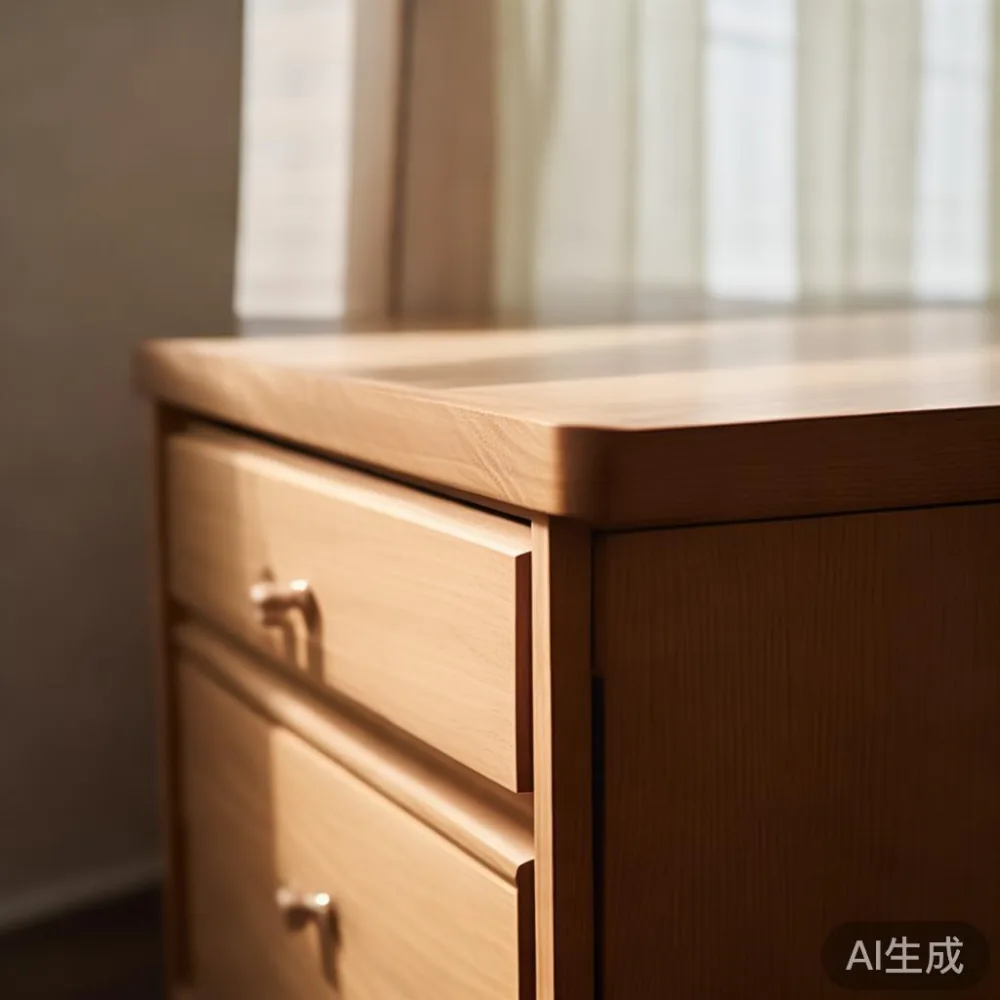
What does "solid wood" actually mean in a price tag?
In the trade, the phrase covers at least four very different constructions, and the price gap between them is wider than most shoppers expect.
1. Solid hardwood, single-slab or joinery-grade planks. Ash, oak, walnut, beech, or rubberwood that has been kiln-dried to a moisture content of 8–12% and then cut, planed, and joined with mortise-and-tenon or dovetail joints. A two-drawer nightstand built this way typically weighs 18–28 kg. Expect S$1,400–S$3,800 for a piece that will outlive a 30-year HDB lease.
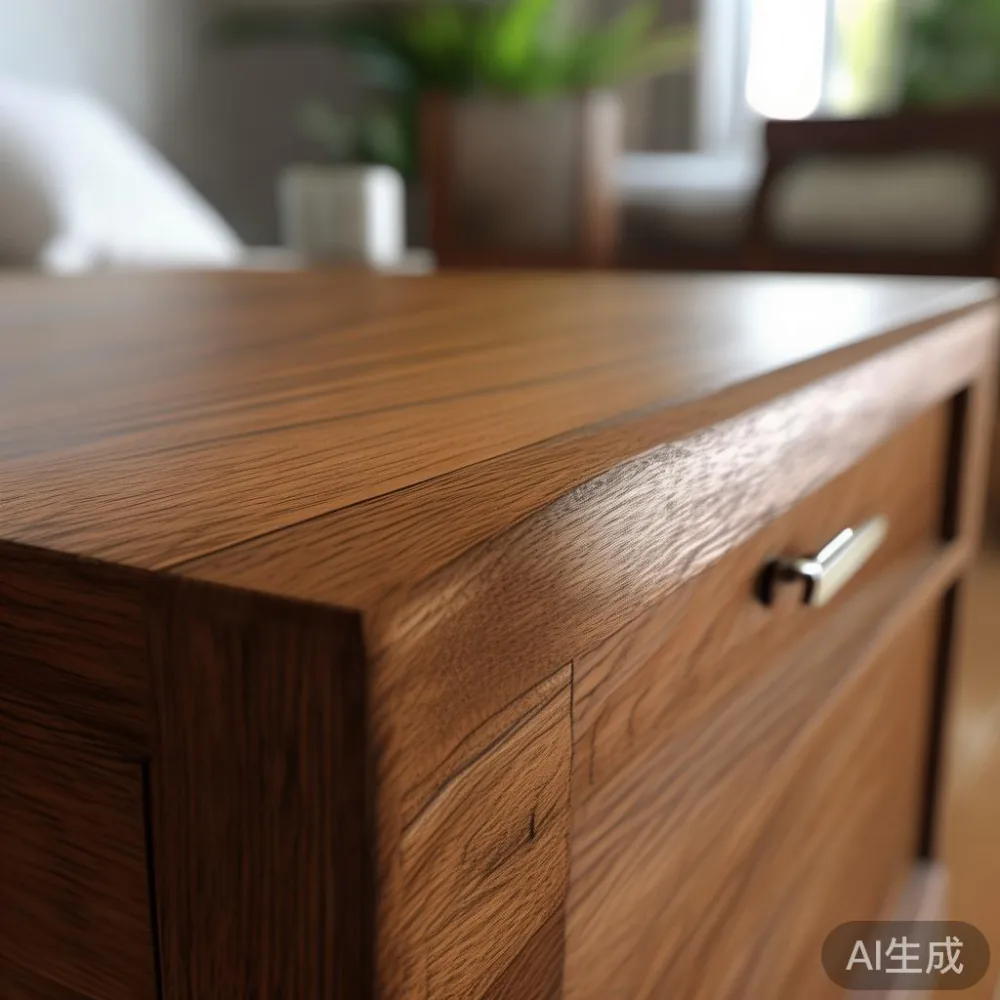
2. Solid softwood, often pine from northern China or the Baltic states. Cheaper, lighter (8–14 kg for the same form), and softer — a set of keys can dent it. The honest price band is S$500–S$1,100, and many pieces here get sold at the hardwood price because the sticker only says "pine solid wood."
3. Solid wood + plywood or MDF panels. Legs, rails, and drawer fronts in real timber; back panels and drawer bottoms in engineered sheet. This is the honest norm for a well-made nightstand and is what most reputable Foshan factory production lines ship. The plywood is not a defect — it is structurally smarter, because a 1.8 cm plywood back won't warp the way a solid panel will in Singapore's 27–32°C, 80%+ humidity.
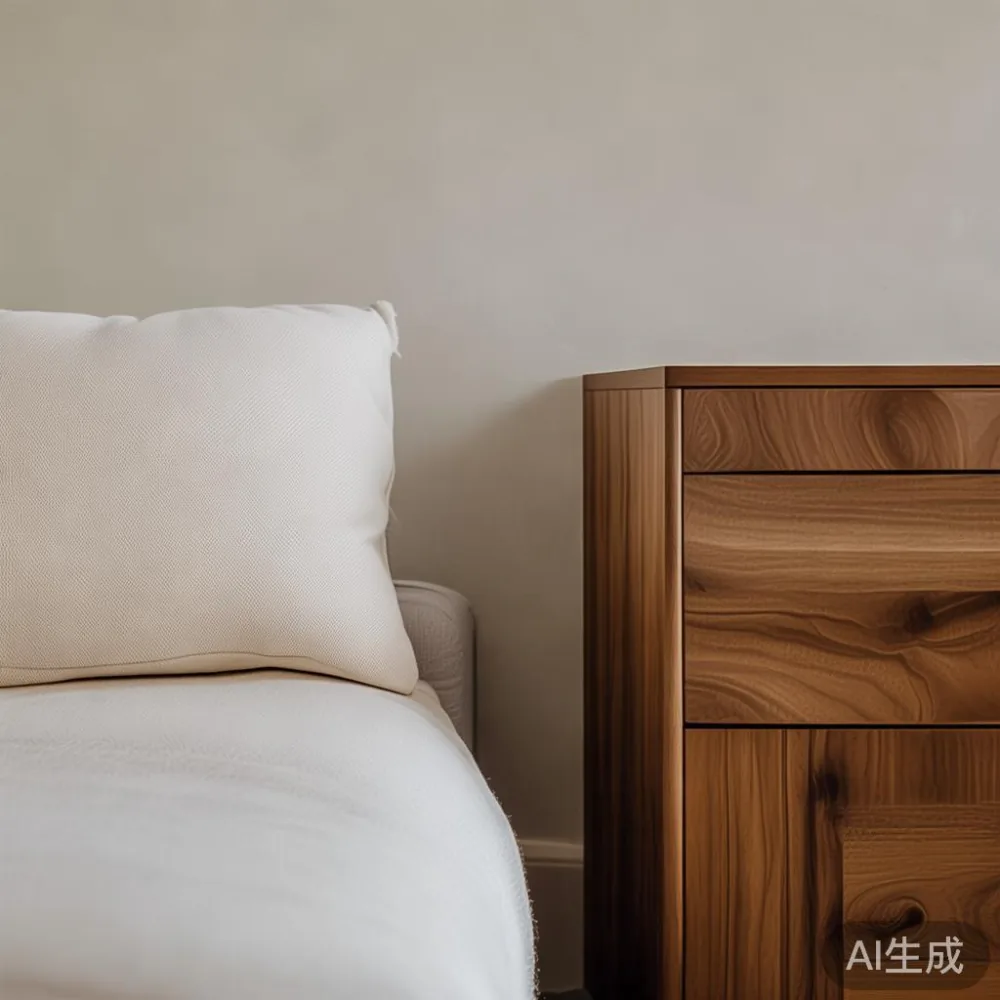
4. Veneered or laminate over a solid core. A 0.6 mm slice of real walnut or oak glued to a plywood or MDF substrate. The price band drops to S$280–S$650. Honest sellers say "veneer." Less honest sellers say "solid wood" because the substrate is technically wood. Read the spec sheet, not the marketing line.
How much of the price is the wood itself?
On a mid-range piece, the raw timber accounts for roughly 28–35% of the factory cost. The rest breaks down something like this, based on what the production manager showed me at the workshop:
- Hardware (soft-close runners, hinges, felt-lined drawer boxes): 8–12%
- Finishing (sealant, stain, 2–3 coats of polyurethane or natural oil): 12–18%
- Joinery labour and CNC machining: 15–22%
- Factory overhead and QC: 10–15%
- Packaging for export (foam corners, corrugated cartons, edge guards for an 80×45×55 cm carton): 4–6%
- Logistics from Foshan to Singapore port, then to your door: 10–18%
Once you add 9% GST, an SGD-unfriendly currency conversion, and the last-mile delivery through a Tampines HDB corridor that is often only 1.2 m wide, the figure on your invoice can be 35–55% above the factory gate price. That is not a markup scam — it is the cost of getting a 22 kg box of furniture up a lift, through a fire-rated door, and into your master bedroom without scratching your parquet.
Why do two nightstands of the same size cost three times apart?
I watched two nearly identical two-drawer nightstands — same dimensions, same "white oak solid wood" label — being packed side by side at the Foshan factory. The S$1,150 version used 1.4 cm side panels and 0.9 cm drawer bottoms; the S$3,200 version used 2.2 cm side panels and 1.6 cm drawer bottoms. Same silhouette, double the material, double the drying time in the kiln, and a finish that went through five coats instead of two. The eye cannot easily tell them apart. The hand, and a 5-year-old marble table with water rings, can.
Other quiet price drivers I saw on the floor:
- Draw-box construction. Through-dovetail joints on all four corners of a drawer add about S$180–S$260 per nightstand in labour. Side-mount staples add about S$30. Both function for a decade; one lasts forty years.
- Wood grade. FAS (First and Seconds) grade ash with tight, even grain costs roughly 40% more per cubic metre than #1 Common grade, which has more knots and mineral streaks. The nightstand looks cleaner — and, importantly for Singapore's resale market, photographs better.
- Hardware brand. Blum soft-close runners are about S$28 per pair at trade; unbranded runners are about S$4. Over the life of a nightstand opened twice a day, the Blum unit is cheaper.
- Hand-finishing vs spray line. A hand-rubbed oil finish on a walnut nightstand adds three days of artisan time. A spray-line lacquer adds forty minutes. Both look acceptable on day one; only one of them ages gracefully.
Is American sofa worth it when you only have space for a nightstand?
This is the question I get most often from condo owners furnishing 60–80 sqm units, because they are shopping for a solid wood sofa, a bed frame, a dining table, a wardrobe, and a nightstand in the same six-month window — and the American sofa is the line item that blows the budget. The honest answer: an American sofa in full top-grain leather, kiln-dried hardwood frame, and 8-way hand-tied springs will outlast three cheaper sofas and probably your HDB lease. But if the only solid wood piece you can afford right now is a nightstand, spend the money there. A nightstand is touched 700+ times a year. A sofa you sit on, but a nightstand you open, close, lean on, set coffee on, and bump with a vacuum. The piece that gets used the most is the piece that should be built the best.
How to choose Japanese sofa and bed frames without confusing "light luxury" for cheap
Japanese-influenced furniture in Singapore — low profiles, exposed joinery, pale ash or oak — has become shorthand for a certain kind of quiet condo. The "light luxury" label gets attached to almost anything these days, and that is where shoppers get lost.
American light luxury tends to mean deep cushions, rolled arms, brushed brass, walnut solids, and a residential scale around 2.1–2.4 m wide. French light luxury trends toward cabriole legs, marble table accents, limed oak, and a softer, more decorative profile. Post-modern light luxury is the geometry-first cousin: fluted panels, terrazzo tops, brass-edged nightstands, and silhouettes that read as art objects as much as furniture.
When you see "light luxury sofa" on a Singapore e-commerce listing, open the spec and check three numbers: frame material (it should say "solid wood," not "wood frame"), spring system (8-way hand-tied or sinuous no-sag), and fill density (high-resilience foam at 32 kg/m³ or higher, wrapped in down). On how to choose Japanese sofa specifically, the rule is even simpler: if the frame is plywood with a thin veneer and the legs are turned softwood, the price band should be S$1,800–S$2,600 for a 2.0 m three-seater. Anything marked higher needs to show you the hardwood certificate.
Luxury Italian light luxury furniture at non-Italian prices — what gives?
Most of the pieces sold in Singapore under the luxury Italian light luxury furniture banner are not made in Italy. They are made in Foshan, Vietnam, or Malaysia, often in factories that also produce for European brands at twice the ticket. The Italian part usually refers to the design language — a silhouette drawn in Milan, a fabric selected from a Como mill, a marble table top cut from a quarry the Italian brand has used for decades. You are paying for the design and the material spec, not the zip code. When the spec sheet names the marble quarry, the fabric mill, and the hardwood FSC certificate, the price is honest. When it only says "Italian style," you are paying for a mood board.
French bed vs Modern bed — which one suits a HDB master bedroom?
On the showroom floor, the French bed vs Modern bed comparison gets reduced to two silhouettes: a French bed with a curved headboard, tapered walnut legs, and a 1.8 m × 2.0 m footprint; a modern bed with a low platform, fluted upholstery, and hidden cable routing for charging. In a typical HDB master bedroom of 14–18 sqm, the modern bed usually wins on daily livability — under-bed storage drawers, no headboard bulk, easier mattress access. The French bed wins on resale drama and on couples who actually use the headboard for reading. The price spread for a queen-size solid wood bed frame is S$2,400 (modern, oak veneer on plywood) to S$7,800 (French, solid walnut, hand-carved headboard). Hardware, joints, and drawer slides account for roughly the same share of the bill as on a nightstand.
How to style Japandi bed in apartment without buying everything new?
Japandi is half Japanese restraint, half Scandinavian warmth, and it photographs beautifully in a 90 sqm Punggol condo. You do not need a new bedroom set to pull it off. Start with the two pieces you touch every day: the bed frame and the nightstand. A pale ash or white oak platform bed frame (S$1,900–S$3,200 for queen) paired with a matching two-drawer nightstand (S$900–S$1,600) sets the tone. Add one linen duvet in stone, one ceramic table lamp, and one piece of black-stained solid wood — a small stool or a tray — to anchor the warmth side of the palette. On how to style Japandi bed in apartment specifically, the rule is: keep the nightstand surface 80% empty. One book, one lamp, one small plant. The negative space is the design.
Reading the price tag without getting taken for a ride
A practical checklist I now run through before I buy any solid wood piece, printed and taped inside my wardrobe door:
- Ask for the species, the country of origin, and the FSC or PEFC certificate number.
- Ask for panel thicknesses in millimetres, not just "solid."
- Ask whether the drawers are plywood box or solid wood box, and what the slide brand is.
- Ask whether the finish is oil, wax, polyurethane, or lacquer — and how many coats.
- Ask for the carton dimensions and the gross weight, then measure your lift and your corridor.
- Ask about the structural warranty in years, the return window in days, and whether refinishing is included.
A piece that answers all six cleanly — 10-year structural warranty, lifetime refinishing on a nightstand you intend to keep for 20 years, 14-day returns, free shipping over a clear SGD threshold, and export to 15+ countries as proof of a working QC system — is the kind of piece you buy once. The Foshan factory floor I visited last month runs to that spec because their buyers ask the same six questions. MIDHILL has been building to that spec since 2008, which is why the price tag is the same on the Singapore showroom shelf as it is on the workshop wall.
The real answer to "what drives the price"
It is not the wood. It is not the brand. It is the chain of decisions between the tree and your Tampines corridor: kiln-drying, grade selection, panel thickness, joinery method, hardware brand, finish system, packaging for a 22 kg carton, sea freight through the Strait of Malacca, port handling, GST, last-mile delivery through a 1.2 m corridor, and a warranty that still answers the phone ten years later. Every one of those decisions adds a number you can name. Add them up, in SGD, and the price tag stops being a mystery and starts being a spec sheet you can read aloud.