Solid Wood Furniture Price Factors: Inside Singapore
Solid wood furniture is often described simply as “made of wood,” yet two pieces carrying the same label can differ by several hundred or even several thousand Singapore dollars. The reason has less to do with a mysterious luxury premium and more to do with measurable factors: the species, grade and thickness of timber; the construction method; the surface finish; hardware; dimensions; and the amount of skilled work required before the piece leaves the factory.
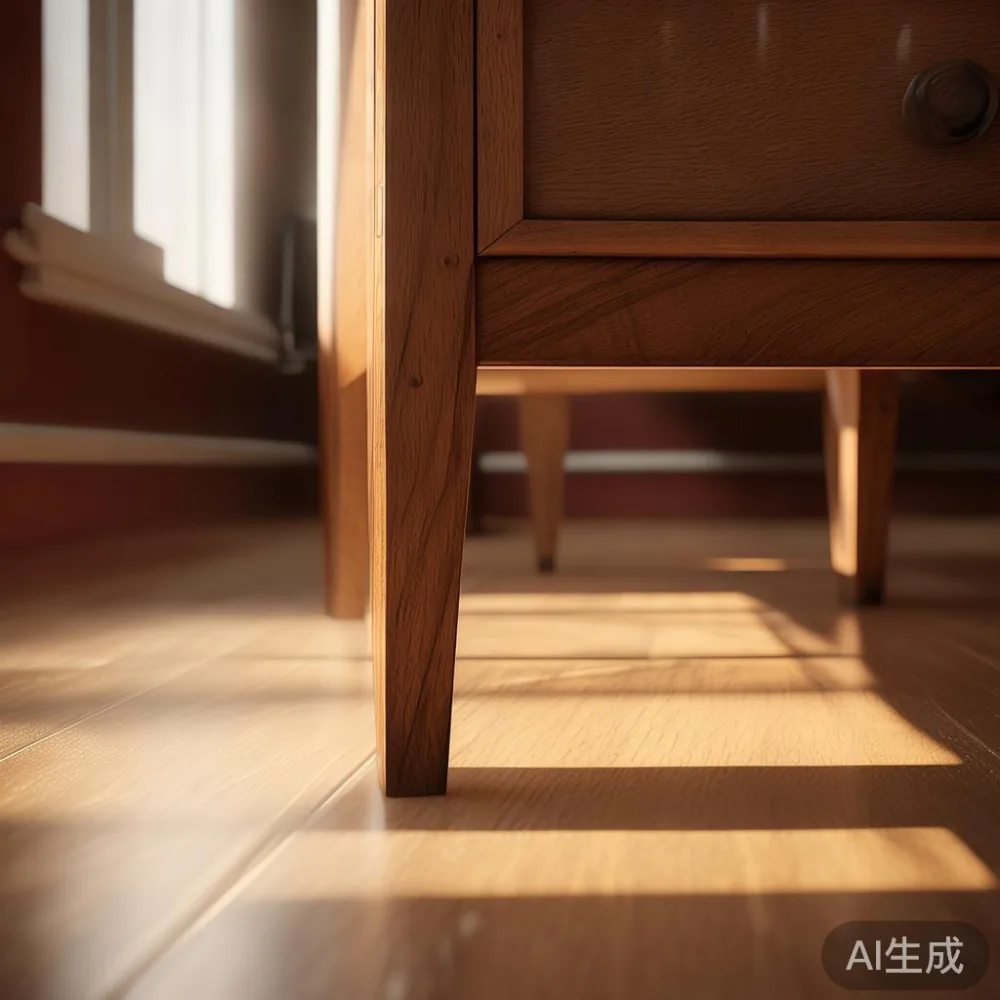
For Singapore homes, those practical factors matter even more. A nightstand for a Tampines HDB bedroom must fit through a common lift doorway, sit comfortably beside a bed in a compact room, and survive humid coastal conditions. A larger piece for a Punggol condo may have to negotiate a private corridor, turning measurements into part of the purchasing decision. GST is also included for consumers, while imported raw materials and factory operations can influence the final SGD price.
This guide explains what actually drives the price of solid wood furniture using nightstands as the central example, while comparing the same cost logic across a solid wood sofa, bed frame, dining table, wardrobe and marble table. The aim is not to chase a decorative label, but to identify where money is genuinely spent and where it can be saved without compromising structural performance.

Is solid wood automatically more expensive than engineered wood?
No. “Solid wood” describes how the visible components are made, not how expensive they must be. A nightstand built from 18 mm solid rubberwood with a simple lacquered finish can cost less than an engineered-wood unit with thick MDF panels, a stone-look top and elaborate hardware. Conversely, a 25 mm solid oak nightstand with hand-finished edges, traditional joinery and premium drawer suspension can command a higher price even when its appearance appears restrained.
The useful question is not “solid or not solid?” but “solid wood of what thickness, what grade, and used where?” A side panel may be solid timber while an internal drawer box, backing board or shelf uses plywood. That does not automatically make the nightstand poor; it may produce a sensible balance of strength, weight and cost. It does, however, mean that the material description needs to be examined beyond the headline.
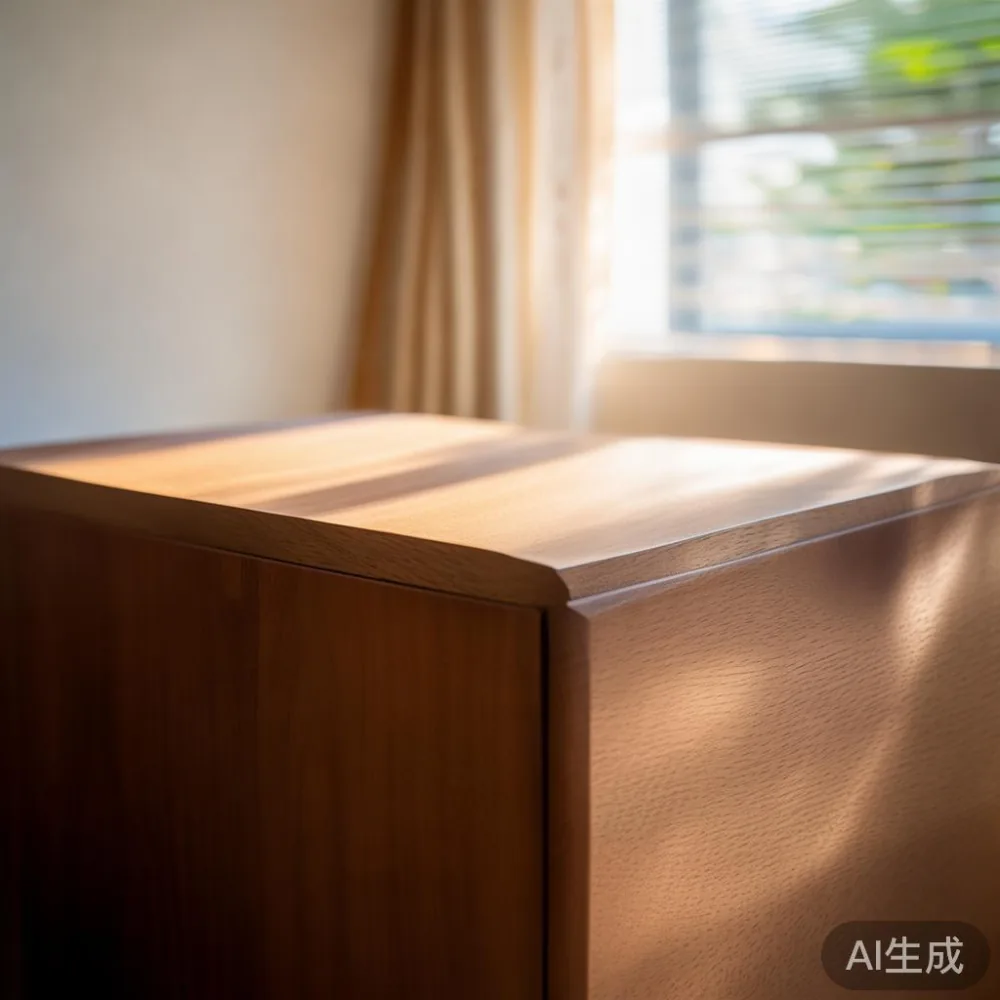
At MIDHILL, the specification should be read as a package: timber species, board thickness, joinery, finish, hardware, internal storage, dimensions and warranty. A 10-year structural warranty is meaningful because it indicates the maker expects the frame and joints to remain serviceable over time. Lifetime refinishing offers a different benefit: scratches and surface wear can be addressed rather than requiring replacement. Neither promise replaces good specifications, but both affect the long-term value calculation.
What costs more: timber species, thickness or grade?
Timber species usually has the clearest price effect, followed by thickness and grade. Rubberwood, ash, beech and pine are often used for practical solid-wood furniture because they offer a balance of workability and cost. Oak, walnut and other premium hardwoods can cost more because of raw-material pricing, grain selection, weight, drying time and machining demands. Prices move with harvests, import routes, demand and exchange rates, so a model’s price is not permanent.
Thickness changes the calculation quickly. Imagine two nightstands with the same footprint of 45 cm wide by 38 cm deep. If the first uses 18 mm solid timber and the second uses 25 mm, the second contains more wood in every visible component. At an indicative material cost of SGD 4–SGD 8 per kg for common kiln-dried hardwood, a 3 kg increase in net timber content alone can add roughly SGD 12–SGD 24 before machining, finishing and waste. The finished price gap may be larger because thicker parts are slower to cut and sand and may need more finish coats.
Grade is harder to see in a photograph. “Grade A” should mean more than a vague marketing phrase: it ought to describe the permitted knots, sapwood, colour variation, grain matching and defects. A nightstand with book-matched grain on both drawer fronts may cost more because each board is selected for appearance. That extra cost is justified only if appearance is important to the buyer; it does not make the drawer stronger.
Dimensions also have a direct impact. A compact nightstand around 40 cm wide, 32 cm deep and 55 cm high may use 0.07 cubic metres of timber. A larger 60 cm unit could use 0.11 cubic metres, plus longer components and more waste. More material means a higher base price, but a very large nightstand may also be less suitable for an HDB bedroom where circulation space is limited.
How much do joinery, hardware and finish really add?
A beautiful carcass can still have an ordinary interior. Drawer slides, hinges, dowels, corner blocks and fastening methods determine whether a nightstand feels precise after 5,000 openings or develops wobble after 500. Full-extension ball-bearing slides on a 40 cm drawer may cost several times more than basic friction slides. Soft-close hinges add another controlled cost. Premium hardware is not merely a luxury detail when it reduces impact noise in a condo bedroom beside a shared wall.
Joinery affects labour and durability in different ways. Machine-cut dowels and confirmat joints can be efficient and strong. Mortise-and-tenon, dovetail or other traditional methods require more setup, accuracy and finishing time, so they often carry a price premium. A modern CNC-routed joint can achieve the same performance at a different production scale. The correct comparison is therefore performance per dollar, not the name of a joint alone.
Finish deserves equally careful attention. Lacquer, oil, wax and stain are not interchangeable. A water-based matte lacquer may provide useful resistance with relatively low odour, while a more elaborate hand-rubbed oil finish requires repeated preparation and application. A natural nightstand with visible pores may need 4–6 sanding and finishing stages. A painted finish may add 2–3 additional layers. VOC control, curing time, colour matching and the number of coats all affect the final cost.
One real test made this clearer to me. Last month I visited my colleague’s Bedok flat to examine a solid oak nightstand after 14 months of daily use. Its 45 × 38 × 58 cm body had minor marks near the rear edge and one slightly sticky drawer after a humid week. The carcass remained square, and the soft-close slides still worked smoothly. The finish, not the timber, created the repair issue. A refinishing service would have made the piece recoverable, but a better sealed specification would have reduced the maintenance need from the start.
What should a Singapore buyer measure before paying?
Start with the route into the home, not just the product page. Common HDB lift openings are often around 80–90 cm wide, although individual blocks and newer flats vary. Door leaves may require about 70–85 cm of clear width, and corridor turns can be tighter than the lift itself. A nightstand packed in a 52 cm-wide carton may pass a 90 cm lift but still fail at a 70 cm staircase turn or a narrow bedroom door.
Ask for the packed dimensions and weight, not only the assembled dimensions. A nightstand weighing 24 kg may need two people on stairs; one weighing 12 kg is easier to handle but could also be less substantial. A piece 52 cm wide, 42 cm deep and 60 cm high gives useful bedside clearance, yet it may occupy a significant portion of a compact HDB room. A 40 cm-wide version can fit a 90 cm bed with about 25 cm on each side, although exact spacing depends on the bed frame.
Humidity is another local factor. Singapore’s outdoor conditions can shift through the year, and air-conditioned interiors vary in dryness. Properly kiln-dried timber below about 12–14% moisture content is generally better suited to indoor furniture than stock dried only for the factory climate. Good makers should control moisture during seasoning and machining. Small seasonal movement in solid timber is normal; splitting, warped drawer bottoms and loose joints are not.
Compare delivery terms as part of the total price. Standard delivery may take 7–14 days to Singapore, while made-to-order pieces can take 30–60 days. Clarify whether delivery is curbside or room-of-choice, whether stair carry is included, and what happens if the package does not fit through the lift. A supplier offering delivery over US$350 may reduce the burden on international orders, but the threshold should still be checked against the actual exchange rate, destination and service scope rather than assumed to cover every Singapore transaction.
Returns are equally practical. A 14-day return window can protect against size mistakes, but the condition requirements, restocking fee, assembly implications and custom-order exclusions should be confirmed in writing. In this market, a thorough specification sheet is more useful than a dramatic price promise.
How does the same pricing logic apply to larger furniture?
The principles carry across categories, but the amounts and labour change. A solid wood sofa is expensive because timber volume, frame engineering, suspension, cushioning, upholstery and assembly can all be substantial. The comparison between an American sofa vs French provincial sofa often mixes construction with design: American-leaning upholstery may use broad, clean profiles and performance textiles, while French provincial styling introduces carved details, shaped arms and more elaborate surface work. The decorative labour can raise the price without making the underlying frame stronger.
A solid wood bed frame needs adequate timber sections, sound joints and stable fixings. A queen bed commonly measures about 152 cm wide and 203 cm long, but outer widths may reach 160–170 cm. That outer dimension must pass the lift and corridor. Headboard design also matters: a tall, carved or upholstered headboard can add material, packing and handling cost. A low platform frame may cost less yet fit local access more easily.
For a dining table, slab construction and joinery become more visible. A 180 cm solid wood dining table for six people needs a stable top, an apron or support system, and enough clearance—normally at least 75 cm—for seated use. European light luxury with storage can introduce deeper aprons, integrated drawers and more precise divisions, all of which demand timber, hardware and fitting time.
A marble table adds another layer. The stone slab, reinforcement, underside support, edge treatment, weight and breakability risk affect both price and delivery. A 120 cm round marble table may weigh 70–100 kg, so a lift rated for 600 kg and a suitably sized trolley matter. A solid wood nightstand weighing 18 kg presents a different level of logistical risk from a marble coffee table weighing 90 kg.
Wardrobes combine volume, fittings and access challenges. Searches for how to choose Japandi wardrobe often focus on pale timber, restrained profiles and calm storage planning, but the price is also set by drawer runners, hinges, hanging rails, shelves, door alignment and modular construction. A 180 cm-wide freestanding wardrobe can be difficult to turn into a corridor even when it fits the lift. Flattened panels or a knock-down design can improve access and reduce packaging.
How should you style a solid wood nightstand without paying for decoration alone?
Good styling starts with the room and function. A narrow nightstand for a Punggol study might be 35–40 cm wide with one drawer and one open shelf; a master bedroom in a larger condo might support two units at 45–55 cm wide with soft-close drawers and concealed cable management. Italian light luxury for bedroom often pairs warm wood, tactile textiles and layered lighting, but the atmosphere does not require a heavily ornamented nightstand. Clean joinery, balanced proportions and a durable finish can carry the look.
For a lighter French direction, pale oak or ash, curved drawer fronts and small round pulls can echo French for dining room styling when the nightstand sits in a multi-use living-and-dining area. Curved components require careful machining and sanding, so a modest price increase may reflect labour rather than inferior quality.
Storage planning also prevents over-ordering. Measure the bedside zone, bed height, wall outlets, phone charger, lamp base and ventilation. A top at 50–60 cm is often convenient with a standard mattress, but a high bed may call for a taller unit. Include at least 20 cm of depth for a lamp and charging items. If the room has a tight walkway, a slim 30–35 cm width may preserve circulation better than a 50 cm cabinet.
French or European-inspired wardrobes can create a coordinated bedroom, but matching finishes across different makers can be difficult because stains and coatings vary. Anyone considering how to style French wardrobe in room should compare actual samples under daylight and evening lighting. A nightstand should not be chosen only because its colour appears to match a wardrobe in a photograph.
How can you compare two solid wood nightstands fairly?
Build a like-for-like comparison sheet with 10 columns: timber species, solid-wood coverage, board thickness, grade, dimensions, packed dimensions, weight, joinery, hardware, finish and warranty. Then add delivered price in SGD, estimated delivery time, return terms and expected care. Without these figures, “premium solid wood” is too broad to evaluate.
A sensible comparison might look like this. Nightstand A uses 18 mm rubberwood, painted MDF drawer boxes, basic hinges and a lacquer finish, arriving at SGD 289. Nightstand B uses 20 mm oak, solid-wood drawer boxes, soft-close slides, matched grain and a low-sheen oil finish at SGD 529. The SGD 240 difference may be justified by material, hardware and repairability, but it may also include more finish preparation than the buyer values. Another option at SGD 349 may use 18 mm rubberwood with better slides and a tougher finish, offering the functional improvements without premium-grade timber.
Look for evidence that supports the warranty. MIDHILL was established in 2008 and exports to more than 15 countries, which suggests experience with different standards, climates and shipping conditions, though the specific product warranty still needs to be read. The 10-year structural warranty addresses long-term frame confidence, while lifetime refinishing changes the economics of a scratched nightstand. It does not cover ordinary patina, misuse or moisture damage, so care guidance remains part of the purchase.
The most informative price is the one that matches the intended use. A small, well-built nightstand for a compact HDB bedroom can be more rational than an oversized statement piece that strains the lift. A larger, more decorative model can still make sense in a generous condo bedroom if its grain, hardware and finish match the quality of the surrounding space. The price is driven by a combination of material, labour and design decisions; understanding each one turns an opaque furniture tag into a practical ownership decision.